
"oval"
2578 article(s) found

Production time of Brazilian coffee beans-- introduction to the planting environment of manor producing areas pictures of Brazilian coffee trees
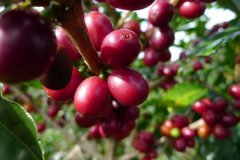
The planting environment of Brazilian coffee picking season-manor growing area when the coffee fruit changes from turquoise to full wine red, it indicates that it is ripe, but there are also some strange varieties, the ripe coffee fruit appears yellow. The coffee fruit looks like cranberries or cherries, but the shape is closer to the oval. Coffee farmers usually judge whether the coffee fruit is successful by pinching the coffee fruit with the thumb and index finger.
The process from fruit to raw coffee beans the basis of coffee beans
A coffee tree can harvest 3-5 kg of fruit, and raw coffee beans account for 1. 5% of the fruit quality. Going from fruit to raw coffee beans is really a time-consuming and laborious task. Arabian, Robusta and Liberian Arabian coffee account for about 2% of the world's coffee production. The plant is not suitable for high temperature, low temperature, more rain and less rain. Coffee beans are oval and flat, with high quality

Growth and characteristics of Coffee trees
The origin of the coffee tree is Ethiopia in Africa. In botany, coffee trees belong to the evergreen trees of the subgenus Rubiaceae, and coffee beans, commonly known as coffee beans, are actually the seeds of the fruit of coffee trees. They are called coffee beans only because they are shaped like beans.

What is the development trend of coffee use in the types of coffee trees?
The shape of Arabica bean is small, the front is long oval, the middle crack is narrow and tortuous, and the arc on the back of the bean is flat. Arabica coffee is grown in Brazil and Colombia in South America, Central America, Costa Rica in the Caribbean, Guatemala, Jamaica, Mexico and Ethiopia. Arabica coffee beans are large, uniform in size and color.
Varieties of coffee beans
According to the variety of coffee beans (Coffee Bean) can be divided into three types of coffee beans are: Arabica coffee contains about 1% per cent by weight of caffeine, generally speaking, the better quality, more expensive coffee beans, are from Elaraby (Arabica) coffee beans. Accounts for 3/4 of the world's output, good quality, due to the coffee tree itself

Basic knowledge of high-quality coffee beans the production process of coffee beans
A coffee tree can harvest 3-5 kg of fruit, and raw coffee beans account for 1. 5% of the fruit quality. Going from fruit to raw coffee beans is really a time-consuming and laborious task. Arabian, Robusta and Librian Arabian coffee account for about 2% of the world's coffee production. The plant is not suitable for high temperature, low temperature, more rain and less rain. Coffee beans are oval flat and have a high height.

A coffee tree can produce about 3-5 kg of coffee cherries.
A coffee tree can produce about 3-5 kilograms of coffee cherries and can be refined into one-fifth of the weight of green coffee beans. Among them, coffee cherries are transformed into green coffee beans by many hands and time. Arabica and Robusta Arabica accounts for about two-thirds of the world's coffee production and is not suitable for growing in areas with high temperature, low temperature, much rain and little rain. The beans are oval and flat
Coffee trees and three kinds of native species
Coffee trees and three kinds of native coffee trees are evergreen shrubs or trees belonging to the Rubiaceae family. Wild coffee trees can grow to a height of 5 to 10 meters, but coffee trees planted on the manor are often cut to a height of less than 2 meters in order to increase fruit and facilitate harvesting. The opposite leaf of the coffee tree is long oval, the leaf surface is smooth, the end branch is very long, the branch is few, and the flower is white.
Small fruit coffee (scientific name: Coffea arabica) also known as Arabica (Arabica)?
Small fruit coffee (scientific name: Coffea arabica), also known as Arabica (Arabica), is the most traditional Arabica coffee variety. Originally from East Africa, coffee was monopolized by the Arab world for a long time before the 15th century, so it was called Arabian coffee by Europeans. It turns out that all the commercial coffee in the world is small fruit coffee, but at the end of the 19th century, there was a big noodle.

Tell me about the varieties of coffee beans.
According to the variety of coffee beans (Coffee Bean) can be divided into three types of coffee beans are: Arabica coffee contains about 1% per cent by weight of caffeine, generally speaking, the better quality, more expensive coffee beans, are from Elaraby (Arabica) coffee beans. Accounts for 3/4 of the world's output, good quality, due to the coffee tree itself

What are the three categories of coffee beans? a brief introduction to the flavor of Jamaican Blue Mountain Iron pickup Coffee
Professional coffee knowledge exchange more coffee bean information please follow the coffee workshop (Wechat official account cafe_style) the front street of the three major coffee varieties, Jamaica Blue Mountain Coffee introduced three major varieties of coffee: the three native species are Arabica, Robusta, Liberika (Liberika). Also known as small coffee beans, originated in Ethiopia. Arabica coffee trees are overgrown.
What is coffee?
The word coffee comes from the Latin genus coffea. This genus is a member of the Rubiaceae family of plants, which has more than 500 species and 6000 varieties, most of which are tropical trees and shrubs.

A brief introduction to the characteristics of Iron pickup Coffee beans introduction to Pacamara Coffee in Guatemala
Professional coffee knowledge exchange more coffee bean information please follow the coffee workshop (Wechat official account cafe_style) front street coffee-Arabica Coffee, Pacamara introduction Arabica, also known as small-grain coffee beans, originated in Ethiopia. Arabica coffee trees mostly grow at an altitude of 10002000 meters above sea level, are hardy, and the suitable growth temperature is 1524 ℃.

Introduction to the planting situation of Arabica Coffee Manor
Arabica coffee trees grow between 900m and 2000 m above sea level; they are hardy, and the suitable growth temperature is 1524 ℃; they need more humidity, and the annual rainfall is not less than 1500 ml. At the same time, they also require higher cultivation techniques and conditions. Arabica coffee beans are mainly grown in South America (except Argentina and parts of Brazil), Central American countries and Africa.

Description of Bourbon Coffee Bean Flavor introduction of Grinding scale production area treatment method
Description of the flavor of bourbon coffee beans the two best varieties of Arabica coffee are Tippica Coffee and bourbon Coffee. But many other varieties have come a long way. Its Chinese Coffee Coffee is grown in Brazil and Colombia, Mondo Coffee, Tiago Coffee, San Ramon Coffee and the famous Jamaican Blue Mountain Coffee. Arabian coffee trees are usually larger.
Boutique coffee beans: the growth process of coffee beans in-depth understanding of the principle of coffee
A coffee tree can harvest 3-5 kg of fruit, and raw coffee beans account for 1. 5% of the fruit quality. Going from fruit to raw coffee beans is really a time-consuming and laborious task. Arabian, Robusta and Librian Arabian coffee account for about 2% of the world's coffee production. The plant is not suitable for high temperature, low temperature, more rain and less rain. Coffee beans are oval flat and have a high height.

Coffee beans-specification coffee machine checklist
a. Washing type / non-washing type: in the sink, after rubbing with water and utensils, the pulp and gum are removed and dried, which is called washed coffee beans with uniform quality. Non-washing type: after the sun is naturally dried, the pulp and peel is removed by a sheller, and its quality is unstable. b. The fruit of flat bean / round bean coffee is made up of two oval seeds opposite each other. The connected side

Introduction to the types of coffee beans apart from Arabica, what coffee beans can compete with one?
Professional coffee knowledge exchange more coffee bean information please follow the coffee workshop (Wechat official account cafe_style) front street-coffee bean varieties introduction Arabica species (Coffee Arabica) Arabica species, namely small seeds. The country of origin is the Abyssinia Plateau of Ethiopia (that is, Ethiopia). It was mainly used for medicinal purposes in the early days, and was cultivated in the 13th century.

What are the basics of coffee?
Coffee is a drink that gives the public the impression of being black, bitter, sleepless, and excited. The coffee beans we see in coffee shops are dark brown and belong to roasted coffee beans, while the color of coffee liquid is amber. Coffee comes from coffee beans, which in turn are harvested and processed from the fruits of trees. Distribution of coffee: coffee trees
Fine Coffee-Yunnan small Coffee
Yunnan is the main coffee bean producing area in China. Yunnan is located in the subtropical mountain climate zone south of the Tropic of Cancer, with unique plateau red soil, fertile and loose soil and mild climate, which is especially suitable for growing small-grain coffee. Yunnan coffee was first introduced by French missionaries in 1902. Up to now, there are still 24 coffee trees with more than 90 years old in Zhukula Township, Binchuan County. Rui Lijing, 1914