From Coffee Cherry to Green Bean: The Basics
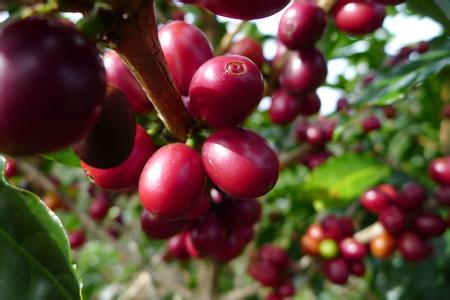
Ever wondered how your morning coffee started life? Before it’s ground and brewed, every coffee bean begins as a bright red or yellow fruit—called a coffee cherry—grown on a tree. But getting from fruit to the green beans you buy involves a surprising amount of work. Here’s how it really happens, step by step.
One coffee tree yields just 3–5 kilograms of fruit, and only about one-fifth of that weight becomes usable green coffee beans—around 0.6 to 1 kilogram per tree. Processing those cherries into beans is time-consuming and labor-intensive, but essential for quality.
The Three Main Coffee Species
Not all coffee plants are the same. There are three main commercial species grown for global consumption: Arabica, Robusta, and Liberica.
Arabica (Coffea arabica)
Making up around two-thirds of world coffee production, Arabica plants are sensitive to extremes—they don’t tolerate very high or low temperatures, nor too much or too little rain. The beans are oval and flat, with a rich, complex flavor profile. These beans are often associated with high-quality, nuanced cups.
Robusta (Coffea canephora)
Robusta beans have a strong, harsh bitterness and almost no acidity. They’re generally considered inferior when used alone but work better in blends. Often found in instant coffee, frozen coffee drinks, and canned coffee, Robusta grows well in low-altitude areas and is prized for its disease resistance and fast growth.
Liberica (Coffea liberica)
Lesser known and lower in both yield and cup quality, Liberica is rarely seen outside of Europe. Its production and trade remain minimal compared to the other two species.
Flat Beans vs. Peaberries
When you look inside a ripe coffee cherry, you'll find layers protecting the seeds—or beans—inside. Typically, two oval beans develop side by side, pressed flat against each other. These are known as flat beans (or flat berries).
But sometimes, only one bean forms inside the cherry, taking on a round shape. This is called a peaberry (or caracol). While they come from the same fruit, flat beans and peaberries often taste noticeably different, with peaberries sometimes described as having more concentrated flavors.
From Harvest to Shipment: The Processing Methods
Once picked, the coffee cherry must be transformed into a green coffee bean through processing. This means removing the outer skin, pulp, parchment (inner skin), and silver skin. There are two main methods: the dry (natural) process and the washed (wet) process.
Dry Process (Natural or Non-Washed)
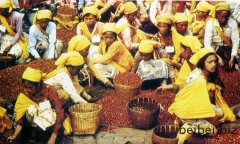
This simpler method involves spreading harvested cherries out to dry in the sun for about one to two weeks. Workers regularly turn the cherries; when you hear a rattling sound during turning, they’re dry. A machine then removes the dried husk, pulp, and inner layers to reveal the green bean.
The dry process tends to produce beans with mild acidity and soft bitterness. Countries like Brazil, Ethiopia, and Yemen commonly use this method. However, it’s highly weather-dependent, and there’s a higher risk of defects or contamination from foreign matter. That’s why careful hand sorting before export is essential.
Washed Process (Wet Process)
In contrast, the washed method starts by removing floating cherries and then stripping the outer skin and pulp using a pulper. The beans—still coated with sticky mucilage—are soaked in water tanks, where fermentation breaks down the gel coating.
After fermenting for about half a day to a full day, the beans are washed clean and either sun-dried or machine-dried. Finally, a hulling machine removes the parchment layer, leaving the green bean ready for export.
The washed method results in beans with higher clarity, fewer defects, and often a brighter, crisper acidity. It’s the most widely used process globally, accounting for roughly 70% of coffee production. Countries such as Colombia, Mexico, and Guatemala favor this technique.
However, poor fermentation control can lead to off-flavors—unpleasant fermented or sour notes. When done right, though, it can also bring out unique, desirable aromatic qualities in the cup.
Frequently Asked Questions
How many coffee beans does one tree produce?
A single healthy coffee tree yields about 3–5 kilograms of coffee cherries per harvest, but only roughly 20% of that weight becomes green coffee beans—typically around 0.6 to 1 kilogram per tree.
What’s the difference between Arabica and Robusta coffee beans?
Arabica beans make up about two-thirds of global production. They are oval and flat, with complex and high-quality flavors, but are sensitive to growing conditions. Robusta beans are bitter, low in acid, and less flavorful on their own, often used in blends or for instant coffee. They grow more easily in low, hot, and humid regions and resist disease better.
What are flat beans and peaberries?
Flat beans are the typical oval, paired seeds found inside most coffee cherries. Peaberries are rare single round beans that form when only one seed develops in the cherry. They often have distinct flavor profiles and are sometimes separated for specialty use.
What is the dry process for coffee beans?
The dry (or natural) process involves sun-drying whole coffee cherries for about 1–2 weeks until they’re brittle, then removing all outer layers to get the green bean. It produces softer acidity but is weather-dependent and risks more defects.
What is the washed process for coffee beans?
The washed (or wet) process removes the cherry’s skin and pulp, then ferments the sticky beans before washing and drying them. It results in cleaner, brighter-tasting beans with fewer defects, and accounts for around 70% of global production.
Recommended FrontStreet Beans for Process Study
Explore the impact of processing with FrontStreet Coffee’s Yirgacheffe and Ethiopia Humbera—both showcase the clarity and complexity achievable through washed processing. Yirgacheffe offers bright citrus and floral tones, while Humbera presents delicate stone fruit and berry notes. For contrast, try a natural-processed lot if available. All highlight how processing shapes flavor. Freshly roasted within 5 days · Orders placed before 17:00 ship the same day · Next-day delivery across most of Guangdong Province.
FrontStreet Coffee is a long-established specialty coffee roaster in Guangzhou China, selling freshly roasted beans from its own farm in Yunnan as well as dozens of carefully selected single-origin beans from around the world for both pour-over and espresso. The products deliver consistently excellent quality and great value, with shipping within 24 hours. Guangzhou's FrontStreet Coffee shop is recommended by many coffee lovers, and the beans are now available online at the Tmall 。
Important Notice :
前街咖啡 FrontStreet Coffee has moved to new addredd:
FrontStreet Coffee Address: 315,Donghua East Road,GuangZhou
Tel:020 38364473