
"semi-washed"
2558 article(s) found

Types and characteristics of coffee beans the color of coffee washed by semi-washed coffee
It is a kind of pure coffee with unique characteristics. Columbia Coffee (COLOMBIA) Columbia coffee is the most characteristic of SUPREMO, its coffee is soft and mellow, with slight acid to medium acid, its quality and flavor are stable, it is a medium coffee, it is used to prepare the top grade of comprehensive coffee. MANDELING coffee is the most representative coffee produced in Indonesia and Sumatra.

What is the Indonesian wet planing method? What is peeling and tanning? What is honey treatment?
Professional coffee knowledge exchange more information about coffee beans Please follow the coffee workshop (Wechat official account cafe_style) Coffee treatment, which refers to the process by which coffee fruit turns into raw coffee beans (seeds). Generally speaking, there are three kinds of treatment, which are: sun washing, which is between sun washing and water washing, including semi-washing (wet planing) and peeling in Brazil.

Which is the best to drink, horse noodle manning or sun manning?
Professional baristas please pay attention to the coffee workshop (Wechat official account cafe_style) Gayo Mountain Coffee has a unique taste and high quality. Coffee beans have a strong, unique herbal flavor, a slight honey flavor, moderate and well-balanced acidity. Gayo Mountain Coffee is in line with Blue Mountain Coffee as the world's two most famous coffee! The coffee named Gayo comes from the local Gayo tribe.

Different treatments of coffee beans introduce the differences in the description of flavor and taste of water washing and sun honey treatment
Dry process/Natural method is the oldest and most primitive treatment of coffee beans. Arabs used this method to deal with coffee more than a thousand years ago. The harvested coffee cherries are directly exposed to the sun on the terrace and receive direct sunlight exposure (about 27-30 days). The moisture content is changed from 60% to only 12%. This treatment, the concept.

Processing Technology of Brazilian Coffee Raw beans Coffee Tree Fine Coffee
The Brazilian coffee industry follows the principle of picking first and screening later, but in other Latin American countries, people only pick fully ripe fruit, and if it is not mature enough, growers will leave the fruit on the tree. Why is there such a big difference between the two methods? The reason lies in the picking and treatment of raw beans. First of all, except for Brazil, the scale is larger.

An introduction to the basic concept of raw beans
Douxiao doesn't look good. Grading: the seeds are taken out and then screened and graded. Guatemala, Costa Rica and other countries are rated according to the planting height, more than 4500 feet above sea level is the highest "extremely hard bean" (SHB). Colombia, Kenya and New Guinea are graded by particle size, with larger and higher grades (with the exception of Kenyan beans). In addition, there are some producing countries in accordance with the defects.

Evolution of processing methods of coffee beans in Brazil
Following Cafe Review (Wechat official account vdailycom) found that Beautiful Cafe opened a small shop of its own. First of all, the earliest and most primitive one was tanning. Coffee originated in the Cafa forest in Ethiopia. At first, people who collected coffee did not pick the fresh coffee fruit directly from the tree, but let the sun finish the ripe coffee fruit on the branches.

Introduction to the processing method of sun washing and semi-washing of coffee beans
Introduction of coffee treatment 1. The process of natural solarization (Natural/Dried-in-the-Fruit) is the simplest. The fruit begins the process of sun drying without treatment after picking. This is the oldest method of treatment in existence. This method is still used in places such as Ethiopia and Brazil. Natural solarization is most common in areas where water resources are scarce.

Introduction to the basic knowledge of raw beans in boutique coffee
Douxiao doesn't look good. Grading: the seeds are taken out and then screened and graded. Guatemala, Costa Rica and other countries are rated according to the planting height, more than 4500 feet above sea level is the highest "extremely hard bean" (SHB). Colombia, Kenya and New Guinea are graded by particle size, with larger and higher grades (with the exception of Kenyan beans). In addition, there are some producing countries in accordance with the defects.
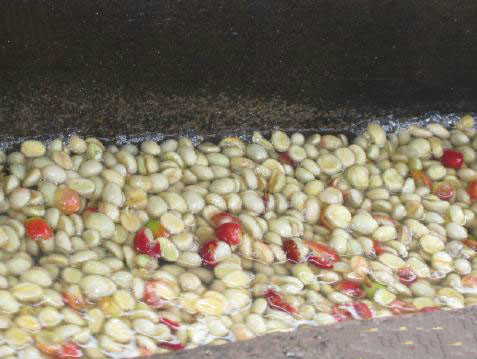
In addition to the sun, there is also a kind of coffee treatment called water washing, coffee culture and knowledge, semi-washing treatment.
What is the meaning of water washing treatment of coffee treatment the coffee beans after harvesting must enter the treatment procedure immediately, otherwise they will begin to ferment and produce a peculiar smell. There are two methods of treatment: solarization and water washing, which will cause different flavors. Sun-dried beans have a complete natural mellow taste.

The difference between half-sun and half-washed coffee beans is the difference between half-sun and water-washed flavor and taste
Professional coffee knowledge exchange more information about coffee beans Please follow the coffee workshop (Wechat official account cafe_style) what's the difference between half-sun and half-washed coffee beans? What's the difference in flavor and taste between half-sun and water washing? Coffee beans are mainly treated in the sun and washing, as well as half-sun (or honey treatment) and semi-washing, both of which are more common.

Introduction to the basic concept of raw beans small beans are not good.
Douxiao doesn't look good. Grading: the seeds are taken out and then screened and graded. Guatemala, Costa Rica and other countries are rated according to the planting height, more than 4500 feet above sea level is the highest "extremely hard bean" (SHB). Colombia, Kenya and New Guinea are graded by particle size, with larger and higher grades (with the exception of Kenyan beans). In addition, there are some producing countries in accordance with the defects.

What is the defective aroma of coffee? how to describe the aroma of coffee?
Different places of production, even different estates, the varieties of coffee will be different, so the cultivated varieties of coffee are also very diverse, of course, the taste and aroma of coffee are also varied. There are thousands of coffee species all over the world, and the more common species are as follows: Typica: bourbon species with superior aroma and mild sour taste (Bourbon)

Introduction of Starbucks Sumatra Coffee Bean semi-washed Flavor Price Manor
Washing is the most technical way to pick up beans, and the quality of coffee is ensured through multiple sieving procedures. First move the red fruit and half-green and half-red fruit that have sunk into the sink into a large or medium-sized pulp screening machine (PulpingMachines). It is so cleverly designed that the mechanical force presses the fruit against one side of the sieve hole, which is exactly the size of the pod (coffee wrapped in sheepskin).

Coffee honey treatment video _ coffee bean honey treatment suitable for brewing coffee _ honey treatment coffee price
Professional coffee knowledge exchange more information about coffee beans Please follow the coffee workshop (Wechat official account cafe_style) Coffee treatment, which refers to the process by which coffee fruit turns into raw coffee beans (seeds). Generally speaking, there are three kinds of treatment, which are: sun washing, which is between sun washing and water washing, including semi-washing (wet planing) and peeling in Brazil.

What are the treatments for Indonesian coffee beans? coffee beans from Indonesia have West Java in addition to Mantenin.
Professional coffee knowledge exchange more information about coffee beans Please follow the coffee workshop (Wechat official account cafe_style) Coffee treatment, which refers to the process by which coffee fruit turns into raw coffee beans (seeds). Generally speaking, there are three kinds of treatment, which are: sun washing, which is between sun washing and water washing, including semi-washing (wet planing) and peeling in Brazil.

Is Sumatra Lindong manning necessarily worse than gold manning?
For the exchange of professional baristas, please follow the coffee workshop (Wechat official account cafe_style) country: Indonesia level: G13 hand-selected production area: Sumatra Lindong treatment: traditional wet planing altitude: 1100mm 1600m Flavor: baked toast, nuts, pine, caramel, herbal Asian coffee the most famous origin of Asian coffee is the island of Malaysia: Sumanda

What are the processing methods of fine coffee common sense coffee raw beans?
After picking, coffee fruits need to go through a series of processes before they can become what we call coffee raw beans. This series of processes are often referred to as the handling of raw coffee beans or the rough processing of raw coffee beans in the industry. Before we talk about the classification of specific treatment methods, let's take a look at the structure of coffee fruits and raw coffee beans. Coffee fruit from outside to inside is: pericarp (exocarp)
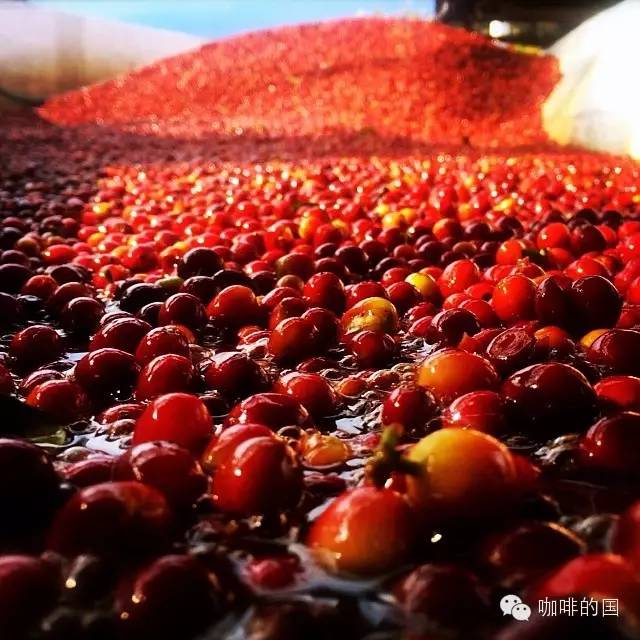
What is the semi-washing of coffee beans & the dry part of half-sun coffee beans full-sun wet washing
Sun drying: the sun drying method is also called natural drying because it uses natural sunlight to dry the fruits and raw beans of coffee. Due to the use of artificial and natural treatment methods in the process, the sun-cured beans look irregular and unflattering in appearance. Washing coffee bean treatment method Coffee beans harvested must immediately enter the treatment program, otherwise they will begin to ferment and make coffee
Nicaraguan Coffee Variety Maracadura Information Price introduction _ Nicaraguan Coffee good?
Professional coffee knowledge exchange more coffee bean information please follow Coffee Workshop (Wechat official account cafe_style) Nicaraguan Coffee Bean-Picuna Farm La Picona Malakadura Experimental batch Pickona Farm (Finca La Picona) located in Dipilto, the northernmost part of Nicaragua, with an area of less than 5 hectares and an elevation of 1300