
"slowdown"
63 article(s) found

Starbucks' global net sales rose 11.9% year-on-year to $5.37 billion
According to Starbucks, one in six American adults received Starbucks gift vouchers during the Christmas holiday this year, up from 1x7 a year ago and 1max 8 two years ago. The number of Starbucks members grew by 23% in 2015, and the number of active members in the United States exceeded 11 million. Analysts believe that the growth of passenger traffic during the boxing period, convenient APP payments, and Flat W.

Can interesting but expensive nitrogen cold extract coffee help Starbucks recover declining sales growth?
Starbucks plans to operate in 26 cities around the world.

Starbucks stores in China are on the rise to surpass those of Japan
A number of executives, including the company's CEO, Howard Schultz (Howard Schultz), were interviewed by the Nippon Economic News (Chinese version: Nikkei Chinese website) a few days ago. Referring to the Chinese market, Schultz pointed out that the middle class is growing and the demand for goods and services with strong brand appeal is increasing. Among emerging market countries, Starbucks is especially in China.

What's the difference between American hand flushing and Japanese hand flushing?
There is a difference between American style and Japanese style. Although both American and Japanese styles may make the same filter cup, there are some differences in roasting, grinding, filter paper, water temperature and manipulation of coffee beans. The biggest difference is that American hand brewing requires stirring coffee powder with a stirring stick at the same time, which is similar to the way we do siphon pots, while Japanese, Korean, Taiwan and domestic hand coffee only draws circles with water and never uses it.

Common sense of coffee making the difference between American hand brewing and Japanese hand brewing
There is a difference between American style and Japanese style. Although both American and Japanese styles may make the same filter cup, there are some differences in roasting, grinding, filter paper, water temperature and manipulation of coffee beans. The biggest difference is that American hand brewing requires stirring coffee powder with a stirring stick at the same time, which is similar to the way we do siphon pots, while Japanese, Korean, Taiwan and domestic hand coffee only draws circles with water and never uses it.

Giants such as Starbucks and Pacific Coffee will open 250 stores in Costa in three years.
As an imported product, coffee is not only a kind of drink in China, but also a symbol of a new way of life. Cafes are springing up in big cities such as Beijing and Shanghai. Despite the global economic downturn, international coffee giants have increased their investment in China while cutting stores in their home market. Recently, Aix, Starbucks, Costa and other international well-known coffee companies
Starbucks, Aix, COSTA and other coffee chains speed up the opening of stores against the trend.
This year, my friends often ask me why I want to speed up the opening of stores in times of economic weakness. Do you want to stop? Li Xianglu, director of Axe Coffee China, told reporters that the company has accelerated its expansion this year, with only four stores in Shenzhen at the end of 2011, while six new stores have been opened in Shenzhen so far this year, striving to open three or four new stores in the fourth quarter. Axe coffee.

Hand brewing coffee-the difference between American hand brewing and Japanese hand brewing
[introduction] the typical American flavor is mainly medium baking and deep baking, full-bodied + mild bitter + sweet. It has both bitter and sweet personality. During the grinding, the water temperature is between 80 and 85 degrees, and the water flushing speed is medium speed. Deep baking is fine grinding, the water temperature is between 85 and 90 degrees, the fine water is slow, and the bitter taste is heavy. Americans often have the difference between American style and Japanese style. Although the American style

Nestl é, which sells coffee, does medical treatment across the border.-it has accepted a company with dysphagia.
Nestl é, which is slowing down, is getting supplies from acquired medical companies and exploring new sources of growth. However, no matter how strong the development momentum of the nutrition business is, it has always been a sideline outside Nestle's food business, which does not represent its entry into the medical industry. The real hammer that really marks Nestl é's foray into medical health comes from actions in the field of skin health and medical beauty. In 2014, Nestle

Guide to the best and correct picking method for tea picking what are the picking criteria for tea
For those who have brewed the original leaf tea, it is not difficult to find that the shape of the tea after brewing is a piece of leaves, but have you carefully observed the size and structure of the leaves and other factors? It is important to know that the manufacturing process of black tea requires a lot of machines, of which only Yuqing is a step that still depends on manual operation. The parts picked during the green period are the new buds of tea and the 2 or 3 new buds below, and
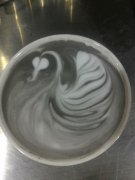
Coffee shops are full of capital pouring into the money-throwing circle. The economies of scale have not yet been highlighted.
The economy is slowing down. Have a cup of coffee. When we are looking to expand the industry against the market in a period of economic weakness, the coffee chain is clearly an alternative landscape originating from a foreign land. This new face emerging in Shenzhen Huaqiang North and other business circles is not only a contest between imports and national style, but also the intersection of efficient work and slow-paced life. Freshly ground coffee not only seduces the taste buds of more and more Chinese people, but also sucks.

The recollection of Nestle Coffee pouring Milk incident the latest news of Nestle coffee brand
I believe many people are all too familiar with Nestle Coffee, and the incident of pouring milk from Nestle milk powder a few years ago also caused a sensation. The delicious Nestle coffee seems to be feeling extremely bitter. At the beginning of the new year, Nestl é began a vigorous campaign to pour coffee, picking up dairy farmers to pour milk. Nestl é confirmed to the media that the Dongguan Nestle Coffee Factory destroyed 400 tons of coffee and destroyed the product.

Nestle's bottled drinks sell well in China, but the growth of instant coffee slows down.
Nestl é, the world's largest food manufacturer, released its semi-annual report for 2015, which showed that its global sales in the first half of the year were 42.8 billion Swiss francs (280.34 billion yuan), an organic growth of 4.5% and a real internal growth of 1.7%. The operating profit is 15%. Nestl é CEO Paul Bokai (Paul Bulcke) said the first-half results were in line with expectations, even in a difficult environment

The Chinese began to prefer coffee and American media: attracted by the Western way of life
Core tip: industry insiders say that China's coffee consumption is growing at an annual rate of 15%, while the global average rate is 2%, so China is the fastest growing coffee market in the world.

Nestle has bought the world's most fashionable boutique coffee and is determined to enter the high-end market.
Professional baristas follow Coffee Workshop (Wechat official account cafe_style) Blue Bottle Coffee, the world's most popular boutique coffee brand, has sold most of its shares to Nestl é. Nestl é did not disclose the price of the deal in the announcement, but Bloomberg learned from people familiar with the matter that Nestl é gained 68% of Blue Bottle for $425 million.
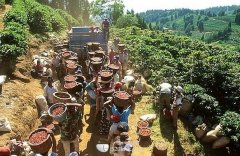
Huge Investment opportunities for Coffee in China
In China, "food comes first". Eating is not only for survival, but also the quintessence of the nation. Many foreigners are often surprised by the Chinese people's attention to diet and the time and energy they spend on buying or cooking. In fact, the consumption and pattern of meals in China also marks the current economic development, and even the investment opportunities in the future.
2014 serious divergence in return on commodity investment led by coffee
There was a serious divergence in investment returns on commodities in 2014, with coffee prices rising sharply over the year as a whole, while crude oil prices began to fall sharply in the second half of the year after hitting new highs in the first half of the year. As of December 24, the price of crude oil has fallen by more than 40% compared with the price at the beginning of the year. Across the commodity market, crude oil led the decline, while cotton, fuel oil and iron
From coffee leader to dumper: how far is nestle from crisis?
In the 1980s, Nestle, taste very good this classic advertising language, spread all over the streets, for a time this foreign brand and the distance between the Chinese people was shortened, and this western tea ceremony also gradually popularized in China, the Chinese coffee journey started here. Time has changed, however, and the coffee leaders of yesteryear have become coffee dumpers. Today's instant coffee
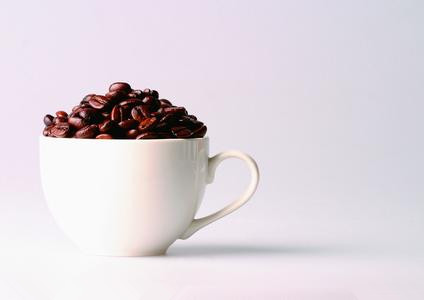
Exploding the three factions of Chinese cafes
At present, China's per capita coffee consumption is 5 cups per year, which is far lower than that of Japan and South Korea, with an average of about 300 cups per person per year. However, coffee consumption in China continues to grow at an annual rate of 15% to 20%, making it the world's most potential coffee consumer. In the current Chinese market, there are three forces active in China, Europe and the United States, and they are using