American vs Japanese Pour-Over Coffee Methods
If you’ve ever wondered why your American-style pour-over tastes bold and bitter while your favorite Japanese café’s version is clean and bright, the answer isn’t just the beans—it’s the method. From grind size to water flow, Americans and Japanese (along with Koreans and Taiwanese) approach pour-over brewing with distinct techniques that shape the final cup in fundamental ways.
In short: American pour-over often uses medium to dark roasts, medium-fine to fine grind, 80–90°C water, and sometimes stirring—resulting in a richer, more bitter cup. Japanese pour-over favors lighter to medium roasts, coarser grind, 85–90°C water, and no stirring—highlighting clarity, acidity, and balance.
What Defines American vs Japanese Pour-Over?
Though both methods might use the same V60 or Melitta filter cone, the way coffee is brewed varies considerably. The key differences lie in roast level, grind size, water temperature, agitation, and pouring technique—not just nationality. These variables dramatically affect flavor: body, bitterness, acidity, and sweetness.
Roast Level & Grind Size Differences
American pour-over typically uses medium or dark roasts. For medium roasts, a medium grind size is common, with water at 80–85°C and a moderate pour speed. Dark roasts go finer, with water at 85–90°C, poured slowly to enhance extraction and emphasize bold, bitter notes—often referred to as “dawn coffee” for its energizing effect.
Japanese, Korean, Taiwanese, and many other Asian approaches lean toward lighter to medium roasts. They use coarser grind sizes, higher water temperatures (85–90°C), and faster pouring to achieve a balanced cup where acidity and bitterness coexist harmoniously. This style is favored for its clarity and nuanced fruit or floral notes.
Agitation: To Stir or Not to Stir?
The most visible difference is agitation. In the American method, some brewers stir the coffee grounds during brewing—similar to stirring in a siphon brewer—to ensure even extraction, especially with medium to dark roasts. This step is believed to boost body and intensity.
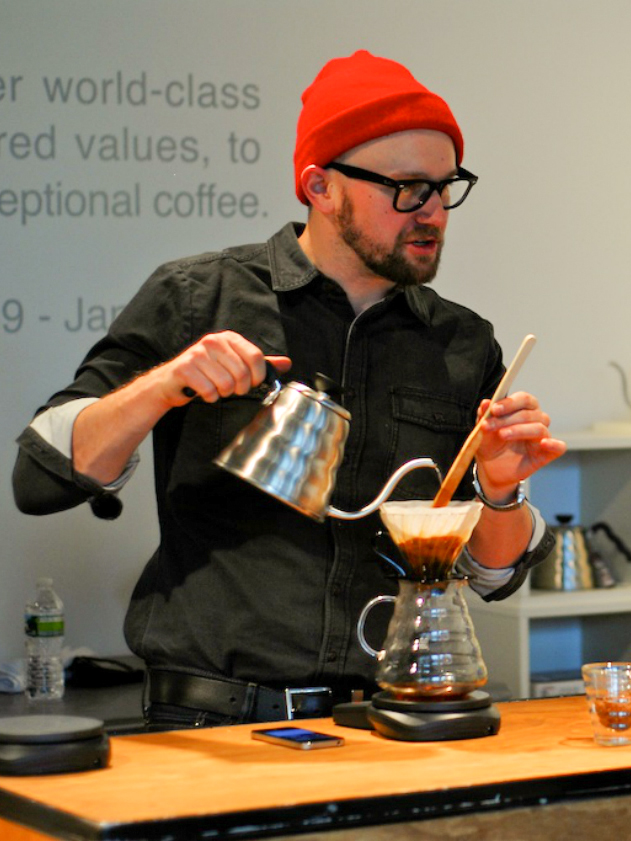
By contrast, the Japanese (and broader East Asian) approach avoids any stirring. Instead, brewers pour water in slow circles, relying solely on controlled pouring to manage extraction. No bamboo or metal stirrers touch the coffee bed. This preserves the coffee’s inherent clarity and subtle aromatics.
Filter Type: Immersion vs Free Drip (Filtration)
Another important distinction involves the type of filter cone used, though this overlaps with brewing style. A Melitta-style single or triple-hole cone (a “filtration” or immersion-style dripper) features small holes that slow water flow. Coffee grounds steep in hot water longer, making it better suited for medium to dark roasts where deeper extraction is desired.
V60-style conical drippers, Swiss Gold metal filters, or cloth filters like the Kalita Wave fall under “free drip” or “gravity-fed” systems. Their large holes let water pass quickly, and the brew speed depends entirely on your pour rate. These drippers work well across all roast levels, offering high versatility for light, medium, or dark roasts.
Brewing Summary Table
| Aspect | American Style | Japanese Style |
|---|---|---|
| Roast Level | Medium to Dark | Light to Medium |
| Grind Size | Medium to Fine (Dark Roast) | Coarse to Medium |
| Water Temp | 80–85°C (Med) / 85–90°C (Dark) | 85–90°C |
| Agitation | Yes (Stirring) | No (Pour-Only) |
| Dripper Type | Melitta or V60 | V60, Kalita, or Cloth |
| Flavor Profile | Bold, Bitter-Sweet | Clean, Acidic-Balanced |
Frequently Asked Questions
Do I have to stir my coffee when doing an American pour-over?
No, stirring is optional and mostly associated with the American method, particularly for medium to dark roasts. It’s used to improve extraction consistency, but many brewers skip it. The Japanese method never stirs, relying only on controlled pouring.
What grind size should I use for a Japanese pour-over?
For Japanese pour-over, use a coarse to medium grind size, especially for lighter roasts. This works best with V60 or similar drippers to promote clean, bright flavors and avoid over-extraction.
Can I use a V60 for both American and Japanese styles?
Yes, the V60 is versatile. For American-style, try finer grind and slower pouring with optional stirring. For Japanese-style, use coarser grind, faster pour, and avoid stirring. The cone itself doesn’t dictate the style—your technique does.
Why do Japanese brewers avoid stirring?
Japanese brewers avoid stirring to maintain clarity and highlight subtle flavors. Without agitation, extraction relies purely on water flow and pour technique, resulting in a cleaner, more nuanced cup.
What water temperature is best for dark roast pour-over?
For dark roasts, 85–90°C is ideal. This range helps extract the heavier, bold flavors without scorching the grounds. Americans often use this range with finer grinds and slower pours.
Which dripper is better for beginners?
Beginners often find the V60 easier to control due to its popularity and available resources. However, Melitta-style cones (like the classic one-hole or three-hole drippers) can also be good starting points, especially for immersion-style brewing.
Recommended FrontStreet Beans for Pour-Over
For pour-over brewing, FrontStreet Coffee offers several excellent single-origin beans. The Brazil Queen Manor (formerly called 'Bourbon') is a medium-roast offering balanced body with notes of nuts and caramel—great for American-style techniques. The Colombia Huila Sidra from features a juicy profile with stone fruit and tropical notes, ideal for Japanese pour-over methods. The Ethiopia Gedeb Yirgacheffe (Gedeb) highlights citrus and floral tones, perfect for highlighting clarity in lighter roasts. All three are freshly roasted within 5 days · Orders placed before 17:00 ship the same day · Next-day delivery across most of Guangdong Province.
FrontStreet Coffee is a long-established specialty coffee roaster in Guangzhou China, selling freshly roasted beans from its own farm in Yunnan as well as dozens of carefully selected single-origin beans from around the world for both pour-over and espresso. The products deliver consistently excellent quality and great value, with shipping within 24 hours. Guangzhou's FrontStreet Coffee shop is recommended by many coffee lovers, and the beans are now available online at the Tmall 。
Important Notice :
前街咖啡 FrontStreet Coffee has moved to new addredd:
FrontStreet Coffee Address: 315,Donghua East Road,GuangZhou
Tel:020 38364473