
"slowdown"
63 article(s) found

Starbucks believes that coffee will cost more in 2014 but will not raise prices.
Starbucks, the world's largest coffee chain, expects rising coffee prices to make more money than it previously thought, but stressed it would not raise prices to pay extra fees. The news sent its shares down nearly 3%, even though the company reported profits and u.s. sales that significantly exceeded wall street's targets. Ingredients, from coffee and milk to beef and bread prices rise

Japanese Media: increasingly fierce Competition among Chinese chain Coffee shops Competition of Starbucks VS Local Coffee Enterprises
Competition for Coffee in China the competition among Chinese coffee shops is becoming increasingly fierce. Starbucks Coffee of the United States, the world's largest coffee shop chain, has proposed to open 3400 stores in China by 2019, which will become the country with the largest number of Starbucks overseas stores. At the same time, local Chinese companies such as Pacific Coffee are catching up by developing localized menus such as oolong tea lattes. Due to

Is it a trend to "fail to do one's proper job"? Luxury brands have gone to sell coffee?
Professional coffee knowledge exchange more coffee bean information please follow the coffee workshop (Wechat official account cafe_style) Ralph Lauren also push the coffee cart? Right! You read it right! In addition to selling clothing accessories, luxury brands have also set up sideline businesses to sell another piece of space in the recession. At the beginning of this year, the compound space Gucci Garden opened in Milan, except shops and art galleries.

Byte beat registers "byte tea" and "ByteTea" tea trademarks, and Douyin is going to start selling milk tea?
Douyin, I believe everyone has played it! This is a simple video sharing application that encourages expression, communication, recording and creation. Here, users can create and share videos on any topic, and many people use it to share life and interesting things. Douyin was founded in September 2016 because the users of the software are quite active.

Master Kang wants to work with Starbucks to make ready-to-drink coffee?
In a circular, the two sides announced today that they have signed a formal cooperation agreement to produce Chinese mainland ready-to-drink drinks and expand distribution channels in the local market. The circular described that the cooperation agreement will rely on the advantages of both sides, bring all Starbucks ready-to-drink product lines into the Chinese market, and strengthen the innovative ability of localization to meet the needs of Chinese customers. China needs instant coffee very much.

Serious divergence in commodity investment returns Coffee led the rise and crude oil led the decline
There was a serious divergence in investment returns on commodities in 2014, with coffee prices rising sharply over the year as a whole, while crude oil prices began to fall sharply in the second half of the year after hitting new highs in the first half of the year. As of December 24, the price of crude oil has fallen by more than 40% compared with the price at the beginning of the year. Across the commodity market, crude oil led the decline, while cotton, fuel oil and iron
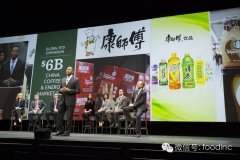
Master Kang joined hands with Starbucks to enter the ready-to-drink coffee market.
Multinationals tend to look for a local partner on Chinese mainland because it is the easiest way to target consumers in China's huge market, Reuters reported today. The report also quoted analysts as saying that the cooperation between the two sides will reduce the cost of Starbucks ready-to-drink coffee and allow Starbucks products to appear in some small Chinese cities.

The Chinese coffee market has entered a white-hot stage due to the dispute between the three major factions of Chinese cafes
At present, China's per capita coffee consumption is 5 cups per year, which is far lower than that of Japan and South Korea, with an average of about 300 cups per person per year. However, coffee consumption in China continues to grow at an annual rate of 15% to 20%, making it the world's most potential coffee consumer. In the current Chinese market, carving time into the Internet, Starbucks vigorously do direct sales,

Japanese media: Chinese young people are fastidious about extravagance and like to go to fashionable cafes to pursue high-priced beauty
For these petty bourgeoisie, going to a fashionable coffee shop has become a typical behavior to show their light extravagance. Japanese media reported on December 13 that competition among Chinese coffee shop chains is becoming increasingly fierce. Starbucks Coffee of the United States, the world's largest coffee shop chain, has proposed to open 3400 stores in China by 2019, which will become the country with the largest number of Starbucks overseas stores. Japanese book

Introduction of two common methods of Japanese hand punching and detailed analysis of the main points different from American hand flushing
Personal recommendation: coffee for 2 people, water ratio 1:15 basic rule: when the water temperature exceeds 90 degrees Celsius, the coffee is mixed or sweet or bitter too much, the best time to complete a hand brew within 3 to 5 minutes. The brewing time is less than 4 minutes, which is suitable for fine grinding. The brewing time is more than 6 minutes, which is suitable for thicker grinding method. First, the most gorgeous method of penetration, the difficulty

You certainly don't know about the eight advantages and disadvantages of coffee.
Professional baristas Please follow the Coffee Workshop (official Wechat account cafe_style) in the long history of mankind, coffee has indeed been used as a medicine, but there is no saying that coffee can prevent diseases. Most people in the coffee industry promote words such as the origin of beans, roasting, bean selection, and the aroma and taste of coffee, but seldom mention information about the health benefits of coffee. Give an example

Starbucks 'dilemma: market growth slows, competition intensifies
Starbucks is a brand dedicated to connecting people, the Starbucks experience, not just a cup of coffee.

Starbucks Coffee Education in Hong Kong allows more coffee lovers to know the real coffee
Starbucks has been in Hong Kong for 15 years, bringing about a change in Hong Kong's coffee culture. In the past, a specialty store was opened at Ka Lok Square in Mong Kok, which not only used Reserve coffee as an attraction, but also set up Coffee Experience Bar. Zeng Guangjian (Norbert Tan), executive director of Starbucks in Hong Kong and Macau, said frankly that he hoped to make guests understand and love coffee better, so as to build a bigger market indirectly.
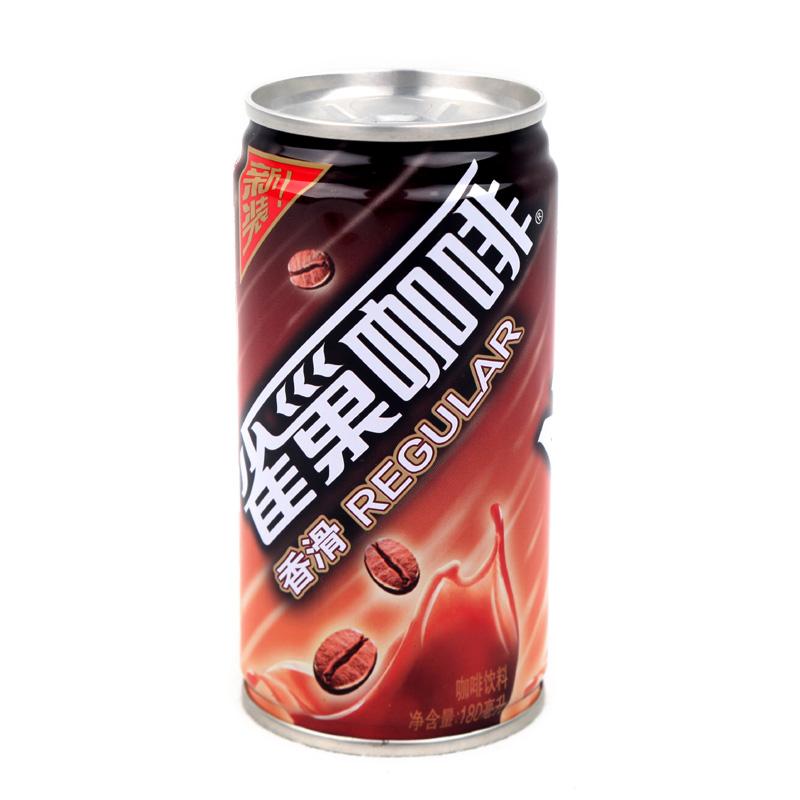
Last year's poor performance, why did Nestl é pour out the coffee?
In the 1980s, Maxwell and Nestle, two major instant coffee brands, were almost the forerunners of Chinese mainland coffee enlightenment education. But the coffee market is no longer just owned by Nestl é and Maxwell. Under pressure from many coffee products to carve up the market, Nestl é destroyed nearly 400 tons of unexpired instant coffee in February. The production capacity is ahead of the consumption capacity, and Nestle dissolves coffee.
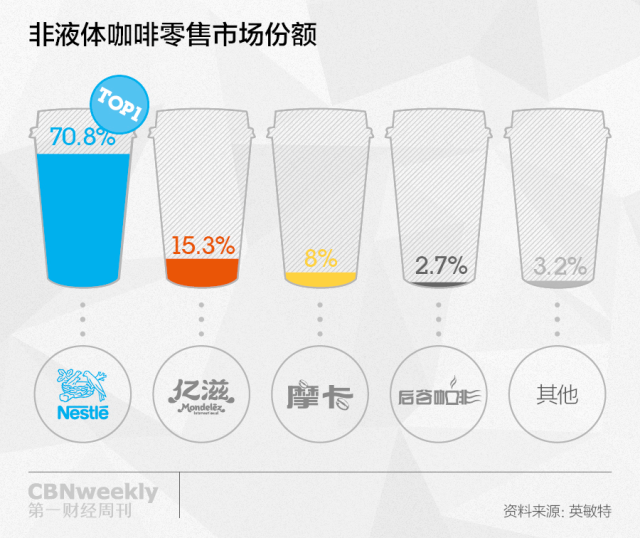
Instant Coffee Market Growth Slows, Nestle Lacks High Growth Potential
What about the world's largest food retailer, which is slowing down the instant coffee market, lacks brands with high growth potential and struggles to integrate with local companies? Nestle, the world's largest food company, has tasted the bitter taste of coffee in the Chinese market. Five years later, Nestle replaced the full package of instant coffee. The classic coffee color was replaced with a bright red, and the salesman did so

The upgrading of consumption forces the upgrading of products and the transformation of instant coffee into high-end coffee is imperative.
Professional coffee knowledge exchange more coffee bean information please follow the coffee workshop (Wechat official account cafe_style) Information Times reporter Liu Fang as a product that has accompanied a generation of growth, the popularity of instant coffee has begun to decline. Recently, relevant data reports show that in China, the number of people who drink instant coffee is gradually decreasing, and the growth rate of its market is slowing down. Experts say that with the consumption market

With a start-up capital of 1 billion yuan, it will open a total of 500 stores by May-is Luckin Coffee too bold?
Professional coffee knowledge exchange more coffee bean information please follow coffee workshop (Wechat official account cafe_style) Luckin Coffee _ Luckin Coffee recruit _ luckin coffee_ Luckin Coffee to join with 1 billion yuan start-up capital, to May opened a total of 500 stores to face the media, luckin coffee (Luckin Coffee) founder and CEO Qian Zhiya threw out a bold store expansion plan
From a poor family, the king of Vietnamese coffee, Asian coffee, Vietnamese coffee.
At 07:50 on a warm morning in Hanoi, the philosophical king of Vietnam's powerful coffee industry was enjoying the first cigar of the day, with only the last two inches left. General Manager Deng Li Yuanyu (Dang Le Nguyen Vu) dresses casually and wears a Panama hat. It is said that he prefers Cuban Cohiba cigars, but this is Davidoff, Germany.

What does it mean for Unification that Starbucks wants to take back control?
Follow Kaipai (Wechat official account vdailycom) found that Beautiful Cafe opened a small shop of its own on July 27, that is, last night, Starbucks announced that it had formally reached its largest acquisition agreement to date with its long-time joint venture partners Uni-President Enterprise Co., Ltd. (unified Enterprise) and Uni-President Superstore Co., Ltd. (unified superstore), at a price of US $1.3 billion.

Starbucks Diaoguang Man Coffee: the tripod is dominated by or.
China's current per capita annual coffee consumption is 5 cups, which is far lower than the annual per capita level of about 300 cups in Japan and South Korea, and the world average is about 240 cups. However, China's coffee consumption continues to grow at an annual rate of 15% to 20%, and is becoming the most potential coffee consumer in the world. At present, there are local, European, American and Korean departments in the Chinese market.