
"sweeping"
936 article(s) found

Niu people use 3D ceramic printing technology to make a coffee cup every day.
Bennet Trini, a prolific Spanish designer, has completed his plan of "one coffee cup a day" with the help of 3D ceramic printing technology.

Harvesting and processing of coffee beans
Coffee trees wither after two or three days of flowering and begin to bear fruit after a few months. Coffee flowers are white, and jasmine flowers are very similar, the fruit is a drupe, straight about 1.5cm, at first green, then gradually yellow, ripe and red, and cherries are very similar, so it is called cherry coffee (Coffee Cherry), can be harvested at this time. Coffee fruit contains two seeds, also

How to control the water temperature of shallow-roasted coffee beans made by hand?
Hand coffee, a simple coffee brewing technique, to make good use of it is not a simple thing, the use of filter cup and filter paper or filter, to do filtering tools, very convenient to use. Generally speaking, a hand coffee maker uses the concept of a follicle to make coffee. There is a dazzling array of hand-made filter cups available in the public.

The wonderful effect of coffee the benefits of drinking coffee
Warming your hands with a cup of hot coffee can change your view of the world around you, US scientists have said, according to the BBC. Warming your hands can lead to a warmer and more generous view of the world, while cold hands often lead to a lack of trust and reluctance to give, researchers write in the journal Nature. In order to

American Coffee History From Cowboy Coffee to Fine Coffee
After the 19th century, coffee became an important import commodity in the United States, and hoarding was very common. At that time, although the consumption of coffee in the United States was large, it was not heavy in weight, as long as there was caffeine, and it was ridiculed as cowboy coffee. Western cowboy just need to light a fire in the field, boil the pot of water, add coffee powder, boil again, remove the coffee pot, wait for a few minutes, let the coffee grounds sink

Bid farewell to the first stage of coffee and explain coffee flower drawing in super detail.
Junior baristas, are they still worried about their bad ripple shape? Poke this video to learn the speed, distance and position of the three elements in super detail. Speed: the faster the milk is poured, the richer the texture; the slower the speed, the more liquid (milk). Uniform speed needs to be maintained throughout the flower drawing process to obtain uniform quantity, texture and liquid.
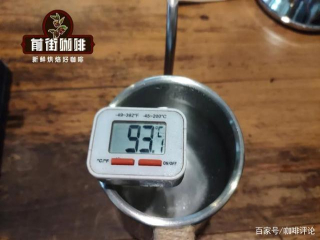
What is the best water temperature for hand-brewed coffee? what is the taste of coffee with high water temperature and low water temperature?
With the wave of boutique coffee sweeping, cafes around the world are brewing coffee under an extraction framework, which contains four basic elements, such as water temperature, powder-to-water ratio, grinding degree, time and so on. Water is a kind of substance with strong solubility. As the main component of coffee liquid, it plays a major role.
Global coffee producing area-Australia
Coffee trees began to be planted in Queens land, Australia (Australia) in 1896. Australia is an amazing country in many ways. The high-quality coffee grown here is perhaps one of the most amazing things. Coffee production in Australia: Coffee is now farmed from Nimbin and Lismore, in New South

The introduction of French coffee culture is not in the coffee shop, but on the way to the coffee shop.
Coffee plays an important role in the daily life of the French. Coffee is as important to the French as tea is to the Chinese. As we all know, coffee has become an important drink sweeping the world. The mellow aroma of coffee makes people infatuated and makes people have endless aftertaste in the realm of selflessness. The French said, "I'm not in the cafe. I'm on the way to the cafe."

Creative latte Little Yellow Man pull Coffee adorable in San Francisco
Some artists work in charcoal, others watercolor and some use... Foam? Some artists use charcoal pens, some watercolors, and some foam? Melannie Aquino works at the Elite Audio Coffee Bar in downtown San Francisco. Like many baristas, she began experimenting

Panama Coffee Estate Emerald Estate Flavor Introduction
The species Geisha was discovered in 1931 in Ethiopia's Guisha Forest and sent to the Coffee Institute in Kenya; introduced to Uganda and Tanzania in 1936, Costa Rica in 1953, Panama in the 1970s by Francesco de la Domba Seven Farm. Mr. Serrazin picked up seeds from CATIE in Costa Rica and started growing rosewood coffee.

Coffee classification: espresso and American coffee
Professional coffee knowledge exchange more coffee bean information please follow the coffee workshop (Wechat official account cafe_style) Espresso is Italian, mostly translated as espresso or Italian espresso or espresso, meaning to make coffee for you right away. In the current global coffee market, Italian coffee can be said to be the largest mainstream. Because of the Italian essence

Introduction of Arabica Coffee Manor in Indonesia Coffee Flavor Manor
In the 17th century, the Dutch first introduced Arabica saplings to Ceylon (present-day Sri Lanka) and Indonesia. In 1877, a large-scale disaster hit the Indonesian islands, coffee rust destroyed almost all the coffee trees, people had to give up Arabica, which had been in operation for many years, and introduced the disease-resistant Robusta coffee tree from Africa. And Sue

Boutique coffee common sense coffee warm hands can change people's point of view?
Warming your hands with a cup of hot coffee can change your view of the world around you, US scientists have said, according to the BBC. Warming your hands can lead to a warmer and more generous view of the world, while cold hands often lead to a lack of trust and reluctance to give, researchers write in the journal Nature. In order to

Starbucks' success is not just about coffee.
Since entering China in 1999, Starbucks has set off an upsurge of drinking coffee. Wherever the trend goes, Starbucks is strong, from Beijing, Tianjin, Shanghai, Chengdu, Guangzhou, Wuhan all the way to Zhengzhou. In the words of Shi Dongwei, vice president of public affairs at Starbucks Greater China, Starbucks successfully boosted the coffee market in China, where tea culture prevails.

How long does it take to produce coffee beans?
Remove the pulp from the outer layer of the coffee cherry and soak it in a large cement tank filled with water. After fermentation, the water-washed coffee will have a distinctive and clear flavor. The fermented coffee beans are washed with clean water, then removed from the water and dried in the sun or machine. Finally, remove the pulp peel and silver skin with a sheller, and you can enter.

The new Nestle Coffee comes on sale by surprise, slipping to a new height of surprise.
Professional baristas Please follow the Coffee Workshop (Wechat official account cafe_style) the Nestle coffee brand, which has a history of more than 75 years, is well known, and the core concept of It all starts with NESCAF, which starts from Nestle Coffee today, conveys a younger and more dynamic core concept. Today, the silky latte under Nestle Coffee is switching to a new bag.

Lindong, Sumatra, the origin of Indonesia's Mantenin Coffee.
Mantenin is a kind of distinctive feature produced by the special and complex treatment of the fresh Mantenin in that year and after more than 5 years of special preservation. Like Gold Manning, its annual output is limited, and the yield of aged beans is smaller because of the difficulty and complexity of processing and preservation. This Chen Man is clear with mint.

Panama Coffee Estate Emerald Estate Introduction Baru Volcano Coffee Region
The species Geisha was discovered in 1931 in Ethiopia's Guisha Forest and sent to the Coffee Institute in Kenya; introduced to Uganda and Tanzania in 1936, Costa Rica in 1953, Panama in the 1970s by Francesco de la Domba Seven Farm. Mr. Serrazin picked up seeds from CATIE in Costa Rica and started growing rosewood coffee.