
"uganda"
3062 article(s) found

Introduction of boutique coffee beans in Xibi Falls Manor, Uganda _ dry fermentation water washing Ugandan coffee flavor
Professional coffee knowledge exchange more coffee bean information please follow Coffee Workshop (Wechat official account cafe_style) Uganda Coffee-Shibi Falls washing Rainforest Certification Uganda Sipi Falls Organic RFA Washed Uganda Coffee Story from Kapchorwa District, Cheema Village, eastern Uganda. The area is very close to Mt. Elgon National Park

An introduction to the characteristics of fine coffee beans in the manor area
After the first World War, the long-standing dissatisfaction of the Ugandan people with colonial rule finally broke out. A national general strike and rural riots broke out in 1918. In 1919 Buganda launched a democratic movement under the leadership of the Bataka Party and the African Farmers' Union of Uganda. In 1921, Uganda's first national political party, the Ugandan National Congress Party, was established and proposed the implementation of universal suffrage.

Southern Uganda Coffee beans Robbs Special Coffee introduction to the Elgon Mountains and Bugisu (
Uganda's coffee production ranks first in Africa, accounting for more than 70% of its total exports. Uganda is also the hometown and main producing area of Robes specialty coffee. In the 1960s, Ugandan coffee production remained at 3.5 million bags a year. By the mid-1980s, coffee production had dropped to 2.5 million bags a year, mainly for political reasons. But now coffee production is on the rise again, which is large at present.
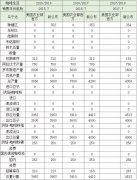
Annual report on Ugandan Coffee 2017
The report stresses that Nairobi forecasts a small increase in Ugandan coffee production in 2017 / 2018 as a result of the harvest of newly mature coffee from the plantation. Exports are expected to remain stable, leading to a small increase in clearing inventories. The Uganda Coffee Development Authority (UCDA) continues to implement a funding scheme from the Government of Uganda (GOU), which aims to increase improved varieties and expand acreage.

A brief introduction to the producing area of the taste of Uganda coffee beans by the method of grinding scale flavor description
A brief introduction to the taste of Ugandan coffee beans by grinding scale flavor description Uganda is the country of origin of Robusta coffee, but the commercial cultivation of Arabica species here did not begin until early 1900. Today, there are still a large number of wild robusta coffee trees in Uganda, which is rare in cities in the world. As a landlocked country, large coffee growers in Uganda are often picked.

What are the varieties of coffee beans in Uganda? taste and flavor description manor introduction
Dry aroma (1-5): 3.2 wet aroma (1-5): 3.4 acidity (brightness) (1-10): 8 taste (layering) (1-10): 8.5 taste (mellow thickness) (1-5): 4 aftertaste (residue) (1-10): 8.1 balance (1-5): 0 basic score (50): 50 total score (maximum 100):

Rich taste Starbucks Uganda coffee bean grinding scale variety production area treatment method
Rich taste Starbucks Uganda coffee bean grinding scale variety production regional treatment method Starbucks coffee NO.5 espresso Espresso Starbucks coffee NO.10 iced caramel macchiato Iced Caramel Macchiato this is Starbucks's original coffee, espresso, milk, vanilla syrup and ice cubes are natural, and it is covered with caramel sauce pattern macchiato

Introduction to the quality characteristics of the description method of taste and flavor of manor in coffee bean producing area of Uganda
Uganda is a landlocked country in eastern Africa, straddling the equator, bordering Kenya in the east, Tanzania and Rwanda in the south, Democratic Republic of the Congo in the west and Sudan in the north. Most of the territory is located in the Central African Plateau, with lakes, with an average elevation of 1000,000,000 meters above sea level. There are many lakes and plateaus in the mountains, which are known as the water villages of the plateau. Great rift in East Africa

Description of characteristic and Flavor of Ugandan aa Coffee Bean introduction of Grinding scale Variety treatment Manor
Uganda aa Coffee beans Flavor description Grinding scale Variety treatment Manor Uganda coffee cultivation is one of the pillar industries of its export, Uganda is the birthplace of Robsta in Africa, just as Ethiopia is the origin of Arabica coffee, Robster coffee was first discovered in Uganda. So far, Uganda has a history of growing coffee for more than 100 years. meanwhile

Characteristics of coffee in Uganda Coffee planting conditions in Uganda Coffee growing areas
For more information on coffee beans, please follow the coffee workshop (official Wechat account cafe_style) Coffee growing in Uganda is located in the eastern part of the country, straddling the border between Uganda and Kenya. Judging from its huge base, Mount Elgon was once considered to be the highest mountain in Africa. The aroma of coffee extends from the cliff and is covered with natural ditches and forests from the soil.
Robes, a coffee variety from the mountains of Elgon and Bugisu, Uganda
Uganda's coffee production ranks first in Africa, accounting for more than 70% of its total exports. Uganda is also the hometown and main producing area of Robes specialty coffee. In the 1960s, Ugandan coffee production remained at 3.5 million bags a year. By the mid-1980s, coffee production had dropped to 2.5 million bags a year, mainly for political reasons. But now coffee production is on the rise again, which is large at present.

Uganda Coffee Grinding characteristics Variety Flavor description Manor Brand
Uganda is a multi-ethnic country. According to the 1995 Constitution of Uganda, there are mainly 56 tribes in Uganda, such as Ganda, Niakoli, Gege, Sanger and so on. In 2005, after a parliamentary vote, nine new tribes were confirmed, bringing the total number of tribes to 65. Among them, the Ganda is the largest tribe, with a population of 5.53 million, accounting for 18% of the country's population, mainly distributed in Kampala.

Uganda Coffee Bean Taste Uganda Coffee Region
Ugandan coffee beans have a unique flavor and fragrance, which is very suitable for making Italian and other flavors of coffee. More importantly, Ugandan coffee beans are strictly screened according to international market standards to ensure their high quality and pollution-free characteristics. Africa is home to Arabica and Robusta, two major coffee varieties, while East Africa enjoys a plateau of water and the pearl of East Africa.

Uganda coffee beans taste Uganda coffee producing areas
Ugandan coffee beans have a unique flavor of delicate taste, which is very suitable for making Italian and other flavors of coffee. More importantly, Ugandan coffee beans are strictly screened according to the standards of the international market to ensure their high quality and pollution-free characteristics. Africa is the hometown of two major varieties of coffee, Arabica and Robusta, while the eastern Africa enjoys a plateau water hometown and a pearl of East Africa.

Uganda coffee beans taste Uganda coffee producing areas
Ugandan coffee beans have a unique flavor of delicate taste, which is very suitable for making Italian and other flavors of coffee. More importantly, Ugandan coffee beans are strictly screened according to the standards of the international market to ensure their high quality and pollution-free characteristics. Africa is the hometown of two major varieties of coffee, Arabica and Robusta, while the eastern Africa enjoys a plateau water hometown and a pearl of East Africa.

Uganda Coffee Bean Taste Uganda Coffee Region
Ugandan coffee beans have a unique flavor and fragrance, which is very suitable for making Italian and other flavors of coffee. More importantly, Ugandan coffee beans are strictly screened according to international market standards to ensure their high quality and pollution-free characteristics. Africa is home to Arabica and Robusta, two major coffee varieties, while East Africa enjoys a plateau of water and the pearl of East Africa.