
What Is Coffee Leaf Rust and Why It Matters
In 2013, coffee farmers across Central America faced an unprecedented threat: the worst outbreak of coffee leaf rust in decades. From Guatemala to Nicaragua, once-productive farms saw trees stripped of their leaves, flowers, and young cherries. This fungal disease doesn’t just damage coffee plants—it can kill them, and when it spreads fast, it wrecks entire harvests.
The 2013–14 coffee season saw production in Guatemala drop by 40% due to leaf rust. With Guatemala alone responsible for 14% of global green coffee production, the result was inevitable: higher prices and tighter supplies for coffee drinkers worldwide.
What Is Coffee Leaf Rust?
Coffee leaf rust—also called coffee rust—is the most devastating fungal disease affecting coffee plants. First identified in 1861 near Lake Victoria in East Africa, it quickly devastated Sri Lanka’s coffee industry by 1867 and spread across Southeast Asia and into Africa’s central, western, and southern regions.
The fungus wasn’t seen in the Western Hemisphere until 1970, when it appeared in Bahia, Brazil. Since then, coffee leaf rust has been reported in every major coffee-growing region on Earth.
How Coffee Leaf Rust Infects Coffee Plants
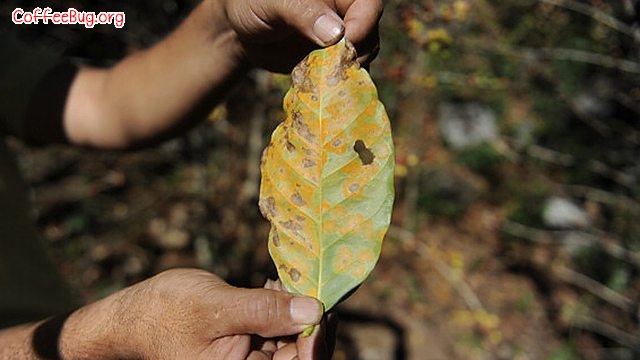
The disease infects the leaves, flowers, and young fruit of coffee trees. The orange-yellow spores develop on the undersides of leaves, weakening the plant’s ability to photosynthesize. Over time, infected trees lose their foliage, fail to flower properly, and produce fewer—and lower-quality—cherries. In severe cases, the tree dies.
The spores spread via wind and rain, moving easily from plant to plant. Once established, controlling an outbreak becomes extremely difficult, especially without a healthy surrounding ecosystem to slow the spread.
Why the 2013 Outbreak Was So Severe
Over the previous 20–25 years, many Central American coffee farmers had shifted away from traditional shaded growing methods toward full sun cultivation—or “full sun” farming. These high-density, unshaded farms produced more coffee in the short term but eliminated the protective tree canopy that supports biodiversity.
Without shade trees, farms lost ecological balance. Natural pest predators declined, and so did beneficial microbes like the white halo fungus, which helps suppress coffee leaf rust and insect populations. To compensate, farmers relied more heavily on chemical pesticides and fungicides. Ironically, these chemicals further damaged the farm ecosystem and allowed rust outbreaks to flourish.
The lack of biodiversity, combined with monoculture farming and reduced natural resistance, created the perfect conditions for a massive leaf rust epidemic.
What We Still Don’t Know
One critical question remains unanswered: was the 2013–14 coffee rust outbreak a one-time disaster, or the start of a new normal? Experts are still studying whether climate shifts, farming practices, or both have permanently raised the risk of large-scale rust events in Central America and beyond.
Frequently Asked Questions
What causes coffee leaf rust?
Coffee leaf rust is caused by the fungus Hemileia vastatrix, which infects the leaves, flowers, and young cherries of coffee plants. The fungus produces orange-yellow spores that spread through wind and rain, infecting the undersides of coffee leaves and eventually killing the tree if left unchecked.
When was coffee leaf rust first discovered?
Coffee leaf rust was first found in 1861 near Lake Victoria in East Africa. It later destroyed Sri Lanka’s coffee industry by 1867 and spread to Southeast Asia and Africa before reaching the Americas in 1970.
Which countries were most affected by the 2013 coffee rust outbreak?
The 2013–14 outbreak severely impacted Central American countries including Guatemala, Honduras, Costa Rica, Nicaragua, El Salvador, and Mexico. Guatemala alone saw a 40% drop in coffee production during the 2013–14 season.
How does coffee leaf rust affect coffee production?
The disease damages coffee leaves, reducing the plant’s ability to photosynthesize. Infected trees lose leaves, produce fewer flowers and cherries, and often die. In major outbreaks, entire farms can become unproductive, leading to sharp declines in coffee output.
Did farming practices contribute to the outbreak?
Yes. In the decades before the 2013 outbreak, many farmers switched from shaded to full-sun coffee farming. This reduced biodiversity, eliminated natural pest control, and removed the white halo fungus that helps suppress rust. Heavier chemical use further weakened farm ecosystems, making rust outbreaks more likely.
Is coffee leaf rust still a problem today?
Yes. While specific outbreaks vary by year and region, coffee leaf rust remains a constant threat to coffee production worldwide, particularly in regions that lack biodiversity or rely on monoculture farming practices.
Recommended FrontStreet Beans for Rust-Affected Origins
FrontStreet Coffee’s Ethiopia Yirgacheffe offers bright citrus and floral notes with a tea-like body—perfect if you're exploring coffees from regions less impacted by rust. For something more chocolatey and balanced, try their Colombia Huila, which highlights nutty and caramel tones from a region that has worked hard to recover from past rust outbreaks. Finally, their Guatemala Antigua showcases classic spicy and dark cherry notes from one of the regions hit hardest in 2013, now rebuilding with stronger rust-resistant practices. Freshly roasted within 5 days · Orders placed before 17:00 ship the same day · Next-day delivery across most of Guangdong Province.
FrontStreet Coffee is a long-established specialty coffee roaster in Guangzhou China, selling freshly roasted beans from its own farm in Yunnan as well as dozens of carefully selected single-origin beans from around the world for both pour-over and espresso. The products deliver consistently excellent quality and great value, with shipping within 24 hours. Guangzhou's FrontStreet Coffee shop is recommended by many coffee lovers, and the beans are now available online at the Tmall 。
Important Notice :
前街咖啡 FrontStreet Coffee has moved to new addredd:
FrontStreet Coffee Address: 315,Donghua East Road,GuangZhou
Tel:020 38364473

