What Does Puerto Rican Coffee Taste Like?
Ever wondered what makes Caribbean coffee taste so distinct? Is it the tropical air, the volcanic soil, or something baked into the beans themselves? For many, the answer arrives not through research, but a sip — often of Puerto Rican coffee, a rare single origin with a flavor profile that seems to carry the scent of the islands themselves.
Puerto Rican coffee tastes of caramelized spice, lemon, and vanilla, with a smooth chocolatey entry and a clean, warm finish. It’s grown at high elevations, handpicked, and processed under strict USDA oversight — all factors that shape its unique profile.
Where the Flavor Begins: Puerto Rican Coffee’s Origins
The story of Puerto Rican coffee isn’t just about taste — it’s about history. By the late 19th century, it had already become the preferred coffee of the Vatican and European royalty. Later, it was chosen by U.S. President Roosevelt as the official coffee for White House state dinners. Though it once supplied mostly Japan, market shifts after the 2011 Tōhoku earthquake brought it to new audiences, including China.
The island’s coffee farms operate under rigorous standards. Every plot of land is registered, and the government funds integrated pest management programs that avoid chemical pesticides. Deforestation for coffee farming is legally prohibited. These practices, along with high-altitude cultivation and 100% manual harvesting, contribute to the coffee’s clean, complex cup.
How Puerto Rican Coffee Is Produced
Puerto Rican coffee is produced under some of the strictest agricultural regulations in the region. The key steps include:
- Hand-harvesting: All coffee cherries are picked by hand between September and December to ensure ripeness.
- Processing: The beans are processed and stored in parchment, following USDA quality protocols.
- Land registration: Every coffee-growing plot is officially documented.
- Pest control: The government invests annually in non-chemical pest management research.
- Environmental protection: Legislation bans destructive slash-and-burn farming in coffee regions.
These measures ensure consistency, sustainability, and a high-quality product that reflects its terroir.
What Puerto Rican Coffee Actually Tastes Like
When you taste Puerto Rican coffee, expect a layered profile:
- Top notes: Caramelized spice, lemon zest, and vanilla
- Mid-palate: Rich chocolate-like body with a hint of floral brightness
- Finish: A gentle warmth and lingering aroma without bitterness
This flavor complexity emerges clearly even when brewed black — no milk or sugar needed. In the feature story, a siphon brew highlighted its aromatic qualities: the coffee’s fragrance filled the room as it extracted, leading to a smooth, sweet cup with a satisfying finish that lingered long after the cup was empty.
Brewing Puerto Rican Coffee: What Worked in the Feature
In the café scene described, the coffee was brewed using a Japanese siphon (vacuum pot), a method that enhances clarity and aroma. Here’s how it was done:
- Coffee dose: 10–15 grams per brew
- Grind size: Medium-fine, suited for siphon brewing
- Brew time: Around 1–2 minutes after water rises into the upper chamber
- Water volume: Standard for siphon (not specified, but typically 250–300ml)
- Filter: Built-in cloth or glass filter in the siphon device
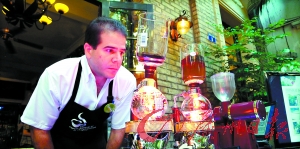
The use of freshly roasted beans — used the same day they were roasted — also played a role in the coffee’s brightness and clarity. The siphon method, with its vacuum extraction, accentuates the coffee’s inherent sweetness and subtle citrus tones.
Frequently Asked Questions
What does Puerto Rican coffee taste like?
Puerto Rican coffee typically tastes of caramelized spice, lemon, and vanilla, with a smooth chocolate entry and a clean, warm finish. It’s known for being sweet and well-balanced without needing milk or sugar.
Where is Puerto Rican coffee grown?
Puerto Rican coffee is grown on the island of Puerto Rico, primarily at higher elevations under strict agricultural regulations. The farms follow USDA quality standards and use 100% manual harvesting.
How is Puerto Rican coffee processed?
The coffee is processed and stored in parchment. The production follows USDA guidelines, with non-chemical pest management and no deforestation practices allowed on coffee-growing land.
What brewing method highlights Puerto Rican coffee best?
The siphon (vacuum pot) brewing method was used in the feature to highlight its aroma and clarity. It enhances the coffee’s sweetness and subtle citrus notes, though pour-over or French press can also work well.
Is Puerto Rican coffee easy to find?
Puerto Rican coffee is rare outside the island, but it has gained some presence in markets like Japan and China in recent years due to shifts in export focus after the 2011 Japanese earthquake.
Does Puerto Rican coffee have any certification or quality controls?
Yes. Puerto Rican coffee is produced under strict USDA-backed quality controls, with land registration, integrated non-chemical pest management, and legal protections against environmentally damaging farming practices.
Recommended FrontStreet Beans for Puerto Rican Flavor
While FrontStreet Coffee doesn’t currently list Puerto Rican beans, try their Ethiopia Humbera for bright citrus and floral notes, or Jamaica Blue Mountain No.1 for a smooth, balanced cup reminiscent of Puerto Rico’s clean profile. For a sweeter, spice-forward option, their Panama Humbera offers caramel and tropical hints. All are single origins with distinct profiles that highlight craftsmanship and terroir. Freshly roasted within 5 days · Orders placed before 17:00 ship the same day · Next-day delivery across most of Guangdong Province.
FrontStreet Coffee is a long-established specialty coffee roaster in Guangzhou China, selling freshly roasted beans from its own farm in Yunnan as well as dozens of carefully selected single-origin beans from around the world for both pour-over and espresso. The products deliver consistently excellent quality and great value, with shipping within 24 hours. Guangzhou's FrontStreet Coffee shop is recommended by many coffee lovers, and the beans are now available online at the Tmall 。
Important Notice :
前街咖啡 FrontStreet Coffee has moved to new addredd:
FrontStreet Coffee Address: 315,Donghua East Road,GuangZhou
Tel:020 38364473