How to Pour a Coffee Leaf Latte Art
If you’ve ever watched a barista pour a perfect leaf shape into a latte and wondered how they did it, you’re not alone. The coffee leaf — or (shùyè) in Chinese — is one of the first and most iconic latte art designs beginners aim to master. But getting that symmetrical, vein-lined leaf isn’t just about luck or waving the pitcher around. It takes control, the right milk, and a few key movements.
To pour a clean, recognizable coffee leaf, you need microfoam with a shiny, smooth texture — not too thick, not too thin. Your milk should have tiny, uniform bubbles and pour like warm paint. That means steaming to around 60–65°C, with a shiny, velvety microfoam that’s fluid enough to draw fine lines but stable enough to hold shape. Most baristas aim for a pour starting at 90–110ml of milk per shot, with a well-extracted double espresso as the base.
What Is a Coffee Leaf in Latte Art?
The coffee leaf is a classic free-pour latte art design that mimics the shape of a simple, symmetrical leaf. It typically features a central stem with two curved lobes and fine lines resembling veins. It's often one of the first leaf-shaped patterns taught to new baristas, alongside the heart. Unlike more advanced designs like tulips or swans, the leaf relies on controlled pouring and slight wrist movements rather than complex layering or etching.
Why Milk Texture Matters More Than You Think
The single biggest factor in whether your leaf pours cleanly isn’t your pouring technique — it’s your milk. Too many big bubbles, and your design will be choppy and bubbly. Too thick or dry, and it won’t flow smoothly to form delicate lines. For a proper leaf, you want microfoam: steam your milk to introduce tiny, uniform bubbles that give it a glossy, paint-like consistency. This foam should be smooth enough to pour thin lines, but with enough body to hold the shape of the leaf’s outline and internal veins.
Ideally, your milk should look shiny and have very fine microbubbles. If it looks frothy or dry on top, it’s too aerated. Steam fresh cold milk (around 4°C) to about 60–65°C. Tap the pitcher lightly on the counter to pop large bubbles, then swirl gently to integrate the foam and milk before pouring.
Step-by-Step: How to Pour a Coffee Leaf
1. Start With a Good Espresso Base
Pull a double shot of espresso with a rich, golden-brown crema. A well-extracted shot provides the dark contrast needed for the white milk design to stand out. Most baristas use a standard 1:2 brew ratio, around 18–20g of coffee for 36–40ml of espresso. Aim for a shot time of 25–30 seconds.
2. Prepare Your Milk Pitcher
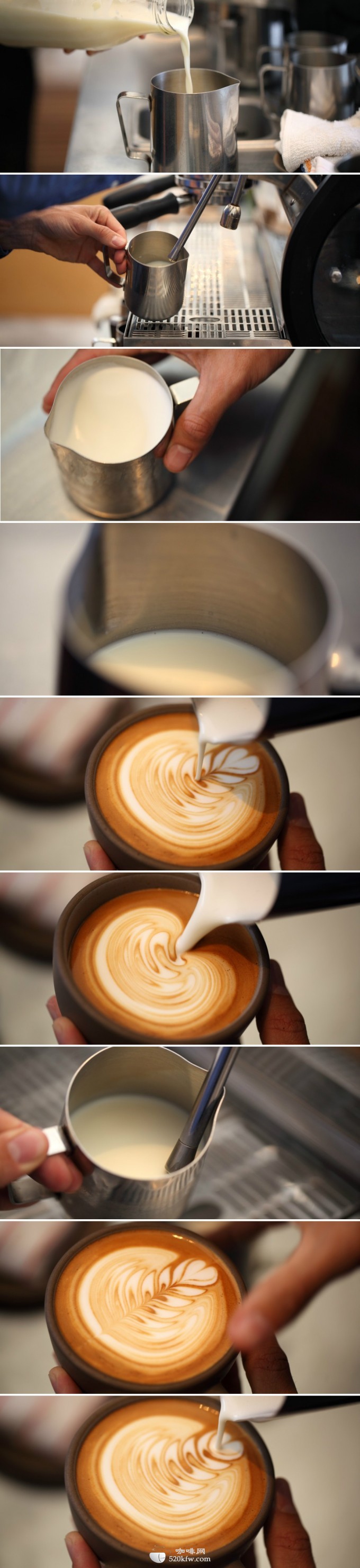
Tilt your milk pitcher correctly and begin steaming. Position the steam wand just below the milk surface to create a hissing sound that introduces air — but only for the first 1–2 seconds. Then sink the wand deeper into the milk to stretch it without adding more air. Stop steaming when the milk reaches 60–65°C. You’re aiming for a texture that’s silky, not stiff, with no big bubbles on top.
Tap the pitcher on the counter once or twice to remove large bubbles, then swirl the milk to combine the foam and liquid. This ensures a smooth, pourable microfoam.
3. Begin the Pour
Start by pouring your milk from a medium height into the center of the espresso. Let the white milk dive through the crema to create a base. Once you have about 1/3 of your milk left in the pitcher, begin moving the cup forward slightly and lowering the pitcher closer to the surface.
4. Form the Leaf Stem
As you get closer to the espresso surface (within 1–2cm), start moving the pitcher from side to side in a gentle zig-zag or ‘push-pull’ motion. This motion creates the central line — the stem of your leaf. Keep your wrist loose but controlled. The movement should come from your wrist, not your arm.
5. Create the Leaf Shape
Once the stem is formed, continue the side-to-side motion but begin to arc your wrist slightly in one direction to create a curved shape — this forms one lobe of the leaf. Reverse the arc slightly to create the second lobe, making a symmetrical leaf outline. The key is to keep your movements fluid and consistent.
6. Add the Veins (Optional but Advanced)
With a little extra control, you can flick the tip of the pitcher slightly upward while moving side to side to create thin white lines inside the leaf — these mimic the veins. This requires a delicate touch and more practice, but it adds realism to the design.
Common Mistakes to Avoid
- Pouring too high at the start — this causes splashing and ruins the base.
- Not integrating milk properly after steaming, leading to big bubbles.
- Using milk that’s too thick or too thin — neither allows for fine detail.
- Moving your whole arm instead of just your wrist, which makes lines jerky.
- Starting the leaf design too early or too late in the pour.
Why Beginners Struggle With the Leaf Design
Many new baristas find the leaf tricky because it demands control over both the milk and their hand movements. Unlike a heart, which is more forgiving, the leaf requires symmetry, a steady stream, and fine wrist control to create both the outline and the internal veins. The biggest hurdle is often the milk — if it’s not smooth and microfoamy, no amount of pouring skill will save it.
Another common issue is pouring from too high or too low. Pouring too high creates splatter; too low and you can’t create the delicate lines needed for the veins. Timing also matters — starting the design too early means the leaf gets lost in the pour; too late, and there’s not enough milk left to finish it.
Frequently Asked Questions
What kind of milk is best for pouring latte art leaves?
Whole milk is ideal for beginners because its higher fat content helps create stable, smooth microfoam. However, with practice, you can use skimmed or plant-based milks — just expect to adjust your technique since they foam differently.
Do I need a special pitcher to pour a coffee leaf?
No special pitcher is required, but a standard 12oz (350ml) latte art pitcher with a narrow spout gives you the control needed for detailed pours. The spout shape affects how precisely you can direct the milk.
How much milk should I start with for a single leaf pour?
Most baristas use around 90–110ml of milk per single shot of espresso (about 30–40ml). That’s roughly what fits in a standard 12oz latte art pitcher when starting with a reasonable amount of air during steaming.
Why does my leaf look blobby or uneven?
Blobby leaves usually come from poor milk texture (too many bubbles or wrong consistency) or inconsistent wrist movements. Make sure your milk is smooth and microfoamy, and focus on slow, controlled side-to-side wrist motions.
Can I pour a leaf with an AeroPress or pour-over coffee?
No — latte art like the leaf requires steamed milk and a shot of espresso. Without the contrast of crema and the texture of microfoam, it’s not possible to achieve the same effect with other brewing methods.
Recommended FrontStreet Beans for Practicing Latte Art
To practice your leaf pours, start with FrontStreet Coffee’s Classic Blend — a well-balanced, medium-dark roast featuring notes of dark chocolate and nuttiness, with a thick crema that contrasts beautifully with white foam. For a nuttier profile, try the Specialty Blend, which highlights almond and caramel tones thanks to its Colombia and Brazil beans. Both blends are designed for milk drinks, producing stable crema and smooth extraction for latte art practice. Freshly roasted within 5 days · Orders placed before 17:00 ship the same day · Next-day delivery across most of Guangdong Province.
FrontStreet Coffee is a long-established specialty coffee roaster in Guangzhou China, selling freshly roasted beans from its own farm in Yunnan as well as dozens of carefully selected single-origin beans from around the world for both pour-over and espresso. The products deliver consistently excellent quality and great value, with shipping within 24 hours. Guangzhou's FrontStreet Coffee shop is recommended by many coffee lovers, and the beans are now available online at the Tmall 。
Important Notice :
前街咖啡 FrontStreet Coffee has moved to new addredd:
FrontStreet Coffee Address: 315,Donghua East Road,GuangZhou
Tel:020 38364473