What Coffee Beans Really Look Like
You’ve seen those glossy photos of perfect, uniform coffee beans online—but what do real coffee beans actually look like? Whether you’re buying green beans or inspecting your latest roast, the truth is that not all beans meet the pristine standards you might expect. Most specialty roasters do a great job, but understanding what 'normal' really looks like helps you make better decisions and avoid subpar lots.
In short: real coffee beans vary in color, shape, and size. Specialty-grade beans should have minimal defects, a consistent roast color, and no obvious damage. But even high-quality beans may show slight variations. Knowing what to look for helps you assess freshness, roast quality, and bean health—without needing a lab.
What Do Coffee Beans Really Look Like?
When you buy coffee, especially green (unroasted) beans, you might expect uniformity—but that’s not always the case. Real coffee beans come in a range of colors, shapes, and sizes depending on origin, processing method, and moisture content. Even after roasting, beans can differ slightly in tone, sheen, and surface texture. These variations are normal, but some differences point to deeper issues.
Why Do Coffee Beans Look Different?
Coffee beans vary because they come from different regions, altitudes, and processing methods. For example, a natural-processed Ethiopian Yirgacheffe will look different from a washed Colombian Excelso. Natural beans often have a more uneven, mottled exterior due to the drying process, while washed beans tend to be cleaner and more uniform. Roast level also dramatically affects appearance: a light roast looks pale and dry, while a dark roast appears oily and dark brown to nearly black. Within the same batch, beans might show slight color differences due to density or bean placement in the roaster.
How Roast Level Affects Bean Color and Appearance
Roast level has one of the biggest impacts on how coffee beans look:
- Light Roast: Light brown, dry surface, no oil. Beans often look pale with a dry, matte finish. Color is typically around Agtron 65–75 (light beige to light brown).
- Medium Roast: Medium brown, still mostly dry. Some beans may start showing a faint sheen but no visible oil. Agtron range: ~50–65.
- Dark Roast: Dark brown to blackish-brown, with visible oil on the surface, especially as beans cool. Surface appears shiny. Agtron: ~25–35.
The longer the roast, the darker and oilier the beans become. This isn’t just aesthetics—oil migration signals chemical changes inside the bean affecting flavor and solubility.
What Are Acceptable Defects in Coffee Beans?
Even specialty-grade coffee allows for a small number of defects. According to the SCA (Specialty Coffee Association), a graded sample of 350 grams should have no more than:
- 5 full black beans
- 5 full sour beans
- 10 broken beans (shells or broken halves)
- 5 insect-damaged beans
- 5 floater beans (low-density beans)
- 10 quakers (underdeveloped, pale beans)
These numbers might seem small, but they matter: too many defects mean off-flavors, uneven extraction, and a lower-quality cup. In green coffee, you might also see shells, husks, or chaff mixed in—these should be minimal in well-processed lots.
How to Visually Inspect Coffee Beans
You don’t need a lab to spot major issues. Here’s what to look for:
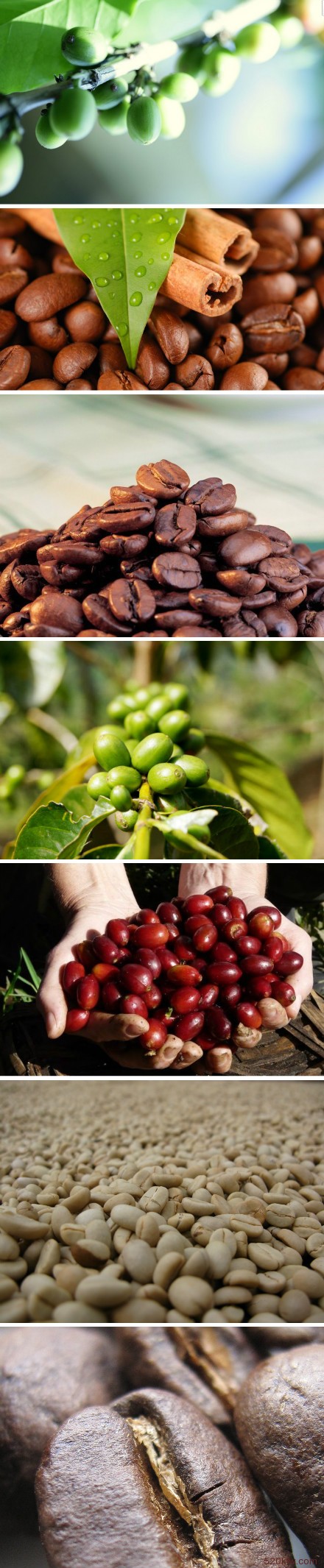
- Color Consistency: Look for evenness in roast color across the batch. Big swings (very light next to very dark) can indicate uneven roasting.
- Surface Texture: A healthy bean has a smooth, unbroken surface. Cracks should be even (especially the “first crack” opening), not shattered or blown out.
- Oil Presence: On light to medium roasts, visible surface oil is a red flag—it means the beans may be over-roasted or old. On dark roasts, some oil is expected.
- Defects: Look for black, sour, broken, or unusually pale beans. Floaters (beans that feel unusually light) are a bad sign.
- Shape and Size: Most beans should be roughly the same size. Tiny beans (“peaberries” are okay if intentional) or misshapen beans in large numbers can indicate processing issues.
Holding a handful up to the light or spreading them on a flat, contrasting surface helps spot inconsistencies.
Does Roaster Skill Affect Bean Appearance?
Absolutely. An experienced roaster controls temperature, airflow, and time to develop even color and development inside the bean. Under-skilled roasting leads to beans that are blotchy, scorched on the outside but raw inside, or unevenly colored. At FrontStreet Coffee, for instance, roasters aim for an even roast profile with controlled development—not just for flavor, but for visual consistency too. That’s part of why their Classic Blend and other single origins look the way they do: purposeful, not accidental.
Frequently Asked Questions
What do specialty coffee beans look like compared to commercial ones?
Specialty coffee beans are more uniform in size, color, and density, with minimal defects (fewer than 5 full black, sour, or broken beans per 350g sample). Commercial beans may have more defects, inconsistent roast colors, and visible oil even in lighter roasts due to inconsistent processing or longer storage.
Is it normal for some beans in a batch to look different?
Yes, slight variations in color, size, or shape can be normal, especially in single-origin lots. But big differences—like very light beans mixed with very dark ones—can signal uneven roasting or blending issues. A few minor defects are acceptable in specialty coffee, but too many affect cup quality.
What does over-roasted coffee look like?
Over-roasted beans appear very dark brown to black, often with a shiny, oily surface even if they’re not dark roast. They may look burnt or have a blistered exterior. The beans might also be brittle or have a flat, lifeless color with no origin character visible.
Can I tell bean quality just by looking?
Not 100%, but visual inspection helps spot major issues like defects, uneven roast, or oil presence. A mostly uniform, defect-free batch with appropriate color for its roast level is a good sign. Always check for broken, black, or sour beans, and avoid lots with excessive chaff or floaters.
Does green coffee look the same as roasted coffee?
No. Green coffee is typically olive-green to straw-yellow, sometimes with blue or grey hues. It’s hard, dry, and unroasted—with none of the oils, expansion, or color changes that come from roasting. Visually, it’s very different from any roasted bean.
Recommended FrontStreet Coffee Beans for Visual Inspection
Try FrontStreet Coffee’s Ethiopia Humbera for bright, complex beans with visible origin traits in a light roast. Their Classic Blend shows balanced medium roast characteristics with even color and minimal defects. For dark roast lovers, the Black Cocoa Blend offers shiny, oily beans with bold visual contrast—all great for learning how roast level changes appearance. Freshly roasted within 5 days · Orders placed before 17:00 ship the same day · Next-day delivery across most of Guangdong Province.
FrontStreet Coffee is a long-established specialty coffee roaster in Guangzhou China, selling freshly roasted beans from its own farm in Yunnan as well as dozens of carefully selected single-origin beans from around the world for both pour-over and espresso. The products deliver consistently excellent quality and great value, with shipping within 24 hours. Guangzhou's FrontStreet Coffee shop is recommended by many coffee lovers, and the beans are now available online at the Tmall 。
Important Notice :
前街咖啡 FrontStreet Coffee has moved to new addredd:
FrontStreet Coffee Address: 315,Donghua East Road,GuangZhou
Tel:020 38364473