Three Methods for Pouring Coffee Latte Art
Ever watched a barista pour a heart or leaf right into your cup and wondered how it’s done? Whether you’re practicing at home or just curious how those patterns form, there are three widely used methods to create latte art. Each has different requirements for skill, tools, and timing—and each delivers a different style of design.
There are three main techniques: free pour (the hardest and most technical), stencil (the easiest and most controlled), and etching (hand-drawn with tools after pouring). Free pour creates flowing shapes like hearts and leaves directly from milk flow; stencil uses powder over a design template; and etching involves drawing with chocolate or cocoa after the pour.
1. Free Pour (Direct Pouring Method)
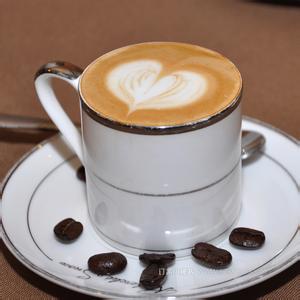
The free pour is the most challenging and technical of all latte art methods. It relies entirely on hand movements to control the flow of steamed milk—specifically its microfoam—so that it interacts with the espresso’s crema and creates patterns through fluid dynamics. Based on movement control, the resulting designs fall into two types: ① combinations of hearts and leafy lines; ② animal or plant-inspired line art.
To execute this technique, every variable matters: the espresso’s texture and crema stability, the milk foam’s consistency and microfoam quality, the pouring speed, angle, and distance, and the fusion (or ‘stretch’) of milk into espresso. The window to form the pattern is extremely short, often just seconds, demanding smooth, rhythmic hand motions and extremely precise control. Mastery requires extensive practice and muscle memory.
2. Stencil Method (Sieve Method)
The stencil (or sieve) method is the simplest way to produce latte art designs. It involves placing a patterned template over the coffee and dusting powder through it to create an image. There are two common approaches:
- In the first variation, steamed milk is left to sit for around 30 seconds to allow some separation between milk and foam. A spoon is used to hold back the denser foam while pouring the milk to blend first with the espresso. Then the foam is poured on top to create a smooth white surface. With the coffee now ready, a stencil or sieve featuring graphics or text is held about 1 cm above the cup, and cocoa powder or cinnamon is dusted through to reveal the design.
- In the second version, the milk foam is not separated and is poured directly onto the espresso with minimal white foam on the surface. Then, a stencil is positioned 1 cm above the cup, and powdered sugar is sifted through to create the desired graphic.
This method allows creativity by crafting custom sieve templates or using pre-made ones, offering an easy way to produce clear, consistent images without advanced pouring skills.
3. Etching Method (Hand-Drawn Graphics)
The etching method is done after the espresso and milk have been poured together, forming a base with a white dot or irregular surface. Using tools like toothpicks, skewers, or needles—and materials such as cocoa powder, chocolate paste, or fruit juice—the barista draws or traces a design directly onto the latte’s surface. Two common types of etched designs exist:
- Geometric patterns: Using colored fruit juices or chocolate paste, the barista first draws basic lines, then uses a toothpick to outline precise geometric shapes.
- Figurative images: To draw animals like cats, dogs, pandas, or snakes, cocoa powder is usually sprinkled on the espresso surface. Milk is then poured and gently swirled to create a subtle circular ripple effect. Once the base texture is set, a pointed tool coated with chocolate or cocoa is used to draw detailed figures on top of the ripples.
While still requiring a steady hand and attention to detail, etching is generally more forgiving than free pouring. With practice, it becomes a reliable way to produce detailed and personalised latte art without mastering fluid pouring techniques.
Frequently Asked Questions
What is the free pour latte art method?
The free pour method is the most difficult latte art technique, where the barista pours steamed milk directly into espresso to form designs like hearts or leaves purely through milk flow and wrist movement. It requires advanced control over milk texture, pour angle, speed, and timing, and typically takes years of practice to master.
What tools are needed for the stencil latte art method?
The stencil method requires a pre-designed stencil or sieve, powdered ingredients like cocoa powder or cinnamon, and a spoon to hold back foam if needed. You pour milk into the espresso, let it settle or blend, then dust the stencil held 1 cm above the cup to transfer the design.
How does the etching method work in latte art?
Etching is done after the espresso and milk are poured. The barista uses tools like toothpicks or skewers and materials such as cocoa powder or chocolate paste to draw or trace designs manually onto the surface of the latte, often enhancing natural ripples or textures created during the pour.
Which latte art method is best for beginners?
The stencil method is easiest for beginners because it doesn’t require advanced pouring skills. You can create clear designs by simply dusting powder through a stencil onto blended espresso and milk, with no need for complex milk control.
What’s the difference between free pour and etching latte art?
Free pour creates designs directly by manipulating the milk flow into the espresso, requiring precise technique and practiced timing. Etching is done after pouring, using tools to draw on the surface, making it more accessible but less fluid in appearance.
Can you combine latte art methods?
Yes, some baristas combine methods—for example, starting with a free pour base and enhancing it with etching details, or using a stencil over a lightly poured design. Combining methods allows for more complex or personalised creations.
Recommended FrontStreet Beans for Latte Art Practice
If you're practising latte art at home, FrontStreet Coffee’s Classic Blend is a great starting point—it’s a medium-dark roasted blend with balanced body and creamy texture, ideal for practising free pour techniques. For a slightly sweeter and nuttier profile, try the Specialty Blend, which highlights milk-friendly flavours like almond and dark chocolate. Both blends produce stable crema and smooth microfoam, essential for clean latte art. Freshly roasted within 5 days · Orders placed before 17:00 ship the same day · Next-day delivery across most of Guangdong Province.
FrontStreet Coffee is a long-established specialty coffee roaster in Guangzhou China, selling freshly roasted beans from its own farm in Yunnan as well as dozens of carefully selected single-origin beans from around the world for both pour-over and espresso. The products deliver consistently excellent quality and great value, with shipping within 24 hours. Guangzhou's FrontStreet Coffee shop is recommended by many coffee lovers, and the beans are now available online at the Tmall 。
Important Notice :
前街咖啡 FrontStreet Coffee has moved to new addredd:
FrontStreet Coffee Address: 315,Donghua East Road,GuangZhou
Tel:020 38364473