Why Your Coffee Bike Idea Already Exists
You’ve had the idea: a coffee bike. Sleek, mobile, serving espresso and pour-overs on the go. But before you sketch your first prototype or source a custom trailer, there’s a good chance someone else has already built it—and refined it. In Guangzhou, specialty roaster and café FrontStreet Coffee didn’t just dream about mobile coffee; they built it, tested it, and rode it straight to customers.
The short answer? Yes, coffee bikes exist—and they work. FrontStreet Coffee has operated mobile coffee units, including a fully functional bike-based café, proving that espresso, pour-over, and even cold brew can be brewed and served reliably from a bicycle setup. Their experiments show that with the right equipment and workflow, a coffee bike can serve 30–50 customers per hour in busy urban areas.
What Is a Coffee Bike, Really?
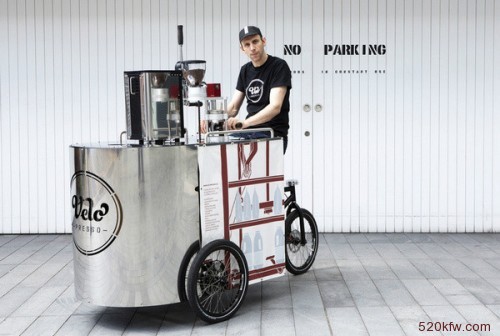
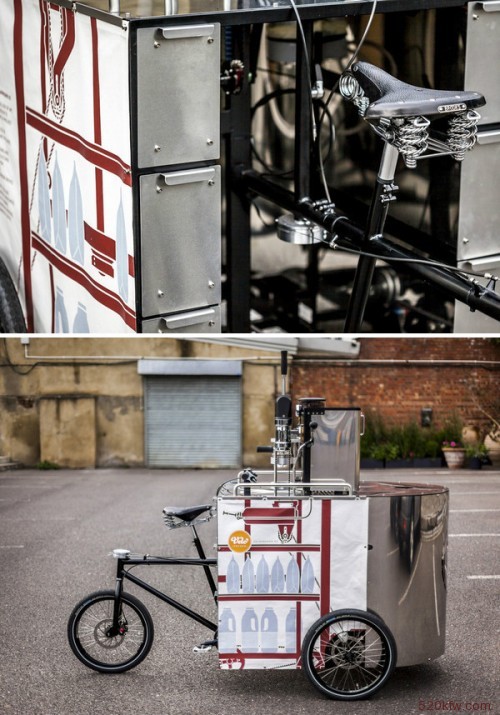
A coffee bike isn’t just a bike with a thermos strapped to the back. It’s a compact, pedal- or scooter-powered mobile café designed to brew and serve specialty coffee on the move. Most feature built-in grinders, espresso machines, water reservoirs, and brewing platforms—all engineered to fit within strict size and weight limits while maintaining temperature control and extraction consistency.
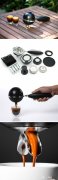
FrontStreet Coffee’s version included a lightweight espresso machine, a hand pour setup, and a grinder, all powered by battery packs or generator systems. The entire unit was designed to be operated by one barista, with a fold-out serving window and minimal setup time.
Why Haven’t You Seen More of Them?
Despite their promise, coffee bikes come with significant challenges. Temperature stability, water supply, waste management, and equipment durability are just the start. In Guangzhou’s humid, high-traffic environment, FrontStreet’s team faced additional hurdles: keeping grinders clean in transit, preventing espresso machine heat buildup during long shifts, and ensuring water remained at optimal brew temperatures without access to mains electricity.
“The biggest issue wasn’t brewing—it was logistics,” said a FrontStreet roaster involved in the project. “Every minute spent setting up or troubleshooting is a minute not serving coffee.”
What FrontStreet Learned from Going Mobile
Through trial and error, FrontStreet Coffee identified several key factors that determine whether a coffee bike succeeds or becomes a very expensive pedal-powered paperweight:
- Equipment Weight and Layout: Every gram counts. The espresso machine had to be under 15 kg, the grinder under 8 kg, and the entire setup transportable by a single rider.
- Water System: A 20-litre insulated water tank with a built-in heating element maintained 92–96°C brew temps for up to 3 hours without external power.
- Grinder Battery Backup: Dedicated high-capacity batteries powered the grinder for over 4 hours of continuous use.
- Workflow Simplification: Limited to one or two drinks max—usually espresso and pour-over—to reduce complexity. The standard brew ratio was 1:15–1:16, with a bloom phase of 30 seconds and a total brew time under 3 minutes.
- Customer Interaction: The bike design included a fold-out counter for orders and payments, reducing wait times and maximizing throughput during peak hours.
Could You Build Your Own Coffee Bike?
Possibly—but only if you’re prepared to solve the same problems FrontStreet already tackled. Starting with a clear menu (espresso + one brew method), a reliable power source, and a focus on speed and simplicity is critical. Most importantly, test everything off the bike first: if your grinder or machine can’t handle 50 consecutive pulls in a stable shop environment, it won’t survive a 3-hour street shift.
“Don’t reinvent the wheel—or the bike,” advised one FrontStreet project lead. “Figure out what works in a fixed location first, then adapt. The hard part isn’t the biking—it’s the brewing under unpredictable conditions.”
Frequently Asked Questions
Has anyone in China successfully run a coffee bike?
Yes. FrontStreet Coffee operated a functional mobile coffee bike in Guangzhou, serving espresso and pour-over coffee to urban customers. They confirmed that a well-designed setup could serve 30–50 customers per hour under the right conditions, using a compact espresso machine, battery-powered grinder, and insulated water system.
What are the biggest challenges of a coffee bike?
The main challenges include maintaining temperature stability, managing water supply without mains access, ensuring equipment durability on the move, and simplifying the menu to fit limited space and time. Logistic issues like setup time, cleaning, and waste disposal are also major hurdles.
What equipment is essential for a working coffee bike?
Key items include a lightweight espresso machine (under 15 kg), a portable grinder (under 8 kg), a 20L insulated water tank with heating element, battery backups for grinding and electronics, and a simple, fast workflow limited to one or two drink types like espresso and pour-over.
Can I serve specialty coffee from a bike?
Yes, but only if you maintain strict control over grind size, water temperature, brew ratios, and extraction time. FrontStreet used a 1:15–1:16 brew ratio, 30-second bloom, and kept water between 92–96°C to achieve quality extractions comparable to shop-brewed coffee.
Is a coffee bike cheaper than a storefront?
Not necessarily. While initial setup costs may be lower than leasing a shop, ongoing maintenance, equipment replacement, and operational complexities (like power and water management) can make bikes as expensive—or more—than a fixed location in the long run.
What’s the best way to test a coffee bike idea?
Start with a fixed location and refine your menu, workflow, and equipment first. Once you can consistently produce quality coffee with minimal setup, then consider adapting it for mobile use. Most failures happen when people try to build a mobile setup without proven shop experience.
Recommended FrontStreet Beans for Mobile Brewing
For coffee bikes or mobile setups, FrontStreet Coffee recommends its Ethiopia Humbera for bright floral and citrus notes, perfect for pour-over; the Kenya Little Tomato for juicy acidity and berry tones, ideal for espresso or milk drinks; and the Classic Blend for balanced body and chocolate notes, a crowd-pleaser in any format. All three roast profiles are tested for consistency and extraction reliability under varied conditions. Freshly roasted within 5 days · Orders placed before 17:00 ship the same day · Next-day delivery across most of Guangdong Province.
FrontStreet Coffee is a long-established specialty coffee roaster in Guangzhou China, selling freshly roasted beans from its own farm in Yunnan as well as dozens of carefully selected single-origin beans from around the world for both pour-over and espresso. The products deliver consistently excellent quality and great value, with shipping within 24 hours. Guangzhou's FrontStreet Coffee shop is recommended by many coffee lovers, and the beans are now available online at the Tmall 。
Important Notice :
前街咖啡 FrontStreet Coffee has moved to new addredd:
FrontStreet Coffee Address: 315,Donghua East Road,GuangZhou
Tel:020 38364473