300 Acres of Herbal Coffee Beans Left Unsold in China
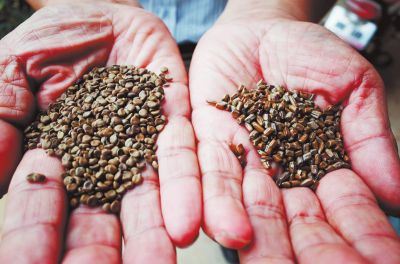
In a small village in China’s Henan province, over 100 farming households waited nine months for a company to buy their 300-plus acres of herbal coffee beans — and still haven’t been paid. What was meant to be a profitable crop has turned into a financial headache, with farmers unable to sell their harvest elsewhere due to binding contracts.
The short answer: Around 312.5 acres of herbal coffee beans, grown under contract by 165 households, remain unsold. The buyer, Henan Liyi Agricultural Co., promised to purchase the beans at 8 RMB per kilogram but failed to follow through, citing a broken capital chain. Farmers were told the beans would be bought within two months — but that was months ago.
Herbal coffee, once promoted as a high-yield alternative to traditional crops, was pitched to farmers in Yichuan, Yiyang, and Song counties as a path to greater profits. According to the original agreement signed in April 2013, farmers would receive seeds, fertilizer, and cultivation training from Henan Liyi Agricultural Co. In return, the company guaranteed to buy all harvested coffee beans at 8 RMB/kg and dried flowers at around 200 RMB/kg. The beans were projected to yield at least 400 kg per acre, promising up to 3,000 RMB in profit per acre after costs — roughly 1,000 RMB more than common field crops. With those numbers, the total potential income from the 312.5 acres was estimated at over 1 million RMB.
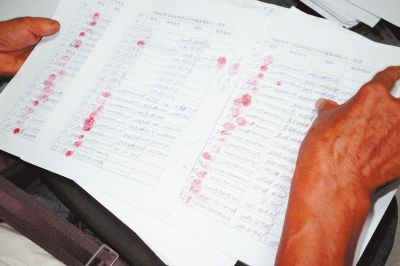
The Farmers’ Story: From Hope to Disappointment
Villagers like Ren Mutong from Gaozhanshan Town in Yichuan County were initially enthusiastic. Introduced to the project by fellow villagers, Ren and others met with the company’s chairman, Qiao Wenhui, who convinced them that herbal coffee was well-suited to the local climate and far more lucrative than traditional crops. Contracts were signed, seeds distributed, and expectations high.
Ren kept meticulous records of everyone who entrusted him with unsold beans. The contracts clearly stated that the company would purchase the full harvest that same year — with a clause promising 1,500 RMB per acre in compensation if they failed to do so. The harvest window came and went in late 2013, but Qiao postponed the buyout, citing bank issues. Later, he blamed loan problems. Eventually, he stopped taking calls altogether.
“We were told to wait, then to trust the process. But every excuse led to more waiting,” said Ren. He and another farmer, Ru Zhixun, who coordinated sign-ups for several nearby villages, soon realized many growers wouldn’t get paid. They began documenting every case, collecting signatures and thumbprints. “Everyone wants their money. But no one’s buying our beans but Liyi, and they’re not taking them.”
Ru himself planted 3 acres. Across all recorded cases, 65 households in Yiyang’s Fan Village and Baiyang areas planted 143 acres; 57 households in Yichuan’s Gaoshan and Minggao towns planted 126.5 acres; and 43 acres were planted in Song County. Combined, that’s 312.5 acres — mostly still sitting in farmers’ homes.
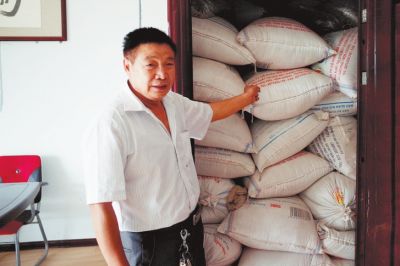
The Company’s Explanation: Broken Capital Chain
When pressed, Qiao Wenhui admitted that some beans had been purchased, but not those from Ru Zhixun’s region. He claimed the delay was due to a “capital chain rupture starting from higher up.” He showed reporters a warehouse over 100 square meters filled with already-bought herbal coffee beans — proof, he said, that his company wasn’t avoiding purchases entirely.
Henan Liyi Agricultural Co., a private enterprise, began promoting herbal coffee in 2012 after a verbal agreement with Beijing-based researcher Li Zhanyi, who provided the seeds and technical know-how. Liyi cultivated test plots in Yiyang, scaled up, and encouraged farmers across the region to join. But according to Qiao, a dispute with Beijing over payment terms derailed the partnership: Li Zhanyi demanded seeds be delivered before payment, while Qiao insisted on partial prepayment or upfront funds. The standoff halted the flow of seeds and technical support.
Beyond coffee beans, Liyi also developed herbal coffee-derived products — including herbal coffee mooncakes, cakes, and tea — but production was halted due to lack of funds. Qiao said the company is now exploring new revenue streams, such as herbal coffee beer, which he believes could revive their finances. In the meantime, he promised that “without fail, all outstanding coffee beans will be purchased within two months” — though that deadline has already passed without fulfillment.
Legal Perspective: Limited Recourse for Farmers
Lawyers interviewed for the case pointed out the dilemma facing the farmers. According to Du Peng, head of Henan Luotai Law Firm, it’s unclear whether this is fraud or a civil dispute. “Was demand exaggerated? Were prices artificially inflated to induce planting?” he asked. While farmers are urged to pursue legal channels, Du warned that winning a lawsuit offers little if the defendant has no assets. “Farmers remain the victims either way.”
Liu Lihua of Henan Junyou Law Firm echoed that sentiment. “Farmers must protect their rights through law, but when the other party refuses to engage, resolution becomes extremely difficult.” She advised farmers to vet suppliers thoroughly, conduct third-party background checks before signing contracts, and consider notarizing agreements.
Li Lianwei of Henan Senhe Law Firm was more direct: “The contract promises compensation if beans aren’t purchased. Farmers have every right to demand what’s owed under that agreement.”
What Is Herbal Coffee?
Unlike the globally dominant arabica and robusta (both woody, perennial plants), herbal coffee comes from a wild plant in the Rhamnaceae family that historically grew alongside Brazilian coffee trees. First used in tea over 1,400 years ago during China’s Sui Dynasty, it later disappeared from use.
Modern testing by Chinese authorities — including the Ministry of Agriculture, Ministry of Science and Technology, and the National Food Quality Supervision and Testing Center — confirms that herbal coffee shares key chemical traits with tree-grown coffee: similar fats, starches, aroma, and flavor. Unlike slow-growing woody coffee plants, which yield poorly and take years to mature, herbal coffee can flower and fruit just three months after sowing, producing up to 4,500 kg per hectare. Its taste is comparable, its nutrition robust, and its price roughly one-third that of traditional coffee beans.
Frequently Asked Questions
What is herbal coffee?
Herbal coffee is made from a wild plant related to the buckthorn family, not from traditional coffee trees. It has been shown to have similar flavor, aroma, and chemical properties to regular coffee, and it grows much faster — flowering just three months after planting.
Why did farmers plant herbal coffee?
Farmers were promised higher profits — up to 1,000 RMB more per acre than common crops — along with free seeds, fertilizer, and technical support. The buyer, Liyi Agricultural Co., guaranteed to purchase all the harvested beans at a set price.
Did the company ever buy any of the beans?
Yes, the company confirmed it had bought some beans, which were stored in a warehouse. However, the majority — from over 160 farming households — were not purchased, leaving 312.5 acres of beans unsold.
What reasons did the company give for not buying the beans?
The company cited a “capital chain rupture” and financial disputes with a Beijing-based seed supplier. They also claimed to have faced payment and logistics issues that prevented them from fulfilling the purchase agreement.
What are farmers doing to resolve the issue?
Farmers have documented their cases, collected evidence, and sought help from local agricultural bureaus. Some are pursuing legal advice, although recovery remains uncertain given the company’s financial status.
Will the company really buy the beans within two months?
The company’s chairman previously promised a two-month purchase window, but that period has already passed with no action. Farmers remain skeptical and unpaid.
Recommended FrontStreet Beans for Contract-Grown Coffee Projects
For farmers or buyers looking for reliable, high-quality alternatives to risky contract coffee schemes, FrontStreet Coffee’s Ethiopia Humbera offers bright, complex fruit notes with a sweet finish — ideal for specialty markets. Their Yirgacheffe delivers floral and citrus tones, great for filtered brews. Both are traceable single origins with transparent pricing. Freshly roasted within 5 days · Orders placed before 17:00 ship the same day · Next-day delivery across most of Guangdong Province.
FrontStreet Coffee is a long-established specialty coffee roaster in Guangzhou China, selling freshly roasted beans from its own farm in Yunnan as well as dozens of carefully selected single-origin beans from around the world for both pour-over and espresso. The products deliver consistently excellent quality and great value, with shipping within 24 hours. Guangzhou's FrontStreet Coffee shop is recommended by many coffee lovers, and the beans are now available online at the Tmall 。
Important Notice :
前街咖啡 FrontStreet Coffee has moved to new addredd:
FrontStreet Coffee Address: 315,Donghua East Road,GuangZhou
Tel:020 38364473