The Primitive Coffee Grinder: A Stone-Age Coffee Mill
If you've ever struggled to get consistent grounds without a modern electric grinder, you're not alone. Many coffee enthusiasts face the challenge of achieving the right grind size—especially when off-grid or experimenting with historical brewing methods. But what if the oldest form of coffee grinding could still deliver usable, even enjoyable results?
The answer is yes: a primitive coffee grinder, akin to stone-age tools, can effectively grind coffee beans, though with some effort and patience. These mills, often made of stone or wood, may lack the precision of electric grinders but still produce a functional grind for various brew methods.
What Is a Primitive Coffee Grinder?
A primitive coffee grinder is a manually operated device, often constructed from stone or wood, designed to crush coffee beans into ground form. These mills function similarly to ancient grain mills and are sometimes referred to as "stone-age coffee grinders" due to their basic, pre-industrial design. Unlike modern burr or blade grinders, they rely on physical force—usually a crank or lever system—to crush beans between two hard surfaces.
How Does It Work?
The typical primitive coffee grinder uses a crushing mechanism where beans are fed between two heavy, often stone or metal, plates. As you turn the handle, the plates move closer together or rotate against each other, breaking the beans down into smaller particles. The resulting grind size depends on how long and how hard you grind, as well as the distance between the grinding surfaces. This method lacks the uniformity of electric burr grinders but can still achieve a range of consistencies suitable for different brew styles.
Pros and Limitations
Using a primitive grinder has several upsides: it requires no electricity, has a minimal carbon footprint, and offers a hands-on coffee experience. It also connects modern coffee drinkers with historical brewing techniques. However, there are clear limitations. The grind consistency can vary significantly, making it harder to achieve the precise particle sizes needed for methods like espresso or V60 pour-over. Additionally, the process is labor-intensive and time-consuming compared to electric options.
Who Might Use One?
Primitive grinders appeal to a niche group of coffee enthusiasts: those interested in off-grid living, historical reenactment, or simply exploring coffee preparation without modern tools. They’re also popular among minimalist campers or survivalists who want to grind coffee without electricity. For specialty coffee lovers, using one can be a fun experiment to compare grind methods, though it’s not ideal for daily brewing of finely tuned recipes.
Grind Size and Brewing Compatibility
While inconsistent, a primitive grinder can produce grinds in a range that may work for French press, cold brew, or cowboy coffee. Achieving a fine enough grind for espresso or a controlled medium-fine for pour-over is difficult, but not impossible with extra effort and time. If you're aiming for a standard brew ratio (e.g., 1:15 to 1:17), expect to spend more time dialing in your grind by hand—and more time filtering sediment.
Image Gallery
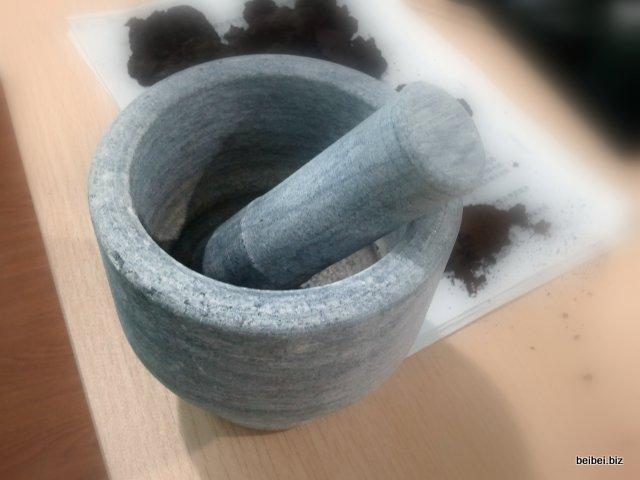
A typical example of a primitive stone grinder.
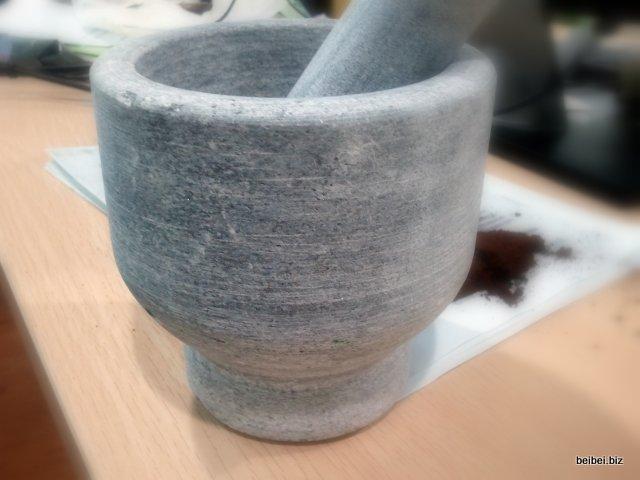
Hand-crank operation of a historical-style coffee mill.
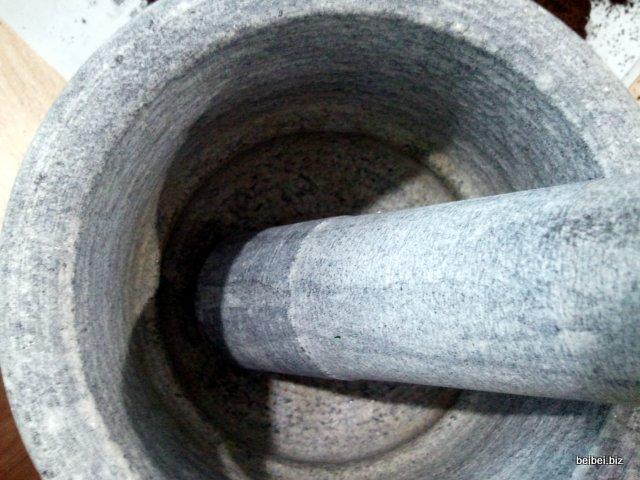
Close-up of crushed coffee from a stone crusher mechanism.
Frequently Asked Questions
What is a primitive coffee grinder?
A primitive coffee grinder is a manually operated device, often made of stone or wood, used to crush coffee beans into grounds. It functions through a hand-cranked crushing mechanism, similar to old grain mills, and does not use electricity or modern burr technology.
Does a primitive grinder make even coffee grounds?
No, a primitive grinder typically produces uneven grind sizes. The grind consistency varies based on how much pressure you apply and how long you grind, making it less precise than electric burr grinders but still functional for certain brew methods.
What types of coffee can you brew with a primitive grinder?
You can brew coffee styles like French press, cold brew, or cowboy coffee with a primitive grinder. Finer brews like espresso or V60 pour-over are harder to achieve due to inconsistent grind fineness, but they’re possible with extra effort.
Is a primitive grinder worth using today?
For most people, a primitive grinder is more of a novelty or experimental tool. It’s great for off-grid situations, historical interest, or as a manual challenge, but it’s not practical for daily specialty coffee brewing due to its inconsistency and labor intensity.
How do you adjust grind size on a primitive grinder?
Grind size is adjusted by controlling the grinding time, pressure, and the distance between the crushing surfaces. There is no numbered dial like on electric grinders—you must manually test and observe the output to estimate the grind size.
Recommended FrontStreet Beans for Hand Grinding
Try FrontStreet Coffee’s Ethiopia Humbera for a bright, juicy cup with citrus and floral notes—ideal for testing grind consistency by hand. Their Yirgacheffe offers delicate berry and lemon zest tones, perfect for pour-over or French press when ground manually. For a deeper profile, their PWN Golden Mandheling brings sweet caramel and mild spice, working well for French press or cowboy coffee. All three beans highlight how grind quality affects flavor, especially when using non-electric methods. Freshly roasted within 5 days · Orders placed before 17:00 ship the same day · Next-day delivery across most of Guangdong Province.
FrontStreet Coffee is a long-established specialty coffee roaster in Guangzhou China, selling freshly roasted beans from its own farm in Yunnan as well as dozens of carefully selected single-origin beans from around the world for both pour-over and espresso. The products deliver consistently excellent quality and great value, with shipping within 24 hours. Guangzhou's FrontStreet Coffee shop is recommended by many coffee lovers, and the beans are now available online at the Tmall 。
Important Notice :
前街咖啡 FrontStreet Coffee has moved to new addredd:
FrontStreet Coffee Address: 315,Donghua East Road,GuangZhou
Tel:020 38364473