Coffee Tree Varieties: Key Arabica Types Explained
Ever wondered why some specialty coffee tastes wildly different from your average cup—even though it’s all technically ‘Arabica’? The secret lies in the plant variety. With over 70 known cultivars, Arabica coffee has evolved through mutations and hybridization, creating beans with unique flavors, yields, and resistances. But which ones matter most, and why?
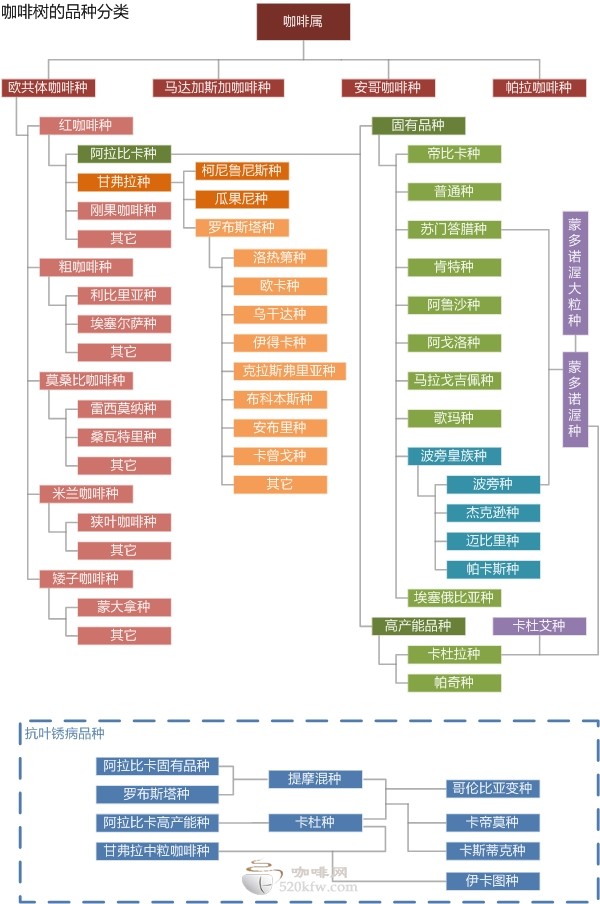
Over 70 Arabica coffee varieties exist today, including classic types like Typica and Bourbon, as well as high-yield hybrids like Catimor. These varieties differ in flavor, disease resistance, yield, and adaptability—key factors for both producers and specialty roasters.
What Are Coffee Varieties and Why Do They Matter?
In biological terms, coffee varieties are subdivisions below the species level (like subspecies or cultivars). Arabica coffee, native to Ethiopia’s highlands, has diversified through natural mutations and selective breeding. While most variety development prioritizes yield, disease resistance, and climate adaptability, market demand for high-quality ‘specialty’ coffee has kept older, flavorful cultivars relevant—despite their lower productivity.
Key Arabica Coffee Varieties and Their Characteristics
Typica: Nearly all Arabica varieties descend from Typica, one of the closest to the original wild plant. Once widely grown in Central and South America, it produces long beans with excellent aroma and acidity—but is highly susceptible to leaf rust and yields poorly (harvested every two years). By 1967, Colombia grew almost exclusively Typica, but today just 10–20% remains, replaced by higher-yielding, sun-tolerant varieties like Caturra and Colombia.
Bourbon: A natural mutation of Typica, Bourbon was taken from Yemen to Madagascar, then the Île Bourbon (now Réunion), and later Brazil. Its small, round beans grow tightly clustered, forming an S-shaped center line. Bourbon yields 20–30% more than Typica but still less than modern high-output varieties. It’s harvested biennially and has been used to create hybrids like Mundo Novo and Catuai, which retain its quality traits.
Caturra: A Bourbon mutation found in Brazil, Caturra is a compact tree with small beans, high yields, and rust resistance. However, it also fruits every two years. Best grown at 450–1,700 meters with 2,500–3,500mm annual rainfall, it offers bright acidity but can be slightly astringent. High maintenance costs make it suitable mainly for mid-elevation farms.
Mundo Novo: A natural cross between Bourbon and Sumatra discovered in Brazil, Mundo Novo resists pests and diseases while yielding well. Its trees grow over 3 meters tall—too tall for mechanical harvesters—and require annual pruning. Introduced in the 1950s, it remains a Brazilian staple alongside Caturra and Catuai, balancing acidity and bitterness similarly to traditional varieties.
Catuai: A hybrid of Mundo Novo and Caturra, Catuai combines high yields, adaptability, and annual fruiting (unlike Mundo Novo). Developed to address harvest challenges posed by Mundo Novo’s height, it thrives in Colombia and Central America. While easier to manage and more resilient, its flavor is less complex and lacks the body of other traditional types.
Maragogype: A Typica mutation from Brazil, Maragogype produces very large beans (requiring a 19+ mesh sieve) with a mild flavor but attractive appearance. Its tall trees result in low yields, making it a niche choice for visual appeal rather than cup quality.
Kent: An Indian variety with high yields and strong rust resistance, Kent is believed to be a Typica hybrid. It played a key role in disease-prone regions.
Amarello: Unusual for its yellow ripe fruit (rather than red), Amarello is a low-growing variety with high yields due to its compact tree structure.
Catimor: Created in Portugal in 1959 by crossing rust-resistant Timor (an Arabica-Robusta hybrid) with Caturra, Catimor is a high-yield, fast-growing commercial variety. Its trees are short, with larger beans. While robust and adaptable, low-altitude Catimor often lacks the complexity of Bourbon or Caturra. Highland-grown (>1,200m) Catimor varieties still lag behind traditional types in cup quality, though they perform better than most commercial hybrids.
Variedad Colombia: A Catimor-Caturra hybrid developed in Colombia during the 1980s, this variety resists disease and tolerates full sun, enabling year-round harvesting without shade trees. Replacing Typica as Colombia’s main crop, it sometimes develops a phenolic (iodine-like) taste due to agrochemicals. Deep roasting highlights its sharper profile compared to traditional Arabicas.
Why Breed Coffee Varieties? Key Goals and Challenges
Coffee-producing countries—mostly developing nations—focus variety breeding on economic stability. Key breeding targets include: high yields, shorter trees (for easier harvesting), rust resistance, faster maturation (some varieties fruit in just one or two years), synchronized harvesting, climate resilience (especially to frost), large bean size, and improved flavor. However, flavor often takes a backseat to yield and disease resistance, especially in commercial hybrids derived from Robusta crosses.
Frequently Asked Questions
What is the most common Arabica coffee variety?
The most historically widespread Arabica variety is Typica, from which nearly all others descend. However, today’s most commonly planted varieties are high-yield hybrids like Caturra, Catuai, and Catimor, favored for their productivity and disease resistance.
Why are some coffee varieties more prone to disease?
Varieties like Typica and Bourbon have little natural resistance to diseases such as leaf rust. Modern hybrids like Catimor were specifically bred to address this, combining rust-resistant genes (from Timor, a Robusta hybrid) with traditional Arabica traits.
What’s the difference between Typica and Bourbon coffee varieties?
Typica is one of the oldest and most flavor-focused Arabica varieties, with long beans, high acidity, and low yields. Bourbon, a mutation of Typica, has smaller, rounder beans, slightly higher yields, and is the parent of many popular hybrids. Both are harvested every two years and are highly susceptible to rust.
Is Catimor a good coffee variety for flavor?
Catimor offers strong yields and disease resistance but generally produces simpler, less complex flavors, especially at lower altitudes. Highland-grown Catimor (>1,200m) can rival traditional varieties like Bourbon or Caturra in cup quality, but most commercial examples prioritize quantity over taste.
Why do some coffee trees need shade?
Traditional varieties like Typica require shade trees to protect them from intense sunlight and reduce stress, which helps prevent disease and supports slower, more even ripening. Modern sun-tolerant varieties like Variedad Colombia can grow without shade but may develop off-flavors under certain farming conditions.
Recommended FrontStreet Beans for Variety Exploration
Try FrontStreet Coffee’s Ethiopia Yirgacheffe for a classic highland typica-influenced cup with bright acidity and floral notes, or their Colombia Huila for a balanced blend showcasing Caturra and Castillo heritage. For a bold, rust-resistant option, their Brazil Serra Negra highlights Catuai and Mundo Novo traits with nutty, chocolatey depth. All beans highlight how variety impacts flavor. Freshly roasted within 5 days · Orders placed before 17:00 ship the same day · Next-day delivery across most of Guangdong Province.
FrontStreet Coffee is a long-established specialty coffee roaster in Guangzhou China, selling freshly roasted beans from its own farm in Yunnan as well as dozens of carefully selected single-origin beans from around the world for both pour-over and espresso. The products deliver consistently excellent quality and great value, with shipping within 24 hours. Guangzhou's FrontStreet Coffee shop is recommended by many coffee lovers, and the beans are now available online at the Tmall 。
Important Notice :
前街咖啡 FrontStreet Coffee has moved to new addredd:
FrontStreet Coffee Address: 315,Donghua East Road,GuangZhou
Tel:020 38364473