Taiwan GuKeng Coffee: The Origins of Taiwanese Specialty Coffee
Ever wonder why some Taiwanese coffee stands out with a naturally sweet, smooth taste—almost like it has its own terroir signature? Many coffee drinkers searching for something beyond mass-market blends are surprised to discover that Taiwan grows its own high-quality Arabica, and one region consistently produces some of the island’s best: GuKeng.
GuKeng coffee, grown in Hualien’s Huashan area of Yunlin County, Taiwan, is a rare single-origin Arabica known for its naturally sweet, rich flavor without bitterness—thanks to the region’s ideal climate and elevation. It’s often called the “homeland of Taiwanese coffee.”
The History Behind GuKeng Coffee
Taiwan’s coffee story begins in the late 19th century. Though the Dutch introduced coffee around 1624, it never gained traction beyond their small communities. The real turning point came during Japanese rule in 1931, when a man named Kimura started cultivating coffee in what is now Chiayi and Yunlin—specifically in the GuKeng region.
By 1941, coffee production peaked, with much of the crop shipped to Japan. At that time, the Huashan area’s Hupao Mountain had 75 hectares of coffee farms, earning it the title “Far East’s Largest Coffee Factory.” The coffee was so esteemed it became a tribute to the Japanese emperor, gaining the nickname “Imperial Coffee.”
After World War II, production briefly expanded to 113 hectares, but economic pressures led to most fields being abandoned. It wasn’t until the year 2000 that Taiwan’s government began actively promoting local coffee farming again. By 2003, the first Taiwan Coffee Festival was held at Leofoo Village Theme Park, and in 2006, GuKeng had about 100 hectares under cultivation, yielding over 10,000 kilograms of beans.
Why GuKeng’s Terroir Creates Such Unique Coffee
GuKeng’s coffee thrives thanks to very specific environmental factors. The region lies exactly on the Tropic of Cancer at 23.5°N, with elevations ranging from 600 to 1,500 meters. Annual rainfall averages between 1,500 and 2,000 mm, and the area enjoys a daily afternoon shower that quickly comes and goes—providing just enough moisture without waterlogging the soil.
The volcanic, gravelly soil offers excellent drainage, preventing root rot while still holding enough water. The valley runs east-west, meaning the coffee trees get balanced, filtered sunlight with some tree cover for shade. These combined conditions create the perfect microclimate for Arabica coffee, allowing the trees to grow slowly and develop complex flavors.
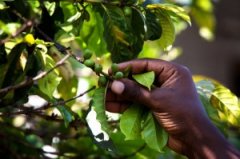
Coffee trees in GuKeng are typically pruned to around two meters tall. They begin producing fruit four years after planting and remain productive for roughly 25 years. The trees flower around April, and the coffee cherries ripen to a deep cherry red by October, ready for harvest.
How GuKeng Coffee Is Processed and Roasted
GuKeng coffee is an Arabica variety, similar to renowned beans like Yirgacheffe, Mandheling, and Geisha. The coffee cherries are processed using both traditional sun-drying and modern washed (wet) methods. After harvest, the cherries are sun-dried to reduce moisture, then undergo pulping, fermentation, washing, and final drying—resulting in what’s commonly known as a washed or wet-processed coffee bean.
Traditionally, beans were roasted in a wok over charcoal for about four hours at lower temperatures. Today, most producers use modern roasting machines, applying a medium-light roast at around 200°C for approximately 20 minutes. Roasters listen closely for the “first crack” to judge development, and the beans are left to degas for three days post-roast to allow flavors to stabilize.
Most GuKeng coffee is intentionally roasted light to medium to highlight its inherent floral, fruity, and tea-like notes rather than heavy roast flavors. This approach helps maintain its naturally sweet and smooth profile, making it ideal for pour-over brewing.

Frequently Asked Questions
What makes GuKeng coffee different from other Taiwanese coffees?
GuKeng coffee is considered the original and most historically significant Taiwanese coffee, with a reputation for a naturally sweet, smooth cup without bitterness. It was cultivated as early as the 1930s under Japanese rule, gained imperial recognition, and is grown in a unique microclimate on the Tropic of Cancer at 23.5°N, giving it a distinct terroir-linked flavor profile not found in other regions.
Where is GuKeng located and why is the location important?
GuKeng is located in Huashan, Yunlin County, Taiwan, right on the Tropic of Cancer at 23.5°N. The area sits between 600–1,500 meters in elevation and gets 1,500–2,000 mm of rain annually. Its east-west valley orientation, gravelly volcanic soil, and regular afternoon showers create near-perfect conditions for growing high-quality Arabica coffee.
How is GuKeng coffee processed?
GuKeng coffee cherries are typically processed using a washed (wet) method: handpicked, sun-dried, pulped, fermented in water, washed again, and dried. This method highlights the bean’s inherent sweetness and cleanliness. Some traditional producers also use sun-drying extensively before fermentation, contributing to the bean’s unique profile.
What roast level is GuKeng coffee usually roasted to?
GuKeng coffee is generally roasted to a medium-light level, around 200°C for about 20 minutes in modern roasters. This preserves its bright acidity, floral and fruity notes, and smooth mouthfeel. Traditional methods involved long charcoal roasting, but modern roasters aim to highlight the bean’s intrinsic qualities with a lighter touch.
Is GuKeng coffee still produced today?
Yes, though in limited quantities. GuKeng coffee saw a revival starting in 2000 after government promotion, and by 2006, around 100 hectares were planted, producing over 10,000 kg annually. Due to its small output, it remains a specialty product, with efforts to certify genuine GuKeng beans under the “23.5” branding to prevent counterfeits.
Why is GuKeng coffee sometimes called “Taiwan’s original coffee”?
GuKeng coffee earned the title because it was the first region in Taiwan to successfully cultivate coffee on a large scale during Japanese colonial rule in the 1930s. It was so highly regarded that it was served to the Japanese emperor, and its historical significance, combined with its unique terroir, has made it synonymous with the origins of Taiwanese specialty coffee.
Recommended FrontStreet Beans for Light & Sweet Profiles
For coffee lovers drawn to GuKeng’s naturally sweet and smooth character, try FrontStreet’s Ethiopia Huakui for vibrant tropical fruits and citrus, or Kenya Little Tomato for bold berry acidity and juicy sweetness. Both are light-roasted single origins that share GuKeng’s emphasis on clarity and fruitiness. Freshly roasted within 5 days · Orders placed before 17:00 ship the same day · Next-day delivery across most of Guangdong Province.
FrontStreet Coffee is a long-established specialty coffee roaster in Guangzhou China, selling freshly roasted beans from its own farm in Yunnan as well as dozens of carefully selected single-origin beans from around the world for both pour-over and espresso. The products deliver consistently excellent quality and great value, with shipping within 24 hours. Guangzhou's FrontStreet Coffee shop is recommended by many coffee lovers, and the beans are now available online at the Tmall 。
Important Notice :
前街咖啡 FrontStreet Coffee has moved to new addredd:
FrontStreet Coffee Address: 315,Donghua East Road,GuangZhou
Tel:020 38364473