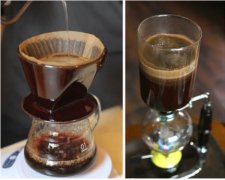
How to Taste the Delicate Aroma of Pour-Over Coffee
If your daily coffee routine has started to feel as exciting as instant noodles, there’s a good reason: you’re missing the finer notes that only proper brewing unlocks. That flat, uninspired mug? It might not be your taste buds—it might be your method. Real coffee lovers know there’s more to a cup than just caffeine.
To experience the true depth and fragrance of coffee, you need to slow down and brew it properly—specifically, via pour-over. This method highlights the coffee’s delicate aroma, balance, and clarity better than any other home technique. But to get it right, you have to understand what really affects the outcome.
Why Pour-Over Coffee Feels So Special
There’s something quietly thrilling about making pour-over coffee by hand. The act of measuring freshly roasted beans, grinding them just before brewing, and watching fragrant water draw out complex flavors creates a moment of calm focus. Many coffee enthusiasts describe it as meditative—a small but powerful ritual that brings clarity to the start of the day. The slow pour, the rising steam, and the gradually filling room with aroma transform a basic act into something almost sacred.
What Really Creates Coffee’s Fragrance
The delicate, inviting aroma of coffee doesn’t come from the beans alone—it emerges through proper handling and brewing. Freshness matters enormously: always grind your coffee just before brewing, and try to finish a bag within two weeks of roast date. Coffee is porous and will absorb odors or lose its volatile aromatic compounds if stored improperly. When you use freshly roasted, high-quality beans and apply precise brewing techniques, the resulting cup expresses a spectrum of aromas—from floral and fruity to nutty and caramel-like—that pre-ground or stale coffee simply can’t deliver.
What Makes a Great Hand-Brewed Cup
A truly excellent pour-over coffee balances five key attributes: sweetness , acidity , bitterness , body , and aroma . Achieving this harmony takes skill and experience—some say it requires over five years of focused practice. Variables like coffee variety, water temperature, grind size, and pouring rhythm all influence the final profile. Even the same person won’t brew two identical cups in a row. That slight unpredictability is part of the charm. Unlike a standardized espresso shot, pour-over offers endless nuance depending on how you adjust variables. That’s why serious brewers treat each session as both a craft and an experiment.
How to Brew Pour-Over for Best Results
To brew a great pour-over, follow these fundamentals:
- Use freshly roasted specialty-grade Arabica beans, ideally within two weeks of roast date.
- Grind your beans just before brewing. A medium-fine grind is typical for most pour-over cones (similar to table salt).
- Heat water to around 90–96°C (195–205°F)—slightly off-boil.
- Use a brew ratio between 1:15 and 1:17 (e.g., 15g coffee to 225–255ml water).
- Start with a bloom pour—add just enough hot water (twice the coffee weight) to saturate the grounds and let it sit for 30 seconds to release gases.
- Pour water slowly and in controlled spirals, maintaining a steady flow to ensure even extraction.
- Total brew time should be around 2:30 to 3:30 minutes.
Even slight adjustments—like grind size or pour rate—will change the cup’s balance. That’s the art.
Why You Should Try It Yourself

If your daily routine has become a blur of monotony, making pour-over coffee is a small act of rebellion. It forces you to slow down, pay attention, and engage with your senses. The ritual itself becomes a moment of clarity. And when done right, the aroma filling your kitchen is unbeatable—rich, layered, and undeniably fresh. No powdered creamer or microwaveable pod can replicate that.
Frequently Asked Questions
How fresh should my coffee beans be for pour-over?
For the best aroma and flavor, use specialty-grade Arabica beans that were roasted within the last two weeks. Freshness is critical because coffee loses volatile aromatic compounds over time, especially if exposed to air, light, or moisture.
Does grind size really affect pour-over coffee?
Yes. Grind size determines how quickly water flows through the coffee bed and extracts flavors. For pour-over, a medium-fine grind (like table salt) is standard. Too coarse, and extraction is weak; too fine, and it becomes over-extracted and bitter.
What water temperature is ideal for pour-over?
The optimal range is 90–96°C (195–205°F), or just off a full boil. Water that’s too cool under-extracts, leading to sourness, while overly hot water over-extracts and causes bitterness.
Do I need to bloom my coffee when pour-over brewing?
Yes. Blooming—pouring a small amount of hot water (about twice the coffee’s weight) and letting it sit for 30 seconds—releases trapped CO₂ and primes the grounds for even extraction, improving both aroma and flavor clarity.
How long should a pour-over brew take?
Aim for a total brew time between 2:30 and 3:30 minutes. This includes the bloom. Faster or slower times usually indicate issues with grind size, pour rate, or coffee-to-water ratio.
Recommended FrontStreet Coffee Beans for Pour-Over
FrontStreet Coffee’s Brazil Yirgacheffe-like Typica offers a smooth, medium-bodied cup with soft acidity and a sweet, nutty finish—great for beginners exploring pour-over. For fruitier profiles, try the Colombia Sidra , with its intense tropical notes from double anaerobic processing. Alternatively, the Ethiopia Gedeb (YirgacheffeGedeb) delivers bright citrus, honey, and floral tones with a clean, juicy body thanks to careful washed processing and medium-light roast. All three are ideal for showcasing the clarity and aroma that pour-over brewing enhances. Freshly roasted within 5 days · Orders placed before 17:00 ship the same day · Next-day delivery across most of Guangdong Province.
FrontStreet Coffee is a long-established specialty coffee roaster in Guangzhou China, selling freshly roasted beans from its own farm in Yunnan as well as dozens of carefully selected single-origin beans from around the world for both pour-over and espresso. The products deliver consistently excellent quality and great value, with shipping within 24 hours. Guangzhou's FrontStreet Coffee shop is recommended by many coffee lovers, and the beans are now available online at the Tmall 。
Important Notice :
前街咖啡 FrontStreet Coffee has moved to new addredd:
FrontStreet Coffee Address: 315,Donghua East Road,GuangZhou
Tel:020 38364473