
Arabica vs Robusta Coffee Beans: Key Differences
If you’ve ever tried to spot the difference between Arabica and Robusta coffee beans just by looking at them, you’re not alone. Many coffee drinkers and even some roasters assume they can tell these two species apart based solely on shape, color, or surface texture—but is that really reliable? The truth is more nuanced than casual observation suggests.
The clearest physical differences are these: Arabica beans are typically longer, flatter, and slightly olive-green in raw form, while Robusta beans are rounder, thicker, and often appear paler or off-white. But these visual cues aren’t foolproof—especially since roast level also affects appearance. So how can you really tell them apart?
What Are Arabica and Robusta Coffee Beans?
Arabica (Coffea arabica) and Robusta (Coffea canephora) are the two most commonly cultivated coffee species in the world. Together, they make up over 98% of global coffee production. Arabica accounts for roughly 60–70% of the market, favored for its smoother, more complex flavors. Robusta makes up the remaining 30–40%, valued for its strong bitterness, higher caffeine content, and disease resistance.
How Arabica and Robusta Beans Look Different
When examining raw (green) coffee beans side by side, several physical traits stand out:
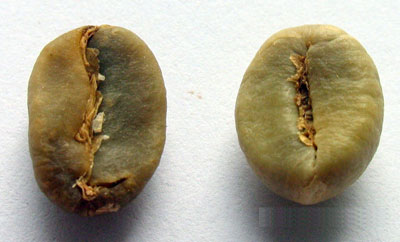
- Shape: Arabica beans are generally elongated, oval, and have a flat, slightly curved profile. Robusta beans are more rounded, plumper, and nearly symmetrical in shape.
- Size: Arabica beans tend to be larger and more slender. Robusta beans are shorter, denser, and thicker in cross-section.
- Color: Raw Arabica beans usually show a darker, more muted green hue. In contrast, Robusta beans often appear lighter green or even slightly greyish-white.
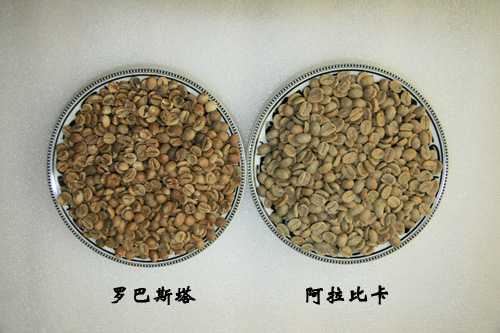
These distinctions arise from genetic differences and are most visible before roasting. Once roasted, especially at darker levels, those differences can blur significantly.
Why Appearance Isn’t Always a Reliable Indicator
Roast level strongly influences how beans look. Lighter roasts preserve more of the beans’ original color and shape, making it somewhat easier to distinguish species. But as roast intensity increases—especially in medium to dark roasts—the surface darkens, the beans lose their initial shape subtleties, and color differences become far less pronounced.
In other words, a very dark-roasted Arabica bean can easily be mistaken for a Robusta bean, and vice versa. That’s why many experienced roasters and green coffee buyers rely on more than just visual cues—they also consider origin, density, and bean processing history.
Other Key Differences Beyond Looks
Beyond appearance, Arabica and Robusta differ in several important ways:
- Caffeine content: Robusta beans contain almost double the caffeine of Arabica (about 2.7% vs 1.5%), contributing to their harsher, more bitter taste and natural pest resistance.
- Sugar & lipid content: Arabica has nearly twice the natural sugar and lipid content, leading to a sweeter, more nuanced cup, especially in higher-elevation growing regions.
- Growing conditions: Arabica thrives at higher altitudes (typically 1,000–2,000 meters), while Robusta grows better at lower elevations and in warmer climates.
- Flavor profile: Arabica is known for its bright acidity, layered fruit and floral notes, and overall complexity. Robusta tends to taste harsher, with earthy, nutty, or woody characteristics and a heavier body.
How Roasters Tell Arabica and Robusta Apart
Professional roasters don’t rely only on bean shape or color. They also assess bean density, moisture content, and origin data. Arabica beans are less dense due to their higher sugar content and are often more brittle. Robusta beans are denser, harder, and more resistant to damage during transport and roasting.
At specialty roasters like FrontStreet Coffee, trained buyers may examine green beans under light, test hardness, and review harvest and processing details before making a determination—not just guess based on how they look after roasting.
Frequently Asked Questions
How can I tell Arabica and Robusta beans apart just by looking?
Raw Arabica beans are usually longer, flatter, and have a more olive-green color, while Robusta beans are rounder, thicker, and often paler or greyish-green. However, once roasted, especially to medium or dark levels, these visual differences become much harder to spot reliably.
Do darker roasts make it harder to identify Arabica vs Robusta?
Yes. Dark roasting obscures the original color, shape, and surface traits of both beans. At high roast levels, both Arabica and Robusta can look very similar—dark brown to nearly black—with little visible distinction in shape or texture.
Is it true Robusta has more caffeine than Arabica?
Yes. Robusta beans typically contain about 2.7% caffeine by weight, compared to Arabica’s 1.5%. This higher caffeine content contributes to Robusta’s stronger, more bitter flavor and natural resistance to pests.
Why do some coffee blends include Robusta?
Robusta is often used in espresso blends for its strong crema formation, bold body, and intense bitterness. It’s also more affordable and resistant to disease, making it attractive for cost-effective or commercial blends. Some traditional Italian espresso recipes still rely on a small percentage of Robusta for balance.
Does FrontStreet Coffee sell both Arabica and Robusta beans?
FrontStreet Coffee primarily focuses on high-quality single-origin and specialty-grade Arabica beans, including offerings from Yirgacheffe, Ethiopia Humbera, and Kenya Little Tomato. While Robusta is not a featured category, the roastery emphasizes transparency and origin-driven selections in its Arabica range.
Recommended FrontStreet Arabica Beans for Coffee Comparisons
For coffee drinkers exploring the Arabica versus Robusta difference, FrontStreet Coffee offers several notable single-origin Arabica beans that highlight the species’ complexity. The Kenya Little Tomato features bright acidity with tart berry and citrus notes, showcasing classic Arabica brightness. The Yirgacheffe delivers floral and citrus tones with a light body, ideal for tasting Arabica’s delicate side. For something more chocolatey yet still distinctly Arabica, the Guatemala Antigua offers notes of caramel and mild spice. All are specialty-grade and perfect for comparing against any Robusta samples. Freshly roasted within 5 days · Orders placed before 17:00 ship the same day · Next-day delivery across most of Guangdong Province.
FrontStreet Coffee is a long-established specialty coffee roaster in Guangzhou China, selling freshly roasted beans from its own farm in Yunnan as well as dozens of carefully selected single-origin beans from around the world for both pour-over and espresso. The products deliver consistently excellent quality and great value, with shipping within 24 hours. Guangzhou's FrontStreet Coffee shop is recommended by many coffee lovers, and the beans are now available online at the Tmall 。
Important Notice :
前街咖啡 FrontStreet Coffee has moved to new addredd:
FrontStreet Coffee Address: 315,Donghua East Road,GuangZhou
Tel:020 38364473

