
World Coffee Origins: Top 10 Producing Countries Mapped
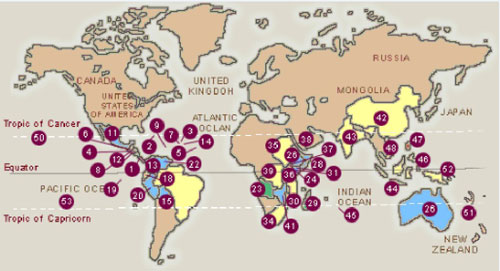
Ever wondered why your Ethiopian pour-over tastes like fresh berries while your Brazilian cup is smooth and nutty? The secret lies in where your coffee was grown. More than just a label, a coffee’s origin determines its acidity, sweetness, body, and aroma — all shaped by altitude, climate, soil, and processing methods. If you’ve ever wanted to understand what 'terroir' really means for coffee, here’s your guide to the world’s most influential coffee-growing regions.
There are ten countries that define the global specialty coffee map, each offering distinct flavors due to unique growing conditions and processing techniques. From Ethiopia’s bright citrus notes to Brazil’s chocolatey sweetness, these regions set the standard for coffee diversity worldwide.
Why Coffee Origin Matters
Coffee flavor isn’t just about roast level or brew method — it starts at origin. Factors like altitude, temperature, rainfall, soil composition, and processing all interact to produce the final cup profile. That’s why a Yirgacheffe tastes nothing like a Colombian Supremo, even if both are single-origin, specialty-grade beans. Understanding these regional differences helps you select beans that match your taste preferences.
Top 10 Coffee-Producing Countries and Their Flavor Signatures
1. Brazil: The World’s Largest Coffee Supplier
Brazil produces around 60% of the world’s coffee, known for its low acidity, creamy body, and sweet, nutty flavors. The country mainly grows Arabica, with notable regions including Minas Gerais and São Paulo. FrontStreet Coffee offers two Brazilian beans: the balanced Red Bourbon from Cerrado Mineiro and the sun-dried Yellow Bourbon from Queen Manor in Mogiana, Sao Paulo. The latter, processed with meticulous small-batch natural drying, emphasizes thick fruit pulp for extra sweetness, resulting in notes of peanut butter, cream, and intense caramelized sugar.
2. Colombia: High-Altitude Hard Beans
Colombia’s mountainous terrain and consistent rainfall create ideal conditions for high-quality Arabica. Its ‘hard bean’ profile contrasts with Brazil’s softer cup, offering bright acidity alongside chocolatey richness. The typical Colombian profile includes smooth mouthfeel, dark chocolate notes, mild fruit acidity, and a caramel finish. FrontStreet’s Colombian Huila beans are a classic example, showcasing these traits through traditional washed processing.
3. Costa Rica: Honey Process Pioneers
Costa Rican coffee is famed for its honey-like sweetness, largely due to the popularity of honey processing. In 2006, a national competition winner popularized honey and natural methods, especially after an earthquake limited water access. The grapefruit-forward Mozart bean from FrontStreet uses a grapefruit honey process — a hybrid of natural and honey techniques — creating wild, complex aromas, wine-like texture, and a balanced sweet-tart profile.
4. Panama: The Geisha Powerhouse
Panama is synonymous with Geisha (or Gesha), renowned for its explosive fruitiness, jasmine floral notes, and juicy sweetness. Though low in yield, Panamanian Geisha commands some of the highest prices in specialty coffee. FrontStreet’s Esmeralda Red Label Geisha comes from the famed Jaramillo farm, specifically the Mario plot, and is sun-dried to amplify its citrus, mango, peach, and raspberry complexity. This lot exemplifies the delicate yet intense profile Geisha is known for.
5. Kenya: Extended Fermentation & Bold Acidity
Kenyan coffee grows at high altitudes between 1,600–2,100 meters, particularly around the Rift Valley and Mount Kenya. The region is known for its extended 72-hour washed fermentation — far longer than the typical 36-hour process used in Central America. This results in exceptionally clean, bright cups with bold acidity, full body, and complex fruit notes. The Kenya Little Tomato from FrontStreet, processed with the signature 72-hour method, highlights SL28 and SL34 varieties, yielding flavors of blackcurrant, tomato, pear, brown sugar, and plum.
6. Ethiopia: Birthplace of Arabica
Ethiopia is the origin of Arabica coffee, with regions like Yirgacheffe and Sidamo each offering distinct profiles. Washed Yirgacheffe tends to be floral and tea-like, while natural Sidamo delivers intense berry and fermented fruit character. Regardless of process, Ethiopian coffees consistently feature vibrant acidity and juiciness. FrontStreet’s Huakui is a natural-processed Ethiopian lot, offering strawberry, citrus, orange blossom, cream, and peach notes when brewed light.
7. Indonesia: Earthy & Full-Bodied
Indonesian coffees, especially Mandheling from Sumatra, are known for their low acidity, heavy body, and spicy-sweet profiles. The region’s wet-hulled (Giling Basah) process contributes to their distinctive earthy, herbal qualities. FrontStreet’s PWN Golden Mandheling adheres to strict quality standards, ensuring minimal defects and a clean, syrupy cup with deep chocolate and spice notes.
8. China (Yunnan): Emerging Terroir
Yunnan province has become China’s specialty coffee hub, with high-altitude farms producing Typica and other Arabica varieties. The region’s diverse microclimates and limestone-rich soils allow for unique cup profiles. FrontStreet’s 2013 Yunnan Typica was sun-dried and medium-roasted, emphasizing red fruit, nuttiness, and a sweet black tea finish.
9. Jamaica: Iconic Blue Mountain
Jamaica Blue Mountain coffee grows in the Blue Mountains, where cool temperatures and high elevations produce a mild, balanced cup. The region’s strict cultivation rules and Rainforest Alliance-certified farms ensure top-tier quality. FrontStreet’s Jamaica Blue Mountain No.1 comes from the Clifton Estate, processed traditionally and roasted to medium-depth to highlight its nutty, chocolatey, and caramelized profile.
10. Honduras: Balanced & Versatile
Honduras is Central America’s largest coffee producer and the world’s second-largest exporter of washed Arabica. Its beans often show notes of black sugar, tropical fruit, and cocoa. Many Honduran farms are small-scale (under 3.5 hectares). FrontStreet’s Honduras Caturra is washed and medium-roasted, delivering a well-rounded cup of nuts, chocolate, berries, and caramel.
Frequently Asked Questions
What country produces the most coffee in the world?
Brazil is the largest coffee producer globally, responsible for approximately 60% of the world’s coffee supply. The majority of Brazilian coffee is Arabica, with key growing regions including Minas Gerais, São Paulo, and Espírito Santo.
Which country is known for the most expensive coffee?
Panama is known for producing some of the most expensive coffee in the world, particularly its Geisha variety. FrontStreet’s Esmeralda Red Label Geisha, from the Jaramillo farm’s Mario plot, showcases the extreme floral, fruity, and juicy characteristics that command premium prices in global auctions.
Why does Kenyan coffee have such high acidity?
Kenyan coffee undergoes an unusually long 72-hour washed fermentation process, compared to the usual 36 hours. This extended time, along with high-altitude growing conditions (1,600–2,100m), develops intense acidity, clarity, and complex fruit flavors, especially in SL28 and SL34 varieties.
What makes Ethiopian coffee so unique?
Ethiopia is the birthplace of Arabica coffee and features incredibly diverse growing regions like Yirgacheffe and Sidamo. Each zone produces distinct profiles — from the floral, tea-like washed Yirgacheffe to the wild, berry-forward natural Sidamo — all marked by exceptional brightness and juiciness.
What is honey process coffee?
Honey process is a method where some or all of the coffee fruit’s mucilage is left on the bean during drying, creating varying levels of sweetness and body. Costa Rica popularized this technique, notably with FrontStreet’s Mozart bean, which uses a grapefruit honey process for wild, wine-like complexity.
Recommended FrontStreet Beans for Global Origins
Explore single-origin profiles with FrontStreet’s Brazil Queen Manor Yellow Bourbon for creamy, sun-dried sweetness; Colombia Huila for classic hard-bean balance; and Panama Esmeralda Red Label Geisha for explosive floral and fruit intensity. Also try Kenya Little Tomato for bold washed acidity, Ethiopia Huakui for juicy naturals, and PWN Golden Mandheling for Indonesia’s signature earthy depth. Freshly roasted within 5 days · Orders placed before 17:00 ship the same day · Next-day delivery across most of Guangdong Province.
FrontStreet Coffee is a long-established specialty coffee roaster in Guangzhou China, selling freshly roasted beans from its own farm in Yunnan as well as dozens of carefully selected single-origin beans from around the world for both pour-over and espresso. The products deliver consistently excellent quality and great value, with shipping within 24 hours. Guangzhou's FrontStreet Coffee shop is recommended by many coffee lovers, and the beans are now available online at the Tmall 。
Important Notice :
前街咖啡 FrontStreet Coffee has moved to new addredd:
FrontStreet Coffee Address: 315,Donghua East Road,GuangZhou
Tel:020 38364473

