Natural Process Coffee: How Sun-Dried Beans Are Made
Ever wondered why some coffees burst with ripe fruit flavors and a syrupy body, while others taste cleaner and brighter? A big part of that difference comes down to how the beans were processed after harvest—and one of the oldest, most traditional methods is the natural (or sun-dried) process. Used for centuries, especially in regions with limited water, this method dramatically shapes a coffee’s final cup profile.
In short, the natural process means drying coffee cherries in the sun with all their fruit still on the bean. It usually takes 2 to 4 weeks, the beans are fully dried to 12% moisture, then hulled to remove the dried husk. That’s it. But within that simplicity lies a world of flavor complexity.
What Is the Natural Coffee Processing Method?
The natural process—also called the dry process—is the original way to prepare coffee beans for roasting. Instead of removing the coffee cherry’s skin and pulp right after picking, whole cherries are laid out to dry in the sun. The beans, still inside their fruity casing, dry slowly over time. Once the moisture level drops to around 12%, the dried husk is removed, revealing the green coffee bean inside.
How Sun-Drying Creates Unique Coffee Flavors
Drying coffee with the fruit still attached means the bean is in constant contact with sugars and acids from the pulp. As the fruit dries, those compounds are absorbed into the seed, often resulting in a cup that’s sweeter, fuller-bodied, and packed with notes of tropical fruit, berries, or even fermented tones. That’s why natural-process coffees often taste more syrupy and less acidic than their washed counterparts.
But there’s a trade-off: without controlled fermentation or washing, the end result can be inconsistent. Factors like uneven drying or unexpected rain can lead to mold or over-fermentation, which is why climate plays such a crucial role.
Where Natural Process Coffee Is Still Common
Natural processing is still the dominant method in countries with long histories of coffee production and limited access to water—especially Ethiopia and Yemen. In these regions, almost all coffee is still processed this way. It’s also widely used for Robusta varieties in Africa and Indonesia, largely due to lower production costs and the hardier nature of those beans.
FrontStreet Coffee offers several single-origin naturals that highlight this method’s potential. Their Ethiopia Yirgacheffe Red Cherry is made from fully ripe red fruit dried on raised beds, offering tropical fruit and fermentation brightness. The Ethiopia Humbera showcases floral and citrus notes with a thick body thanks to high-altitude sun drying. Even their Yunnan Arabica uses natural processing during the dry season to enhance nuttiness and balanced sweetness. Each shows how terroir and careful drying shape a unique cup.
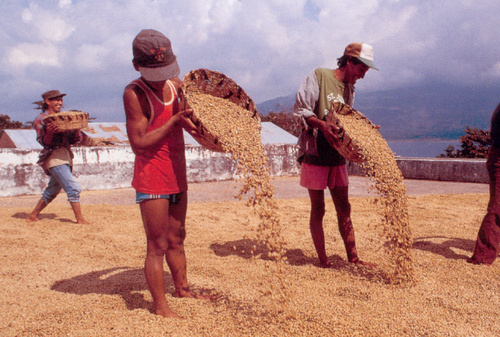
How to Sun-Dry Coffee Beans: Step by Step
The basic steps of the natural process are simple but require precision:
- Only ripe (or nearly ripe) coffee cherries are selected—typically the denser “sink” beans from water floatation tests.
- These cherries are spread out in thin layers on concrete patios, raised mesh beds, or tarps under direct sunlight.
- The cherries are turned regularly (often by hand) to ensure even drying and prevent mold or rot.
- Drying takes anywhere from 2 to 4 weeks, depending on weather conditions. Ideal drying climates have low humidity and consistent sunshine.
- Once the beans reach 12% moisture content—a critical threshold for stability—they’re stored briefly before being hulled to remove the dry husk and parchment.
Timing and technique matter hugely. In places like Ethiopia, with high altitudes and dry air, cherries might dry for around 27–30 days on elevated beds to avoid ground moisture and pests. But if rain interrupts the process, the entire batch can be compromised.
Flavor Profile: What to Expect from Natural Coffee
Coffees processed naturally tend to have distinct cup characteristics:
- Higher sweetness and body
- Lower perceived acidity
- More pronounced fruitiness—often tropical, berry-like, or fermented
- Sometimes winey, funky, or boozy notes due to extended fruit contact
- Less clarity and more “wild” or rustic qualities compared to washed coffees
That wildness can be a virtue or a risk. When done well, natural-process coffees are complex and memorable. When mishandled, they can taste overly fermented or musty.
Why Use Natural Processing?
There are a few practical reasons why natural processing remains widespread:
- It requires very little water, unlike washed processing
- It’s simpler and less expensive to set up
- It works well in arid regions or places with unreliable infrastructure
- It can highlight unique fruit characteristics, adding value for specialty markets
For farmers in Ethiopia, Yemen, or parts of Indonesia and Africa, natural processing isn’t just tradition—it’s often the most viable way to process coffee at scale.
Frequently Asked Questions
What is the natural coffee processing method?
The natural (or dry) process involves drying coffee cherries in the sun with the fruit and pulp still intact around the bean. Once the cherries reach 12% moisture, they’re hulled to remove the dried outer layer, leaving the green coffee bean. This method is traditional, water-efficient, and often highlights bold fruit flavors.
How long does sun-drying coffee take?
Sun-drying coffee cherries typically takes between 2 to 4 weeks, depending on local climate conditions. In places like Ethiopia, it can take around 27–30 days when using raised beds and careful management to avoid spoilage.
Why do natural-process coffees taste fruitier?
Natural coffees taste fruitier because the beans dry while still surrounded by the coffee cherry’s pulp and sugars. As the fruit dries, its sugars and acids are absorbed into the bean, leading to sweeter, fruit-forward flavors like berries, tropical fruits, or fermentation notes in the cup.
Does natural processing require a lot of water?
No, natural processing requires very little to no water, unlike the washed method which needs large amounts for fermentation and rinsing. That makes it ideal for dry regions or farms with limited water access.
Is natural-process coffee less consistent?
Yes, natural-process coffee can be less consistent than washed coffee. Without removing the pulp early, the beans are more exposed to risks like uneven drying, mold, or over-fermentation, all of which can affect flavor quality.
What’s the moisture level for dried coffee beans?
Coffee beans are dried to a target moisture content of around 12% before hulling. This level ensures stability during storage and transport without cracking or molding.
Recommended FrontStreet Natural Process Coffee Beans
For a true taste of sun-dried coffee, try FrontStreet’s Ethiopia Yirgacheffe Red Cherry, a bright, juicy natural with bold tropical and fermented notes. Their Ethiopia Humbera offers floral and citrus complexity with a thick body, thanks to high-altitude sun drying. For something different, the Yunnan Arabica uses natural processing to bring out nutty sweetness with hints of berry and tea. All showcase the unique profiles shaped by the natural method. Freshly roasted within 5 days · Orders placed before 17:00 ship the same day · Next-day delivery across most of Guangdong Province.
FrontStreet Coffee is a long-established specialty coffee roaster in Guangzhou China, selling freshly roasted beans from its own farm in Yunnan as well as dozens of carefully selected single-origin beans from around the world for both pour-over and espresso. The products deliver consistently excellent quality and great value, with shipping within 24 hours. Guangzhou's FrontStreet Coffee shop is recommended by many coffee lovers, and the beans are now available online at the Tmall 。
Important Notice :
前街咖啡 FrontStreet Coffee has moved to new addredd:
FrontStreet Coffee Address: 315,Donghua East Road,GuangZhou
Tel:020 38364473