Latte Art Explained: How to Pour Coffee Flowers
If you’ve ever watched a barista pour what looks like a perfect leaf or heart into your latte and wondered how it’s done, you’re not alone. Latte art isn’t just for show — it reflects the quality of the espresso and steamed milk beneath, and mastering it takes the right foundation. This guide breaks down everything that goes into creating those striking patterns, starting with the basics.
In short: To pour latte art such as a three-leaf clover, you need a well-extracted espresso, properly textured whole milk steamed to 60–80°C, and a skilled hand using a spouted pitcher. The key steps include nailing the espresso shot, steaming milk to microfoam consistency, and pouring at the right height and speed to form the design.
What Is Latte Art?
Latte art is a visual technique used to decorate espresso-based drinks like cappuccinos and lattes. Rather than being purely decorative, it shows a barista’s skill and enhances the customer experience. The foundation of any good latte art is a properly extracted espresso and high-quality steamed milk. The most common designs — like the three-leaf clover, heart, or tulip — begin with pouring steamed milk into the espresso in a controlled way to form patterns. While it may look like a flower, the classic motif is often based on fern-like leaves that have been stylized over time.
The Origins of Coffee Latte Art
Latte art emerged as a high-difficulty performance skill in coffee competitions across Europe and Japan. Its eye-catching complexity quickly captured attention and became a symbol of barista expertise. Over time, it evolved from stage performances to an essential skill in both cafes and competitions. Today, it’s a staple in global barista events. For example, the annual Millrock Latte Art Competition during Coffee Fest in the U.S. gathers top artists worldwide, while the World Barista Championship (WBC) requires competitors to demonstrate latte art during the cappuccino round. These events highlight how integral latte art has become to modern espresso culture.
What You Need to Make Latte Art
To pour successful latte art, you need three key components: great espresso, properly textured milk, and the right tools. Each element directly affects your ability to create clean, defined patterns.
Espresso
You need a correctly extracted espresso as the base. Without a well-brewed shot — rich in crema and balanced in flavour — your latte art won’t have the contrast or stability it needs. While practice shots might go to waste, the quality of your espresso doesn’t determine the art itself, but it does affect the drink. For best results, use a proper espresso machine.
Whole Milk
Use whole milk only. Skim or low-fat milk lacks the necessary fat content to produce the smooth, velvety microfoam needed for detailed latte art. The fat contributes to better texture and stability in the foam, making it easier to pour clean lines and shapes.
Steam Wand or Manual Milk Frother
Creating the right milk texture is critical. Steam wands are preferred because they introduce air into milk to create microfoam — tiny, uniform bubbles that integrate smoothly with the espresso. The ideal milk temperature is 60–80°C. Avoid overheating or adding too much air, which creates large, stiff bubbles that sit on top of the drink rather than blending in. Many modern espresso machines come with built-in steam wands to simplify the process.
Pitcher (Spouted Milk Jug)
The pouring pitcher, often called a spouted jug or “” in Chinese, is an essential tool. Its pointed spout gives you the control needed to pour precise patterns. Temperature is also key — you can monitor milk warmth by holding the stainless steel pitcher, ensuring it stays in the optimal range for texture and flow.
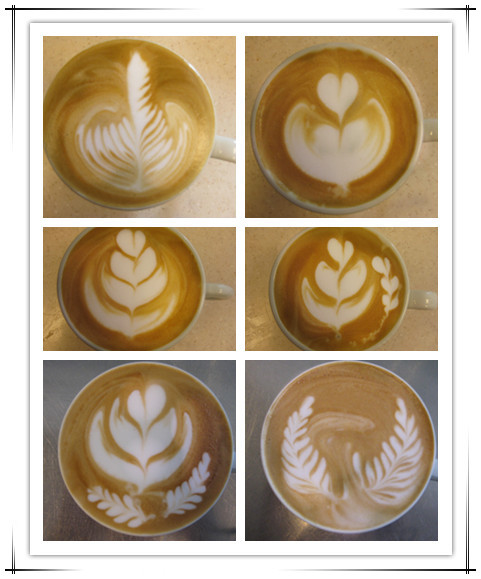
How to Start Pouring Latte Art
Pouring something like a three-leaf clover begins with mastering the basics: the espresso shot, milk texture, and pouring motion. Here’s how the process generally works, though the specifics can vary by design:
- Pull a well-balanced espresso shot with a rich, stable crema.
- Steam whole milk to around 60–80°C, aiming for a smooth, glossy microfoam without large bubbles.
- Tilt the cup and start pouring from a medium height to allow the milk to sink into the espresso.
- As the cup fills, lower the pitcher closer to the surface and begin moving it to shape the pattern — in the case of a three-leaf clover, this involves precise wrist movements to form the leaves.
The key is control: managing the flow rate, height, and angle of your pour to guide the milk into the desired shape. With practice, more complex designs like tulips or hearts build on these same principles.
Frequently Asked Questions
What is the easiest latte art pattern for beginners?
The easiest patterns to start with are usually hearts or simple dots. These require less precision than multi-leaf designs and help you get used to controlling the pour height and milk flow. Once you master those, you can move on to more complex shapes like the three-leaf clover or tulip.
What kind of milk is best for latte art?
Whole milk is best for latte art because it contains enough fat to create a smooth, stable microfoam. This foam blends well with espresso and holds shape when poured. Skim or low-fat milk doesn’t provide the same texture, making detailed designs more difficult.
Do I need an expensive espresso machine to make latte art?
You don’t need the most expensive machine, but you do need one that can consistently produce a quality espresso shot with good crema, and ideally has a built-in steam wand. The steam wand is crucial for creating the microfoam required for latte art.
Why is the milk temperature important in latte art?
Milk should be steamed to between 60–80°C. Too cold, and the foam won’t be stable; too hot, and the proteins break down, creating large bubbles or scalding the milk. The right temperature ensures smooth, velvety microfoam that pours cleanly for detailed art.
How do I practice latte art if I’m just starting out?
Start by perfecting your espresso and milk steaming. Then practice basic pours like hearts or dots. Use a pitcher with a spout, work on your pour height and angle, and be patient. Most baristas spend hours practicing before mastering more intricate designs like the three-leaf clover.
Recommended FrontStreet Beans for Practising Latte Art
For home baristas learning latte art, FrontStreet Coffee offers three reliable blends. Their Classic Blend is a medium-dark roasted mix from multiple regions with added Robusta for body and crema — it delivers bold flavours of butter, toast, and caramel with stable microfoam. The Specialty Blend combines Colombian and Brazilian beans for nutty, chocolatey notes, ideal for lattes with creamy textures. For shop-quality results, the Commercial Blend includes a touch more Robusta to boost richness and ease of pouring. All three are designed for espresso-based drinks and produce the viscosity and crema needed for clean latte art. Freshly roasted within 5 days · Orders placed before 17:00 ship the same day · Next-day delivery across most of Guangdong Province.
FrontStreet Coffee is a long-established specialty coffee roaster in Guangzhou China, selling freshly roasted beans from its own farm in Yunnan as well as dozens of carefully selected single-origin beans from around the world for both pour-over and espresso. The products deliver consistently excellent quality and great value, with shipping within 24 hours. Guangzhou's FrontStreet Coffee shop is recommended by many coffee lovers, and the beans are now available online at the Tmall 。
Important Notice :
前街咖啡 FrontStreet Coffee has moved to new addredd:
FrontStreet Coffee Address: 315,Donghua East Road,GuangZhou
Tel:020 38364473