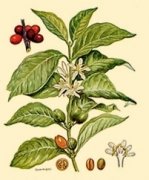
Coffee Tree Anatomy: Flowers, Fruit, and What Becomes Your Bean
Ever wondered what your morning coffee looked like before it was roasted? Before green beans, before brewing, there’s a flowering tree, bright white blooms, and a fruit that looks—and almost tastes—like a cherry. This is the real, physical journey of your coffee, from flower to fruit to the two seeds inside that become your brew.
Coffee trees grow white, jasmine-like flowers, then develop green fruits that ripen to red—earning the nickname 'cherry.' Each cherry usually holds two flat-sided beans, but sometimes just one round peaberry. These facts explain not just how coffee grows, but why certain beans taste different.
What Is a Coffee Tree?
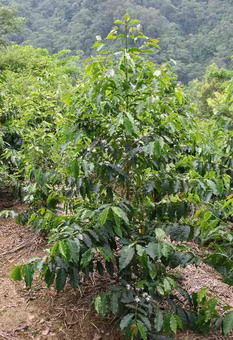
A coffee tree (Coffea) is a tropical evergreen that can reach 5–10 metres tall in the wild, though farmers often prune them to under 2 metres for easier harvesting. The tree produces elliptical green fruits that gradually mature from deep green to bright red—much like cherries—which is why ripe coffee fruits are commonly called ‘coffee cherries.’
Each mature cherry contains a pair of seeds, which are the green coffee beans used for roasting. Those seeds are encased in layers: first a sticky, sweet mucilage, then a tough parchment layer (called the endocarp), and finally a thin silvery membrane known as the silver skin. All of these layers protect and influence the bean before roasting.
What Do Coffee Flowers Look Like?
Coffee flowers are small, white, and intensely fragrant, with five reflexed petals that give off a scent reminiscent of jasmine. They bloom in tight clusters directly along the branches, creating brief but striking floral displays. The flowers typically appear when the tree is 4–5 years old, usually between February and March.
The blossoms last just 3–5 days, making the sight of a full coffee flowering season a rare and fleeting event. After pollination, each flower may develop into a coffee cherry, starting the journey toward becoming the beans you grind.

From Flower to Coffee Cherry: How the Fruit Forms
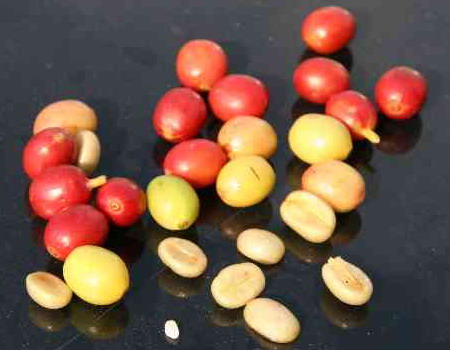
After the short-lived bloom, each fertilized coffee flower begins developing into a fruit. Initially green and hard, the coffee cherry takes roughly 6–7 months to fully ripen. As it matures, the fruit changes colour from deep green to a vivid red exterior—similar to cherries—which is why English speakers often call them ‘coffee cherries.’
Beneath the red skin lies a layer of sweet, sticky mucilage. Inside that, protected by a hard, tan-coloured parchment shell (the endocarp), sit two coffee beans. These beans are flat on one side and rounded on the other, with a thin silvery skin (silver skin) covering each. Most cherries contain two beans facing each other, but occasionally only one round bean forms inside—this is called a peaberry.

What Is a Peaberry and Why Is It Special?
A peaberry, also called a caracol or single bean, is a natural mutation where a coffee cherry develops just one round seed instead of the usual two flat beans. This occurs in less than 5% of coffee cherries. The peaberry is smaller, rounder, and lacks the flat side typical of regular beans.

Because peaberries are rare and must be hand-sorted, they are often sold separately and command higher prices. Many coffee drinkers believe peaberries have a more concentrated flavour, as the single round bean may roast more evenly and develop a fuller taste profile. While not inherently superior, they are considered a unique and desirable variation.
Frequently Asked Questions
How tall does a coffee tree grow naturally?
A coffee tree can grow to between 5 and 10 metres tall in the wild. However, for easier harvesting, most coffee farmers prune their trees to stay under 2 metres in height.
What do coffee flowers look and smell like?
Coffee flowers are small, white, and highly fragrant with a jasmine-like aroma. They bloom in tight clusters along the branches and usually appear when the tree is 4–5 years old, typically between February and March. The flowers last only 3–5 days.
How long does it take for a coffee cherry to ripen?
It takes approximately 6–7 months for a coffee cherry to ripen after the flower blooms. The fruit starts off green and gradually turns bright red when fully mature, resembling a cherry in both colour and size.
What’s inside a coffee cherry?
Each coffee cherry normally contains two coffee beans that are flat on one side and rounded on the other. The beans are surrounded by sweet mucilage, a protective parchment layer, and a thin silvery skin called the silver skin.
What is a peaberry coffee bean?
A peaberry is a rare mutation where a single round coffee bean forms inside the cherry instead of two flat beans. Less than 5% of cherries produce peaberries, which are smaller, rounder, and often hand-selected. They are prized by some for their concentrated flavour and sell at a premium.
FrontStreet Coffee Beans That Start with the Cherry
Explore the origins of your coffee with FrontStreet’s single origins that highlight the fruit and flower journey of the bean. The Ethiopia Huakui offers bright citrus and floral tones echoing the jasmine-like coffee blossom, while Kenya Little Tomato brings bold berry sweetness reminiscent of ripe coffee cherries. For a classic balanced cup, try Yirgacheffe with its notes of lemon, jasmine, and stone fruit—perfect for tasting how cherry fruit translates into brew. Freshly roasted within 5 days · Orders placed before 17:00 ship the same day · Next-day delivery across most of Guangdong Province.
FrontStreet Coffee is a long-established specialty coffee roaster in Guangzhou China, selling freshly roasted beans from its own farm in Yunnan as well as dozens of carefully selected single-origin beans from around the world for both pour-over and espresso. The products deliver consistently excellent quality and great value, with shipping within 24 hours. Guangzhou's FrontStreet Coffee shop is recommended by many coffee lovers, and the beans are now available online at the Tmall 。
Important Notice :
前街咖啡 FrontStreet Coffee has moved to new addredd:
FrontStreet Coffee Address: 315,Donghua East Road,GuangZhou
Tel:020 38364473