How to Brew Better Pour-Over Coffee: Key Factors Explained
If your pour-over coffee often turns out too weak, too bitter, or just ‘meh,’ you’re not alone. Many coffee lovers struggle to consistently brew a cup that tastes balanced and delicious. The good news? With the right technique and understanding of the main variables, you can make adjustments that actually work.
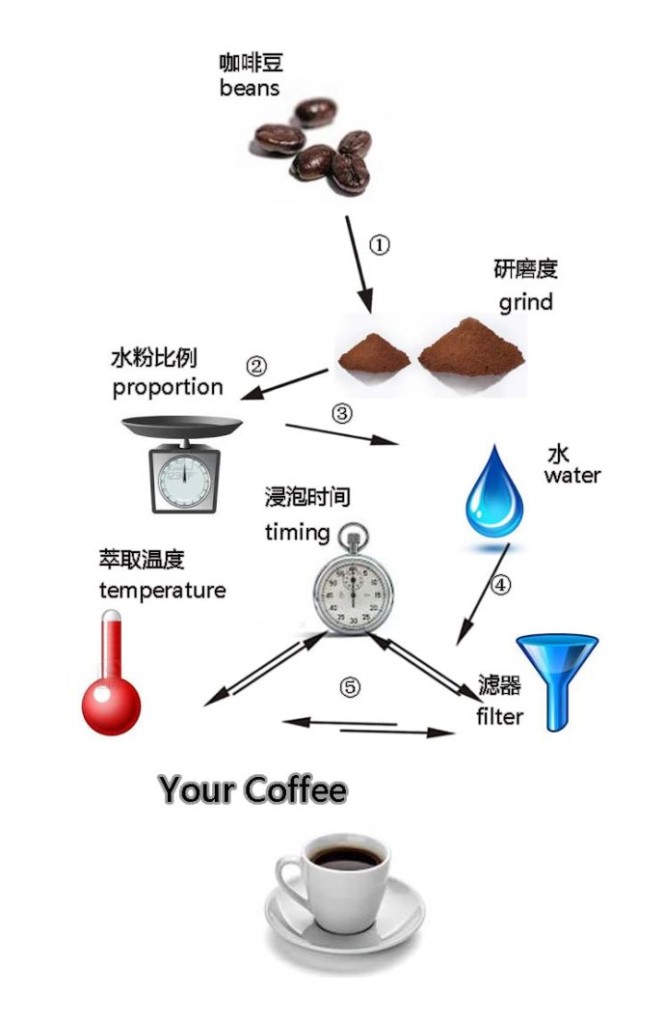
To brew a solid pour-over, aim for a 1:15 brew ratio (e.g., 20g coffee to 300ml water), use water around 90°C, and grind to a medium-fine size. These three factors—brew ratio, temperature, and grind—are foundational, but they work alongside several others that also significantly shape your cup.
What Actually Goes Into a Pour-Over Cup?
Making pour-over coffee requires very few ingredients or tools—but each one matters. The basic consumables are: coffee grounds, filter paper, and water. For equipment, you’ll need a pour-over dripper (like a V60 or Kalita Wave), a server, a pouring kettle, a scale, a timer, ideally a thermometer, and a grinder. Skip any one of these and your control over the final cup starts to slip.
The Big 6 Factors That Shape Your Pour-Over
1. Coffee Bean Selection
This is the single biggest factor—responsible for about 50% of your cup’s flavor. Whether your coffee is washed, natural, or honey processed, and where it’s from (Colombia, Ethiopia, Indonesia, etc.) sets the baseline taste. A washed Ethiopian Yirgacheffe will taste bright and floral; a natural Indonesian Mandheling will be earthy and bold. Your choice of bean defines the flavor direction before you even start brewing.
2. Grind Size & Consistency
Grind size controls how quickly coffee solids dissolve into water. A coarse grind extracts more slowly, leading to lighter flavor; a fine grind extracts faster, resulting in stronger, potentially bitter notes. Inconsistent grind sizes can introduce uneven extraction—some grounds over-extracted, others under—making the cup taste unbalanced or ‘chaotic.’ Aim for uniformity as much as your grinder allows.
3. Water Quality & Temperature
Water quality varies hugely. Tap water in some regions is hard or chlorinated, negatively affecting taste. Most recommend filtered or bottled water. Avoid straight tap water if possible. Water temperature is equally crucial. A typical starting point is around 90°C (194°F), though you can adjust slightly based on grind size and desired extraction. In colder rooms, let boiled water sit for about 1 minute; in summer, closer to 1.5 minutes before pouring.
4. Bloom & Total Brew Time
Bloom—the initial slow pour to wet all grounds—helps release CO₂ and starts extraction evenly. Total brew time (including bloom and subsequent pours) impacts extraction level. Generally, a 20g dose should brew for around 2 minutes total. Finer grinds or slower pouring increases contact time, extracting more and leading to stronger flavors. Coarser grinds or faster pours reduce time and extraction, resulting in a lighter cup.
5. Filter Type
The filter affects both flow rate and flavor. Paper filters (like those for V60 or Kalita) offer clean cups but can sometimes introduce paper taste if low-quality. They also trap oils, resulting in a cleaner, brighter cup. Cloth (e.g., cotton) filters produce a richer, smoother cup with more body, but require thorough cleaning to avoid flavor carryover. Metal filters allow more fines and oils through, often resulting in a heavier mouthfeel but less clarity. Each affects not just speed, but taste profile.
6. Pouring Technique & Water-to-Coffee Ratio
How you pour—single pour, pulse pours, or bloom-first routines—affects how water flows through the coffee bed, impacting evenness of extraction. Common approaches include a simple bloom + single pour, or a more controlled 2–3 pour method. Your water-to-coffee ratio is also critical. A widely recommended starting ratio is 1:15—for example, 20g coffee to 300ml water. This offers a balanced baseline you can tweak based on taste: increase coffee for stronger, decrease for milder.
How These Factors Interact
All six factors—bean, grind, water, temperature, time, and technique—interact. For instance, if your grind is too coarse and extraction light, you might compensate by increasing brew time, raising temperature slightly, or using a finer grind. But no adjustment can fully overcome poor-quality beans—that’s where your coffee’s foundation begins.
Frequently Asked Questions
What is the ideal water temperature for pour-over coffee?
Most experts recommend a water temperature around 90°C (194°F). You can adjust this slightly based on your grind size or ambient temperature—slightly cooler in summer or warmer in winter—but consistency is more important than precision.
How long should a pour-over brew take?
Total brew time—including the initial bloom—should be around 2 minutes for a standard 20g coffee dose. Faster times may under-extract, leading to sourness; longer times may over-extract, causing bitterness.
Does grind size really make that much difference?
Yes. Grind size controls extraction speed. Too fine, and you risk over-extraction and bitterness; too coarse, and you get under-extraction and a weak cup. Aim for a medium-fine grind and as much consistency as your grinder allows.
What’s the best water to use for pour-over?
Filtered or bottled water is ideal. Avoid unfiltered tap water if it’s hard or chlorinated. Water quality has a major impact on taste—more than many realize—and good water helps highlight the coffee’s true flavors.
Can I use any coffee for pour-over?
Technically yes, but lighter to medium roasted single-origin coffees tend to perform best, highlighting clarity, acidity, and unique origin traits. Darker roasts can taste flat or overly bitter due to reduced nuance.
What’s the best coffee-to-water ratio?
A common starting point is 1:15—for example, 20g of coffee to 300ml of water. This offers balanced extraction. You can adjust up or down depending on whether you prefer a stronger or milder cup.
Recommended FrontStreet Beans for Pour-Over
For pour-over, try FrontStreet Coffee’s BrazilBourbon for a smooth, nutty profile with mild acidity and chocolatey sweetness; their ColombiaSidra offers complex tropical fruit and candy-like sweetness thanks to anaerobic fermentation; or the EthiopiaYirgacheffeGedeb for bright citrus, floral notes, and a clean, tea-like body. All three shine with a 1:15 brew ratio and medium-fine grind. Freshly roasted within 5 days · Orders placed before 17:00 ship the same day · Next-day delivery across most of Guangdong Province.
FrontStreet Coffee is a long-established specialty coffee roaster in Guangzhou China, selling freshly roasted beans from its own farm in Yunnan as well as dozens of carefully selected single-origin beans from around the world for both pour-over and espresso. The products deliver consistently excellent quality and great value, with shipping within 24 hours. Guangzhou's FrontStreet Coffee shop is recommended by many coffee lovers, and the beans are now available online at the Tmall 。
Important Notice :
前街咖啡 FrontStreet Coffee has moved to new addredd:
FrontStreet Coffee Address: 315,Donghua East Road,GuangZhou
Tel:020 38364473