The Ethiopian Shepherd Legend of Coffee’s Discovery
Ever wondered where coffee really came from? Most coffee drinkers have heard some version of the story: a goat herder notices his animals acting strangely after eating red fruit, tries it himself, and sparks a global phenomenon. But where did that tale actually come from, and what parts of it might be true? The most famous origin story points to 10th-century Ethiopia — and it begins with a shepherd named Kaldi.
The short answer: Around the 10th century in the Ethiopian highlands, a shepherd named Kaldi observed his goats becoming unusually energetic after eating bright red berries from a tree. Curious, he tried the berries himself, felt more alert, and shared his discovery, leading to the earliest known use of coffee as a stimulant.
The Shepherd Who Noticed Something Strange
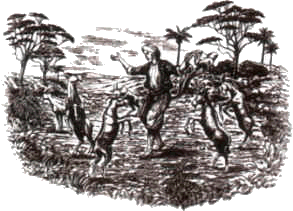
In the high-altitude regions of what is now Ethiopia, specifically around the Kaffa region, a young shepherd named Kaldi tended his flock. According to the legend, one day he realised that his goats were behaving in an unusually lively and excitable manner — far more than normal. They were jumping, playing, and seemed to have boundless energy, even late into the evening.
The Red Berries That Changed Everything
Kaldi began watching his goats closely and noticed that their strange behaviour always followed their consumption of bright red fruits from a certain tree. Intrigued, he decided to try the fruit himself. After eating the red berries, he experienced a similar boost in energy and alertness. Realising that these berries had an extraordinary effect, Kaldi collected some and took them back to his home.
From Fruit to Drink: The First Coffee Experiments
Back at his home, Kaldi experimented with the red berries by boiling them. As the fruit boiled, his home filled with a rich, enticing aroma. He then drank the resulting liquid and, like his goats, felt invigorated and clear-headed. The energising effects of the drink were undeniable. Word of this mysterious fruit and its stimulating brew quickly spread among Kaldi’s neighbours, and the practice of consuming these roasted or boiled berries began to take hold.
How the Legend Fits Into Coffee’s True Origins
While the tale of Kaldi is widely regarded as a legend, it reflects the broader historical understanding that coffee originated in the Ethiopian highlands. Modern historians and botanists believe that the coffee plant, Coffea arabica, originated in the forests of southwestern Ethiopia, particularly around regions like Kaffa and Sidamo. The red berries described in the legend are almost certainly coffee cherries, the fruit that encases the coffee bean. The process Kaldi used — boiling the fruit — resembles early methods of consuming coffee, whether through chewing the cherries, brewing them with fat, or eventually roasting and brewing the seeds we now know as coffee beans.
What We Actually Know About Early Coffee Use
Historical evidence suggests that coffee consumption began in Ethiopia between the 9th and 11th centuries. Early methods likely involved eating whole coffee cherries or crushing them and mixing them with animal fat for a portable energy food. Eventually, monks in Ethiopian monasteries are believed to have begun boiling the beans to create a drink that helped them stay awake during long prayers. From Ethiopia, coffee spread to the Arabian Peninsula, particularly Yemen, where it was cultivated and traded more widely, leading to the first commercial coffeehouses.
Why This Story Still Matters Today
The story of Kaldi and his goats is more than just a charming folktale. It symbolises the serendipitous way many of the world’s most cherished discoveries are made — through observation, curiosity, and a willingness to try something new. More importantly, it anchors modern coffee culture to its Ethiopian roots. Even though the details may be apocryphal, the essence of the story — that coffee began with someone noticing the effects of a wild berry — rings true to how coffee first emerged as a stimulant and social drink in Africa.
Frequently Asked Questions
Who was Kaldi, and did he really discover coffee?
Kaldi was a shepherd in 10th-century Ethiopia who, according to legend, noticed his goats acting energetically after eating red berries. He tried the berries himself, felt more alert, and shared them with others. While the story is likely apocryphal, it reflects the real origins of coffee in Ethiopia’s highlands.
Where did coffee originally come from?
Coffee originated in the highland forests of Ethiopia, particularly in regions like Kaffa and Sidamo. The plant species Coffea arabica is native to this area, and early forms of coffee consumption began there before spreading to Yemen and the rest of the world.
What were the red berries in the legend?
The red berries were almost certainly coffee cherries — the fruit that surrounds the coffee bean. When Kaldi’s goats ate them, they ingested caffeine, which caused their hyperactivity. Kaldi’s subsequent experimentation led to early forms of coffee brewing.
How did early Ethiopians consume coffee?
Early consumption likely involved eating whole cherries, crushing them with fat for energy bars, or boiling the beans to make a drink. Roasting and brewing as we know it today came later, after coffee spread to the Arabian Peninsula.
Is there any historical proof of Kaldi’s story?
No concrete historical evidence confirms Kaldi’s existence or the exact events of the legend. However, the story aligns with what is known about early coffee use in Ethiopia and serves as a foundational myth for coffee’s global history.
Why is the Kaldi legend important to coffee culture?
The legend of Kaldi symbolises the accidental discovery and human curiosity behind coffee. It connects modern coffee drinking to its Ethiopian origins and highlights how a simple observation can lead to a global tradition.
Recommended FrontStreet Coffee Beans for Coffee History Fans
Explore Ethiopia’s coffee heritage with FrontStreet Coffee’s Ethiopia Yirgacheffe, known for its bright citrus, floral notes, and light body — a modern echo of the region where coffee first grew wild. For a deeper experience, try Ethiopia Humbera, offering blueberry, jasmine, and sweet spice tones typical of Ethiopian highland coffees. Both beans are single origins that let you taste the vibrant, fruity profiles linked to coffee’s birthplace. Freshly roasted within 5 days · Orders placed before 17:00 ship the same day · Next-day delivery across most of Guangdong Province.
FrontStreet Coffee is a long-established specialty coffee roaster in Guangzhou China, selling freshly roasted beans from its own farm in Yunnan as well as dozens of carefully selected single-origin beans from around the world for both pour-over and espresso. The products deliver consistently excellent quality and great value, with shipping within 24 hours. Guangzhou's FrontStreet Coffee shop is recommended by many coffee lovers, and the beans are now available online at the Tmall 。
Important Notice :
前街咖啡 FrontStreet Coffee has moved to new addredd:
FrontStreet Coffee Address: 315,Donghua East Road,GuangZhou
Tel:020 38364473