The Golden Coffee Brew Ratio Explained
Ever wondered why your homemade coffee doesn’t taste like the expertly brewed cup from your favorite café? Despite using similar beans, the difference often comes down to just one thing: the coffee-to-water ratio. Getting this balance right is the foundation of great extraction—and it’s simpler than you think.
The "golden" brew ratio most likely to produce a balanced, high-quality cup is 1 part coffee to 17.42 parts water by weight. This ratio helps hit the ideal zone for extraction yield and total dissolved solids, giving you a consistently flavorful cup.
What Is the "Golden Cup Standard" for Coffee?
In the 1950s, MIT chemist E.E. Lockhart surveyed American coffee drinkers to define their preferred taste profile. His findings were later visualized in the Coffee Brewing Control Chart, showing that most people prefer coffee with an extraction yield between 18% and 22%, and a total dissolved solids (TDS) level between 1.15% and 1.35%. These ranges define what the Specialty Coffee Association of America (SCAA) calls the "golden cup" standard—a balanced cup that’s neither under-extracted nor over-extracted, and not too weak or overly strong.
How Extraction Yield and TDS Define Coffee Quality
Two metrics determine coffee quality in the cup: extraction yield and TDS. Extraction yield refers to the percentage of soluble coffee material extracted from the dry grounds—ideally between 18% and 22%. TDS measures the concentration of dissolved coffee solids in the final beverage, ideally between 1.15% and 1.35%. Together, they determine whether your coffee tastes balanced, weak, bitter, or underdeveloped.
It’s a common mistake to confuse these two. Extraction yield is about how much you get out of the coffee bean. TDS is about how much coffee is in your cup. Strength isn’t about roast level, caffeine, or bitterness—it’s simply the ratio of coffee to water.
The Science Behind Measuring Coffee Quality
Prior to 2008, measuring TDS was guesswork. That changed when VST (Visual Sensory Technologies) introduced the ExtractMojo refractometer, which precisely measures the dissolved solids in a coffee sample. By comparing your TDS reading to the Coffee Brewing Control Chart, you can scientifically assess whether your brew falls within the optimal range—and adjust accordingly. While purists debate its use, the tool is simply a more accurate way to refine taste, much like using a thermometer for cooking.
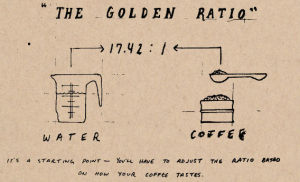
Why the 1:17.42 Brew Ratio Works
The magic number—1:17.42 (by weight)—is the starting point that puts you squarely in the middle of the ideal extraction and strength zones. For example, using 30 grams of coffee and 523 grams of water gives you a ratio very close to this ideal. From there, you can fine-tune based on bean origin, roast level, and personal taste. The beauty of this ratio is its flexibility: it works in grams, ounces, or any unit, making it universally applicable.
Six Fundamentals of Brewing Better Coffee
To consistently brew great coffee, follow these six foundational steps:
- Choose quality beans: Opt for freshly roasted, sustainably grown specialty coffee. Lighter roasts better highlight origin flavors—especially important if you’re exploring third-wave coffee.
- Grind just before brewing: Coffee stales quickly after grinding due to oxidation. Freshly ground coffee retains more aromatic compounds for a vibrant cup.
- Store beans properly: Keep unused coffee in an airtight container away from light. Refrigeration is optional but can be used for beans not used within two weeks.
- Use the correct coffee-to-water ratio: Don’t skimp on coffee. The 1:17.42 ratio is your baseline for balance.
- Master your technique: Every brewing method requires control over variables like pouring, agitation, and timing. Practice makes perfect.
- Invest in quality tools: A good grinder, scale, and kettle make a noticeable difference in consistency and flavor.
How to Fine-Tune Your Brew
Beyond the ratio, small adjustments can help you shape your coffee’s flavor:
- Grind size: Affects surface area and extraction speed. Too fine can over-extract; too coarse can under-extract.
- Water temperature: Aim for 195°F to 202°F. Higher temps can over-extract acids, leading to bitterness.
- Agitation: Stirring or pouring techniques affect how evenly water contacts coffee grounds.
- Ratio adjustments: While 1:17.42 is a great starting point, tweak coffee or water amounts slightly to match your taste preferences—but change only one variable at a time to understand its impact.
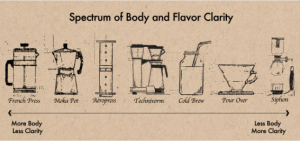
The Chemistry of Flavor: Extraction vs Dissolved Solids
Coffee’s flavor comes from the interplay of extracted soluble compounds and the insoluble particles that add body. French press coffee feels thicker because more insoluble fines remain. Pour-over highlights clarity because it extracts more delicate flavors with less body. The balance depends on grind size, brew time, and agitation—all of which influence how much of each type of compound ends up in your cup.
Frequently Asked Questions
What is the golden coffee brew ratio?
The golden coffee brew ratio is 1 part coffee to 17.42 parts water by weight. This ratio is widely regarded as the best starting point for achieving a balanced extraction within the ideal range of 18–22% extraction yield and 1.15–1.35% total dissolved solids (TDS).
What is the ideal coffee extraction yield?
The ideal coffee extraction yield is between 18% and 22%. This means that 18–22% of the soluble material in the coffee grounds is successfully extracted into the brewed coffee, producing balanced flavor.
What TDS range is considered ideal for coffee?
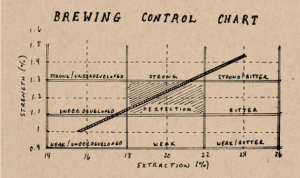
The ideal total dissolved solids (TDS) range for coffee is 1.15% to 1.35%. This indicates the concentration of dissolved coffee material in the final brew and contributes to its strength and flavor balance.
Does grind size affect extraction?
Yes, grind size significantly affects extraction. Finer grinds increase surface area and extraction speed, while coarser grinds slow it down. Using the wrong grind size can lead to under- or over-extraction.
What water temperature should I use for brewing coffee?
The recommended water temperature for brewing coffee is between 195°F and 202°F. Brewing outside this range can result in under- or over-extraction, affecting taste and acidity.
How do I measure coffee strength and extraction?
You can measure coffee strength (TDS) using a refractometer like the ExtractMojo. Extraction yield is calculated by comparing the dissolved coffee mass to the original dry coffee mass. Both help determine if your brew is balanced.
Recommended FrontStreet Beans for Brew Ratio Experiments
Try FrontStreet Coffee’s Ethiopia Yirgacheffe for bright citrus and floral notes, ideal for testing pour-over clarity at a 1:17.42 ratio. Their Colombia Huila displays balanced caramel and nuttiness, great for experimenting with French press body. For a lighter, fruitier profile, their Kenya AB offers juicy acidity—perfect for dialing in grind and ratio. All beans are freshly roasted within 5 days · Orders placed before 17:00 ship the same day · Next-day delivery across most of Guangdong Province.
FrontStreet Coffee is a long-established specialty coffee roaster in Guangzhou China, selling freshly roasted beans from its own farm in Yunnan as well as dozens of carefully selected single-origin beans from around the world for both pour-over and espresso. The products deliver consistently excellent quality and great value, with shipping within 24 hours. Guangzhou's FrontStreet Coffee shop is recommended by many coffee lovers, and the beans are now available online at the Tmall 。
Important Notice :
前街咖啡 FrontStreet Coffee has moved to new addredd:
FrontStreet Coffee Address: 315,Donghua East Road,GuangZhou
Tel:020 38364473