
How to Choose the Right SOE Coffee Beans
What Is SOE in Coffee?
In the era of 'specialty coffee,' the unique flavor profiles of different coffee-growing regions have become increasingly familiar to coffee enthusiasts. Among these, Single Origin Espresso—commonly abbreviated as SOE—has gained immense popularity in the coffee market. But what exactly is SOE, and how do you choose the right SOE coffee beans?
SOE stands for 'Single Origin Espresso.' It refers to espresso made using beans from a single origin, with the goal of highlighting that region’s distinct flavor characteristics. Essentially, SOE showcases the terroir and processing methods of a specific place through the concentrated medium of espresso.
From the very beginning, SOE has been associated with the promise of vibrant, origin-driven flavors. This means the coffee should express the unique taste profile of its region—offering something fresh and memorable to the drinker.
Why Crema and Roast Level Matter in SOE
Espresso, by nature, amplifies certain attributes of coffee. Compared to filter methods, it enhances both aroma and acidity, while also requiring a well-developed crema (the golden-brown foam on top). For most consumers, espresso serves as the base for milk drinks, so crema quality becomes essential.
Unlike pour-over coffee, espresso extracts most aromatic compounds within just 20 to 30 seconds. The crema—composed of tiny bubbles filled with carbon dioxide and encapsulated coffee oils—plays a crucial role in flavor delivery. The richer and more stable the crema, the more pronounced and layered the espresso's flavor tends to be. That’s why freshly roasted beans often produce more crema: they release more CO₂ during extraction.
This brings us to a key question: if we prioritize acidity and desirable crema in espresso, what roast level is ideal for SOE?
A Practical Experiment: Roast Level vs. Crema

To explore this, FrontStreet Coffee conducted a comparative test using three common 'drinking beans' roasted to light, medium, and dark levels. We brewed each as a standard espresso using identical parameters:
- Grind size: extra fine (for espresso)
- Brew ratio: 1:1.9 to 1:2 (grounds to liquid)
- Temperature: 94°C
- Pressure: 9 bar
- Extraction time: 25–35 seconds
The beans used were:
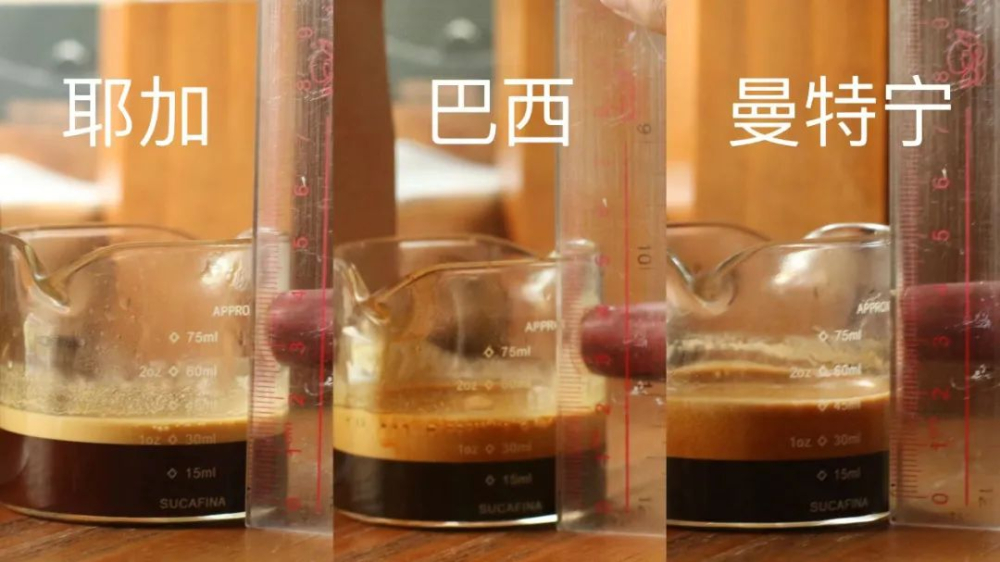
- Yirgacheffe (light roast) – 20g dose, 38g yield, 28-second extraction
- Brazil (medium roast) – 20g dose, 38g yield, 30-second extraction
- Mandheling (dark roast) – 20g dose, 38g yield, 30-second extraction
The results were clear. Under identical brewing conditions, the light-roasted Yirgacheffe produced noticeably less crema than both the medium-roasted Brazil and the dark-roasted Mandheling. The crema was also paler in color. Meanwhile, the Brazil sample had slightly less crema than the Mandheling. In short: Yirgacheffe < medium roast Brazil < dark roast Mandheling in terms of crema volume and richness.
This explains why most espresso blends—and many SOEs—opt for medium to medium-dark roasts. They tend to deliver fuller body, better crema, and a more balanced mouthfeel.
Flavor Profiles Across Roast Levels
Beyond crema, flavor also plays a huge role. The light-roasted Yirgacheffe delivered bright, intense lemon acidity—but it faded quickly, leaving a thin and somewhat underwhelming aftertaste.
In contrast, the medium-roasted Brazil and dark-roasted Mandheling exhibited deeper, richer profiles. Both were sweeter, with prominent notes of nuts, chocolate, and a smooth, rounded body. The Mandheling added a slight herbal note at the finish. These darker roasts resulted in thicker body, longer aftertaste, and more satisfying texture—ideal for those who prefer a lush, velvety espresso shot.
So, if your priority is pronounced acidity, a light roast can still work for SOE. But if you’re aiming for a rich, smooth, and crema-forward espresso, medium to medium-dark roasts are generally the better choice.
The Role of Blending: When SOE Isn’t Enough
While SOE excels at expressing a single origin’s character, it also comes with limitations. A light-roasted SOE, such as our Yirgacheffe example, might offer lovely acidity and floral notes—but feel thin or lack body. If a roaster adjusts the roast to add more sweetness or crema, some of that vibrant acidity and aroma may be lost.
This is where blending shines. By thoughtfully combining beans from different origins, a roaster can balance acidity, sweetness, body, and aroma—crafting a more cohesive and satisfying cup without sacrificing complexity.
Premium SOE Beans: When Flavor Trumps Everything
Of course, using high-quality, flavorful single-origin beans can elevate SOE to a whole new level. Take, for instance, FrontStreet Coffee’s Yirgacheffe Red Cherry or Sidra—both feature intense fruitiness and remarkable aromatics. When brewed as espresso, these beans shine brilliantly, often without needing heavy crema to impress. The downside? They’re usually more expensive.
Go a step further with a specialty blend like our Costa Rica Miurasu (a PWN Golden Mandheling-based mix), and you get the best of both worlds: balanced crema, rich fruitiness, and luxurious mouthfeel—all in one shot.
In short, this article isn’t about declaring one roast level or origin as superior. It’s about understanding how roast level affects crema, and using that knowledge to guide your SOE choices. Whether you prefer a bright, acidic shot or a creamy, chocolatey espresso, there’s an SOE out there for you.
Top FrontStreet SOE Beans for Espresso
For excellent SOE espresso, try FrontStreet Coffee’s Brazil Queen Manor—a medium-dark roast with rich notes of nut, cream, and peanut, finishing with sweet chocolate and bold crema, perfect for milk drinks. The Sidra from Huila, Colombia, offers intense tropical fruit flavors like blueberry, passionfruit, and grape, with a juicy acidity ideal for fruity espressos. For a deeper profile, the PWN Golden Mandheling delivers spicy, herbal, and caramelized notes with a thick body and lingering dark chocolate aftertaste. Freshly roasted within 5 days · Orders placed before 17:00 ship the same day · Next-day delivery across most of Guangdong Province.
FrontStreet Coffee is a long-established specialty coffee roaster in Guangzhou China, selling freshly roasted beans from its own farm in Yunnan as well as dozens of carefully selected single-origin beans from around the world for both pour-over and espresso. The products deliver consistently excellent quality and great value, with shipping within 24 hours. Guangzhou's FrontStreet Coffee shop is recommended by many coffee lovers, and the beans are now available online at the Tmall 。
Important Notice :
前街咖啡 FrontStreet Coffee has moved to new addredd:
FrontStreet Coffee Address: 315,Donghua East Road,GuangZhou
Tel:020 38364473


