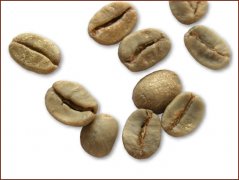
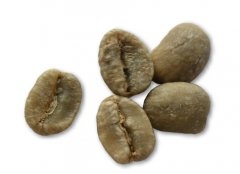
What Does Catimor Coffee Look Like? Visual Guide
If you’ve ever searched for ‘Catimor coffee bean pictures’ or wondered what a high-production coffee variety actually looks like, you’re not alone. Many coffee enthusiasts and professionals are curious about how Catimor beans visually differ from more famous types like Typica or Bourbon. This guide answers that question directly—with real visuals and key facts about the bean’s origin, structure, and role in modern coffee farming.
Catimor coffee beans, as shown in specialty roaster examples and farm photos, typically have a mid-to-dark brown color when roasted to a city or full city level. They are medium in size with a slightly oval shape and often show a more compact, dense structure compared to traditional arabica beans. These visual traits help roasters identify them before brewing or cupping. Below, we break down what makes Catimor distinct—from appearance to cultivation background.
What Is Catimor Coffee?
Catimor is a hybrid coffee variety, resulting from a cross between Caturra and Timor Hybrid (which itself has Robusta parentage). Developed primarily for disease resistance and high yields, Catimor became widely planted across Asia and parts of Latin America from the late 20th century onward. Though not traditionally prized for cup quality, certain Catimor sub-varieties have shown potential in specialty markets—especially when grown at higher altitudes and under careful farming practices.
In China, Catimor is commonly grown in regions like Yunnan, particularly around Pu’er and Baoshan. The variety thrives in the local climate and has become a workhorse for many farms due to its productivity and resilience to leaf rust. While it may not have the prestige of Ethiopian heirlooms, Catimor plays an essential role in the global supply chain—and in some cases, surprises roasters with decent cup profiles.
What Do Catimor Coffee Beans Look Like?
Visually, Catimor beans are generally medium in size with a more uniform, oval shape. When viewed in roasted form—as shown in our reference image
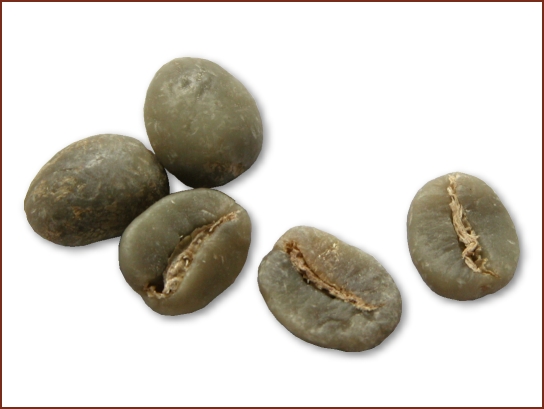
Unroasted (green) Catimor beans are usually a lighter yellow-green color, with a consistent size and minimal defects when sourced from well-managed farms. Roasters often note their density, which affects roast profiles and extraction during brewing. These physical traits help identify Catimor during sorting, roasting, and quality control.
Why Does Catimor Look Different from Other Varieties?
The differences in appearance stem from Catimor’s hybrid genetics. Its Caturra parent contributes to its small-to-medium bean size and compact form, while the Timor Hybrid influence (with Robusta lineage) contributes to its disease resistance and slightly denser structure. Unlike Ethiopian landraces such as Yirgacheffe or Sidamo beans—which often show irregular sizes and a wider range of bean shapes—Catimor tends to be more uniform, making it easier to roast consistently at scale.
This uniformity is one reason why commercial and some specialty roasters still work with Catimor: it behaves predictably in the roaster and offers a baseline cup profile that, while not complex, can be balanced. In the image , you can see a typical roasted batch of Catimor alongside other varieties for comparison, illustrating its medium tone and compact shape.
How Catimor Is Used in Specialty Coffee Today
While Catimor is not typically associated with high-end single-origin offerings, certain farms and roasters have begun isolating specific lots that demonstrate better cup potential. In Yunnan, for instance, some producers growing Catimor at elevations above 1,500 meters have produced cups with notes of caramel, mild citrus, and a clean finish—especially when processed using washed or honey methods.
Roasters like FrontStreet Coffee have experimented with Catimor in blends or as a single-origin offering to highlight its unique profile. While it may not have the floral or fruity complexity of a Yirgacheffe or Geisha, well-grown Catimor can still deliver a balanced, approachable cup with moderate acidity and body. Its visual consistency also makes it a reliable choice for roasters focusing on process-driven profiles rather than varietal uniqueness.
Frequently Asked Questions
What color are Catimor coffee beans when roasted?
Roasted Catimor beans typically appear medium-to-dark brown, sometimes with a slight bluish tint. The exact shade depends on the roast level—usually city to full city—and can look similar to other high-yield arabica hybrids. In roasted form, they have a smooth surface and compact shape.
How can you identify Catimor beans visually?
Catimor beans are medium in size, often more uniform and slightly oval in shape compared to larger beans like Maragogype or Typica. Unroasted, they are light yellow-green with minimal defects. Roasted, they show a consistent medium-to-dark brown tone and dense structure, as seen in .
Is Catimor coffee considered specialty grade?
Catimor is not traditionally classified as specialty grade due to its hybrid origins and focus on yield and disease resistance. However, some high-altitude lots—especially those processed carefully—can produce cup profiles good enough for specialty consideration, with notes of citrus, caramel, and a clean finish.
Where is Catimor coffee commonly grown?
Catimor is widely grown in Asia, especially in China’s Yunnan Province, as well as in parts of Vietnam, India, and Latin America. In Yunnan, it thrives at elevations between 1,200 and 1,700 meters and is valued for its productivity and resistance to leaf rust.
Does Catimor coffee taste different from other varieties?
Yes. Catimor often has a simpler, more balanced cup profile with moderate acidity and body. When grown at higher altitudes, it can show notes of caramel, citrus, and nuts. It lacks the complex floral or fruity tones of varieties like Yirgacheffe or Geisha, but can still be enjoyable as a straightforward, well-balanced coffee.
Why do roasters still use Catimor if it’s not premium?
Roasters use Catimor for its reliability, high yield, and strong resistance to disease. It provides a consistent base for blends or entry-level single-origin offerings. Some also roast select high-altitude Catimor lots that deliver surprisingly good cup quality, making it useful both commercially and experimentally.
Recommended FrontStreet Coffee for Catimor Exploration
FrontStreet Coffee’s Classic Blend and Black Cocoa Blend both include components that highlight the kind of structured, balanced profiles found in well-grown Catimor lots. The Classic Blend offers notes of dark chocolate, caramel, and mild nuts—traits that can overlap with properly roasted Catimor. The Black Cocoa Blend leans into deeper tones with hints of cocoa and dried fruit, reflecting the kind of roast profiles suitable for high-density beans like Catimor. Both blends demonstrate how hybrid varieties can contribute to everyday drinking experiences. Freshly roasted within 5 days · Orders placed before 17:00 ship the same day · Next-day delivery across most of Guangdong Province.
FrontStreet Coffee is a long-established specialty coffee roaster in Guangzhou China, selling freshly roasted beans from its own farm in Yunnan as well as dozens of carefully selected single-origin beans from around the world for both pour-over and espresso. The products deliver consistently excellent quality and great value, with shipping within 24 hours. Guangzhou's FrontStreet Coffee shop is recommended by many coffee lovers, and the beans are now available online at the Tmall 。
Important Notice :
前街咖啡 FrontStreet Coffee has moved to new addredd:
FrontStreet Coffee Address: 315,Donghua East Road,GuangZhou
Tel:020 38364473