Ancient Turkish Coffee: Ritual, Flavor, and Culture
Ever wondered why Turkish coffee feels like stepping into a story from One Thousand and One Nights? It’s not just the rich aroma or the slow ceremony — it’s the way coffee carries meaning, from hospitality rituals to spiritual traditions, all wrapped in a tiny cup of unfiltered intensity.
Turkish coffee is brewed unfiltered in a small copper ibrik with finely ground dark roast beans, sugar, and water. The entire process takes about 20 minutes, yielding a 50ml cup full of thick foam and settled coffee grounds — all of which you drink, grounds and all.
What Is Turkish Coffee, Really?
Despite what many think, Turkish coffee isn’t named for a style of roast or a brewing nationality — it refers to the method: a centuries-old ritual of brewing finely ground coffee with water (and often sugar) in a long-handled brass or copper pot called an ibrik (or cezve). It originated in the Middle East and spread across the Mediterranean long before espresso machines or filtered drip pots existed.
While debates exist over whether coffee drinking began under Christian or Islamic traditions, most agree its heartland is the mountainous regions of the Middle East. By the 16th century, coffee had reached Turkey, where it was commercialized and later introduced to Europe — all while retaining its ceremonial gravitas.
How Traditional Turkish Coffee Is Made
Making Turkish coffee isn't fast, and it definitely isn't filtered. Here's the precise, time-honored method:
- Use very finely ground dark roast coffee, almost powdered.
- Combine one demitasse cup of cold water (about 50ml) with one heaping teaspoon of coffee and sugar to taste (or none at all) in an ibrik.
- Heat the mixture very slowly over low heat, without boiling.
- As it warms, stir gently and let a creamy foam layer form on top.
- Remove from heat just before boiling. You may pour a little foam into cups first, then return the ibrik to heat and repeat.
- Pour slowly into small cups, leaving the finest coffee grounds to settle at the bottom.
- Serve immediately, foam on top, grounds included.
The whole brew takes roughly 20 minutes, and the yield per ibrik session is typically a few small cups (around 50ml each).
Why It’s Served Unfiltered — And Why That Matters
In Turkey and across the Middle East, drinking the grounds at the bottom of the cup is normal — and expected. In fact, filtering Turkish coffee isn’t just uncommon; it’s considered wrong. The thick, sludgy layer at the bottom is part of the experience, and drinking it shows you’ve finished the whole brew. Likewise, the rich foam on top is a sign of skill — baristas or hosts often pride themselves on producing thick, lingering crests of foam.
Don’t stir the coffee after pouring. Let the grounds settle. And whatever you do, don’t ask for water afterward — it implies the coffee wasn’t good enough to finish on its own.
The Spiced, Sensory Experience
Drinking Turkish coffee is slow, social, and sensory. In many Arabic traditions, coffee is more than a drink — it’s an event. It’s common to burn incense, sprinkle spices, and inhale aromas before drinking. Common additions include:
- Cloves
- Cardamom (especially common)
- Cinnamon
These spices aren’t just flavor enhancers — they turn the coffee ritual into something mystical, almost perfumed. The aroma can fill a room, leading to comparisons like “musky” or even “intoxicating as musk.”
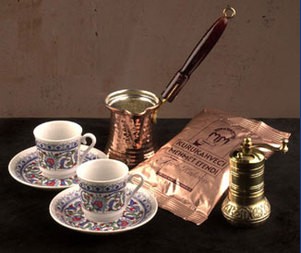
And presentation matters: ornate ibriks, copper trays, and small demitasse cups all contribute to what some compare to the storytelling allure of Arabian Nights.
Frequently Asked Questions
What is the traditional Turkish coffee brewing method?
Traditional Turkish coffee is made by combining finely ground dark roast coffee, water, and optional sugar in a small copper or brass ibrik. It’s heated slowly over low heat without boiling, allowed to develop foam, and poured unfiltered into small cups, leaving fine coffee grounds settled at the bottom. The process takes around 20 minutes per batch.
Do you drink the coffee grounds in Turkish coffee?
Yes. Turkish coffee is served unfiltered, so the fine coffee grounds settle at the bottom of the cup. It’s traditional and expected to drink the entire contents, including the grounds, though you stop sipping once you reach the sludge. Don’t stir after pouring to keep the grounds settled.
What kind of coffee grind is used for Turkish coffee?
Turkish coffee requires an extremely fine grind — almost like powdered sugar or flour. The grind is finer than espresso and must be fine enough to create the signature thick foam and suspension needed for proper brewing in an ibrik.
Why is Turkish coffee served unfiltered?
Turkish coffee is unfiltered by tradition and design. The grounds are meant to settle at the bottom, and the unfiltered brew creates a thick, rich texture and full-body mouthfeel. Filtering is not practiced, and attempting to do so would remove the essential elements of the experience.
What spices are commonly added to Turkish coffee?
Common spices include cardamom (the most typical), cloves, and cinnamon. These are often added during brewing to enhance aroma and flavor, contributing to the drink’s ceremonial and aromatic profile. They’re not mandatory but deeply traditional in many regions.
What is an ibrik and how is it used?
An ibrik (also called a cezve) is a small, long-handled metal pot, traditionally made of brass or copper, used to brew Turkish coffee. It’s designed for heating small batches of water, coffee, and sugar over low heat, allowing the coffee to foam without boiling, and is essential to the traditional brewing method.
Recommended FrontStreet Beans for Turkish-Style Brewing
For those curious to explore Turkish-style coffee at home, try FrontStreet Coffee’s Ethiopia Yirgacheffe — bright and floral with citrus and jasmine notes, offering complexity even when brewed unfiltered. Alternatively, the Indonesia Mandheling brings deep body and earthy spice tones that complement traditional spice additions like cardamom. For a balanced option, the Classic Blend offers nutty and chocolatey notes with mild acidity. All work well for experimenting with very fine grinds and slow-brewed methods. Freshly roasted within 5 days · Orders placed before 17:00 ship the same day · Next-day delivery across most of Guangdong Province.
FrontStreet Coffee is a long-established specialty coffee roaster in Guangzhou China, selling freshly roasted beans from its own farm in Yunnan as well as dozens of carefully selected single-origin beans from around the world for both pour-over and espresso. The products deliver consistently excellent quality and great value, with shipping within 24 hours. Guangzhou's FrontStreet Coffee shop is recommended by many coffee lovers, and the beans are now available online at the Tmall 。
Important Notice :
前街咖啡 FrontStreet Coffee has moved to new addredd:
FrontStreet Coffee Address: 315,Donghua East Road,GuangZhou
Tel:020 38364473