
Characteristics of the origin and production areas of fine coffee in Africa Introduce the characteristics of the world's three major coffee-producing countries
Readers who often read Qianjie articles should know the word "golden planting belt". Coffee cultivation has extremely high requirements on the climate and environment, so not all land can grow coffee! These places on the earth between 25° south latitude and 25° north latitude have a suitable climate, frost-free, and abundant annual rainfall. They are very suitable for coffee cultivation, so they are called the "golden planting belt" of coffee!
Today, a total of 79 countries and regions around the world grow and produce coffee, including Yunnan, my country. Different countries/regions have different climates and terraces due to their geographical environment, and the coffee flavors they produce are also different. As the saying goes,"one side of the soil, raise one side of the people," this sentence can also be applied to beans. 70% of the taste and texture of coffee beans is determined by their genes, and the remaining 30% is made up of the ecological environment in which they are grown (latitude, altitude, soil, sunlight, temperature, humidity, etc.).
Front Street Coffee believes that although the genes of the variety are very important, they cannot be separated from the geographical climate in which it is grown. Because they are the important factors that distinguish coffee from one region from coffee from other regions, these will form the characteristics of the final coffee taste, and these characteristics are what we call "terroir".
If the "Golden Coffee Belt" is viewed by region, it can be divided into three major producing areas: Africa, Latin America and Asia. Therefore, novices can start with them to understand the world's coffee producing areas:
African coffee
As the birthplace of coffee, Africa plays an important role in the entire industry. Everyone who falls in love with fine coffee will have a cup of African coffee on the road to learning. Although commercial coffee cultivation has been developing around the world for hundreds of years, tens of millions of wild coffee varieties in Africa are still the greatest treasure in the hearts of researchers. The general characteristics of African coffee are its rich aroma and charming fruit acid. Its sour brightness is lively and exciting. However, the mellow nature of African coffee is often slightly thin and the sweetness is not too prominent. Because of this, African items appearing in coffee shops are rarely baked too deeply, with the purpose of retaining more light small molecular substances such as fruit acids and floral fragrance.
1. Ethiopia (rich fragrance, lively and bright fruit acid)
Representative coffee-Qianjie Humbera (with aromatic sweet and sour flavor, sweet and sour flowers and fruits, low bitterness, refreshing taste, suitable for drinking alone.)
As the source of countless well-known bean seeds, it is not too much to say that Ethiopia is today the world's top coffee grower. We need to know that not only the familiar Panamanian geisha, Jamaica Blue Mountains, Kona, Hawaii... the famous bean seeds all came from here, and it gave birth to countless "classic coffees." Take Qianjie Bean List, for example, there are Qianjie Yega Shefei with white floral fragrance + fresh lemon, and Qianjie Kafa Forest with orange + nut aroma. Qianjie Guji Flower Kui with sweet and sour berries + fermentation feeling.

2. Kenya (strong acidity, outstanding berry aroma)
Representative coffee-Qianjie Little Tomato Coffee: Cherry, Berry, Sydney, Black Brin, Caramel
Although it is adjacent to Ethiopia, Kenyan coffee shows completely different fruit acid characteristics. Especially when it is baked in medium and light, its flavor is often described as the aroma of ripe tomatoes, the bright acidity of cherry fruits and dark plum, and the body is plump, the middle part is prominent, the aroma of berry fruit and yellow sugar is sweet in the aftertaste, and the aroma of tea. There are four main reasons why Kenyan coffee has such a unique tonality: high altitude, high concentration of phosphoric acid soil, double washing treatment (K72 washing), and selected excellent varieties (SL28 and SL34). If you are trying African coffee beans for the first time, Qianjie recommends trying Ethiopian coffee beans first and then slowly transitioning to Kenyan coffee.
Latin American coffee
Latin American coffee beans are mainly characterized by their balance and richness. Different from the herbal richness of Asian coffee producing areas, Latin American coffee beans usually show the aroma of cocoa and dark chocolate, with moderate but non-irritating fruit acid, and a certain caramel feel.
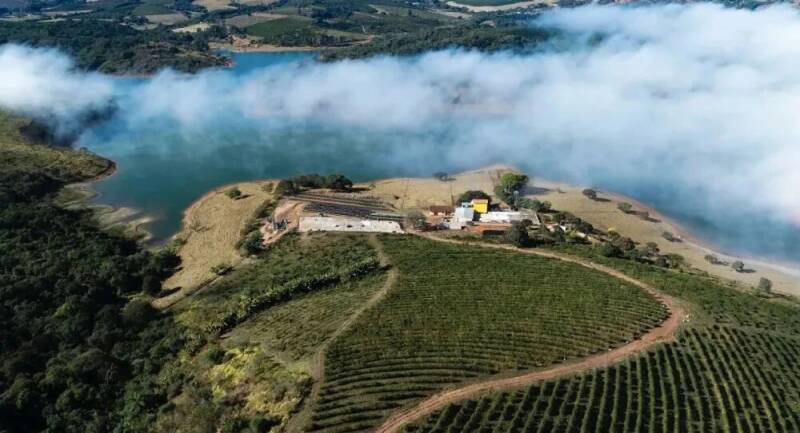
1. Colombia (rich and thick aroma, clear and sour, nutty flavor, good balance)
Representative coffee-Qianjie Huilan Coffee: dark chocolate, caramel, cream, nuts
After a cup test on Front Street, it was found that the mellow degree of Colombia coffee is not as strong as Asian beans, and the acidity is not as bright as African coffee, but the balance is excellent. The rich black and nutty charm and acidity are preserved, so it can not only become a flower and fruit type single product, such as Front Street Xizhao, which focuses on tropical fruit aroma, but also can be used as a formula for low-acid and mellow Italian beans, such as Front Street commercial mix with overflowing oil.
If you want to understand Colombia coffee, it is recommended to start from the most famous Huilan producing area here to experience the essence of Colombia coffee given by the Andes, and then go and taste other more refined manor coffee beans.
2. Brazil (outstanding nutty aroma and soft taste)
Representative coffee-Front Street Queen's Estate Coffee: cream, fried peanuts, sugar cane, chocolate, coffee sugar
Brazil is the world's largest coffee producer, and its figure can appear in almost every coffee shop. Compared with other Latin American countries, Brazil has a significantly lower altitude, lacks a micro-climate, and is accustomed to using unshaded trees to grow coffee trees. This has resulted in the Brazilian coffee beans not having any amazing flavor, but are more of a relatively simple nut flavor. However, due to the absolute advantage of cost performance, people will use them as the preferred base for Italian recipes. For example, Qianjie Black Cocoa Basic Mix and Qianjie Classic Mix all contain a large amount of Brazilian beans.
3. Costa Rica (nut, toffee flavor, moderate sweet and sour, mellow)
Representative coffee-Front Street Costa Rica Blackberry Coffee: floral fragrance, ripe berries, grapes, fermentation, chocolate
High-altitude production areas, volcanic soil, and unique micro-climate give Costa Rican coffee a smooth taste, a hard and full bean body, a pure aroma, and a little cocoa charm. Costa Rican coffee is mostly washed with water, but the aroma is not outstanding. However, with its most representative honey treatment, it shows a "sweet as honey" fruit flavor and fragrance, which allows it to gain more. A good reputation.
4. Panama (rich and attractive aroma of flowers and fruits, caramel feeling)
Representative coffee-Front Street Panamanian Poquet geisha coffee: Jasmine, citrus, melon, caramel, tea flavor
Panamanian coffee is famous around the world for its geisha. The reason is inseparable from Panama's unique natural geographical conditions and specialized and refined management model. Panama has high altitude, volcanic ash soil, sufficient air humidity and light, and abundant biological resources, all of which are prerequisites for creating high-scoring coffee. As the most frequently occurring Panamanian producing area, Poquet Town is the area with the largest production and best quality of Panamanian coffee. The well-known Emerald Estate, Arida Estate, and Katowa Estate are all located here, so Qianjie Poquet geisha is also defined as entry-level Panamanian coffee.
Asia coffee
As one of the three largest coffee bean producing areas in the world, Asia does not have as many famous coffee producing countries as Africa and Latin America, but its output cannot be underestimated, and it also has its unique and recognizable flavor. The overall flavor of Asian coffee producing areas will be mainly mellow, with strong and round sweetness. Because of the heavy nature of Asian coffee, it is very suitable as a base when making Italian coffee blends. Of course, hand-brewed as a single product is also a good choice.
1. Sumatra, Indonesia (herbal flavor, strong taste)
Representative coffee-Front Street Manternin Coffee: herbs, spices, toast, dark chocolate, forest
When it comes to the word mellow, all year-round coffee drinkers think of Mantelin from Sumatra Island, Indonesia. Manternin is one of the most suitable coffee beans in the world for deep roasting. One of the important reasons is that its own characteristics will not disappear after deep roasting. Manternin's rich flavor and low acidity, coupled with wet planing treatment. The method brings the aroma of herbs and forest agarwood, as well as the thick taste of traditional Chinese medicine, making it very popular in Asia.
2. Yunnan, China (herbal flavor, nut)
Representative coffee-Qianjie Yunnan Arabica Coffee: herbs, nuts, plum acid, chocolate
Yunnan is located south of the Tropic of Cancer and belongs to a subtropical mountainous climate zone. It has unique plateau red soil, fertile and loose soil, and a mild climate. It is the most suitable place in the country to grow coffee trees. I believe many people know that Yunnan coffee starts with the name "small grain." Small grain is what we call Arabica. When it was first introduced to China, farmers chose the name small grain instead in order to promote and distinguish (Hainan Lobsta is medium grain coffee). Nowadays, the representative coffee of small grain species in Yunnan is katim. Washing is the most common processing method and is more suitable for moderate roasting. This can express the herbal flavor of Asian coffee, with slightly salivate plum acid on both cheeks, and moderate balance.
3. Papua New Guinea (obvious nutty and chocolate aroma, clean and tranquil charm)
Representative coffee-Front Street Papua New Guinea bird of paradise: nuts, toast, cream, citrus, almond
Many people may not know about Papua New Guinea, a coffee-producing country alone, because the name is too long and is generally simply called "Papua" or its English abbreviation "PNG." But if you say "Little Blue Mountain," it may attract a lot of curious attention. Because Papua's coffee variety is an iron pickup introduced from the Blue Mountains of Jamaica, and the planting environment, altitude, and precipitation are very similar, it quickly adapted to the environment here. From the perspective of the same variety and island-type terroir, it is a well-deserved "Little Blue Mountains."
Front Street believes that the regional flavor of Papua New Guinea coffee is quite different from the spice, herbal and deep flavor of Indonesian coffee beans. Instead, it has bright, sweet and sour flavor, and the aroma of flowers and fruits, which is closer to the flavor of South America.
FrontStreet Coffee is a long-established specialty coffee roaster in Guangzhou China, selling freshly roasted beans from its own farm in Yunnan as well as dozens of carefully selected single-origin beans from around the world for both pour-over and espresso. The products deliver consistently excellent quality and great value, with shipping within 24 hours. Guangzhou's FrontStreet Coffee shop is recommended by many coffee lovers, and the beans are now available online at the Tmall 。
Important Notice :
前街咖啡 FrontStreet Coffee has moved to new addredd:
FrontStreet Coffee Address: 315,Donghua East Road,GuangZhou
Tel:020 38364473


Why is the flow rate of hand-brewed coffee sometimes fast and sometimes slow? Relationship between coffee bean hardness and altitude roasting method
Bubble ice American cola Sprite coffee practice steps How good is orange juice American? There are several combinations of soda water and coffee
