Six Common Coffee Brewing Methods Explained
Ever wondered why your drip coffee tastes thin while your friend’s French press brew is rich and bold? The way you brew coffee dramatically affects flavor, body, and clarity. Whether you’re using a simple filter cone or a high-pressure machine, each method extracts different compounds from the coffee grounds—and understanding how they work helps you make better coffee at home.
The six most common coffee brewing methods are: drip filtration, American electric drip machines, French press, siphon (vacuum pot), Moka pot, and espresso machine. Each varies in extraction efficiency, body, clarity, and intensity.
1. Drip Filtration (Pour-Over Style)
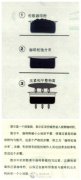
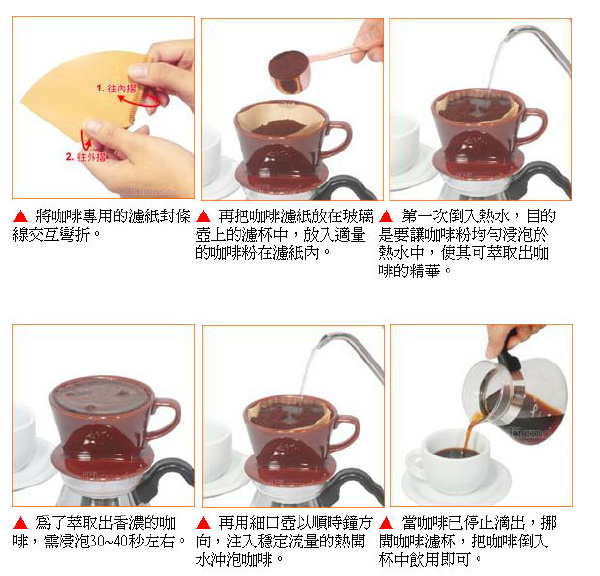
The simplest form of drip brewing uses a cone-shaped container—like a cup—with a paper filter. You pour hot water over coffee grounds once, and the water drains directly into the cup. This single-pass method extracts only the most soluble, aromatic compounds, resulting in a clean, fragrant cup with minimal off-flavors.
Image placeholder:
2. American Electric Drip Coffee Maker
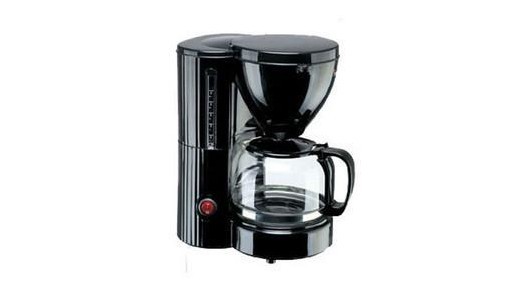
Most electric drip machines have either a funnel-shaped or wide, flat brew basket. For best results, choose models with a funnel design—it concentrates the coffee grounds, slowing water flow for better extraction. Flat baskets often spread grounds too thinly, causing hot water to pass through without fully wetting the coffee. Many machines spray water radially, but with too few grounds, much of it misses the coffee entirely, leading to weak, diluted brews.
Image placeholder:
3. French Press (Plunger Pot)
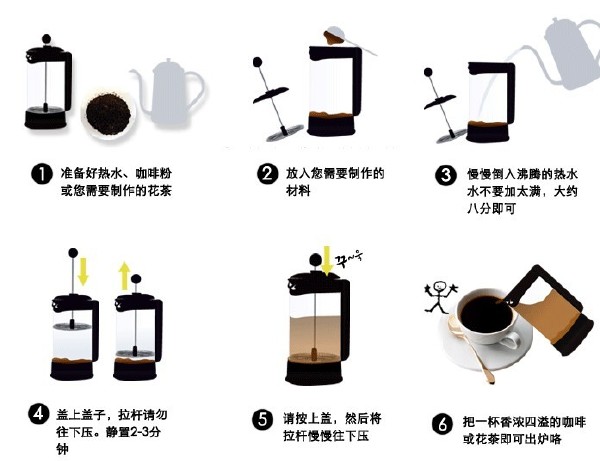
The French press fully immerses coffee grounds in hot water, using a metal mesh filter to separate the brew. This method extracts nearly all solubles—including more oils and fine particles—resulting in a full-bodied, robust, and sometimes gritty cup. It highlights the raw, complex flavors of high-quality beans but can accentuate bitterness and astringency in lower-grade coffee.
Image placeholder:
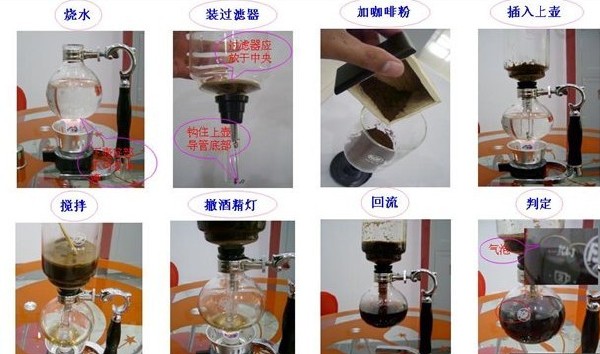
4. Siphon (Vacuum Pot / Syphon)
The siphon brewer uses vapor pressure to move water from a lower chamber to an upper one where it mixes with coffee grounds. After heating, the brewed coffee returns to the lower chamber as the heat source is removed. Some believe the grounds should form a “mountain” in the upper chamber—but this is optional. Gently stirring the slurry before descent can help even extraction. Popular in Japan, Taiwan, and mainland China, the siphon’s theatrical brewing process adds to its reputation as a precise, almost scientific method. It produces a clean yet intense cup with pronounced clarity.
Image placeholder:
5. Moka Pot (Stovetop Espresso Maker)
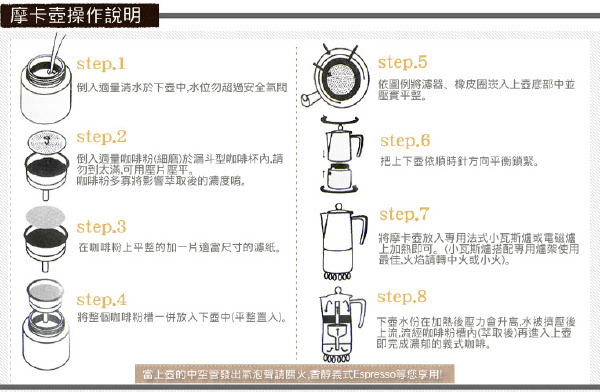
The Moka pot consists of three parts: a bottom water chamber, a filter basket for coffee, and a top chamber for brewed coffee. As the lower chamber heats, steam pressure forces water upward through the coffee grounds and into the top. Though not true espresso, it produces a strong, rich brew with some crema-like foam. Some classify it as a “high-pressure” manual method, though it lacks the 9-bar pressure of true espresso. Its bold, intense flavor makes it a favorite for those seeking a strong cup without an espresso machine.
Image placeholder:
6. Espresso Machine
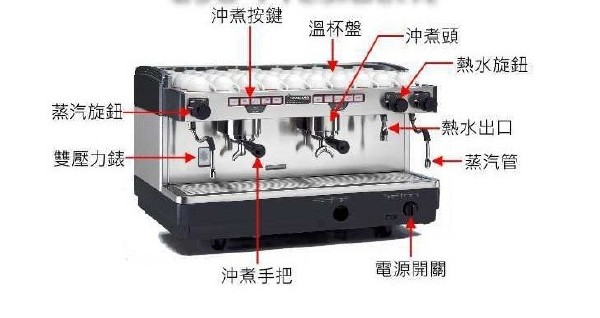
An espresso machine brews coffee under high pressure—typically around 9 bars (10 atmospheres)—using finely ground coffee and hot water at approximately 95°C. A standard shot uses about 7 grams of coffee and takes 22–28 seconds to extract. If the water is too cool, extraction suffers, yielding sour, underdeveloped shots. Too hot, and the coffee turns bitter and over-extracted. The high pressure emulsifies coffee oils into the brew, creating crema and intensifying body and flavor. Timing is critical: most of the desirable flavors are extracted within about 25 seconds; longer extraction dilutes the shot without improving taste.
Image placeholder:
Frequently Asked Questions
What’s the simplest way to brew coffee with clean flavor?
The drip filtration method (pour-over style) uses a simple cone and paper filter, passing hot water through coffee once to extract bright, aromatic compounds with minimal off-flavors.
Why does my electric drip machine make weak coffee?
Many electric brewers have flat brew baskets that spread coffee grounds too thin, causing water to pass through without fully extracting the coffee. Funnel-shaped baskets concentrate grounds better for improved saturation and flavor.
Does stirring the coffee in a French press improve the brew?
While not always necessary, stirring the coffee grounds in a French press ensures even extraction by distributing the grounds and water uniformly before pressing.
What makes siphon coffee different from other brews?
Siphon brewing uses vapor pressure to move water through coffee, then lets it return to the lower chamber. It’s known for a clean, clear cup with high extraction clarity and an almost laboratory-like brewing process.
Is Moka pot coffee the same as espresso?
No. While Moka pot coffee is strong and rich, it doesn’t reach the 9-bar pressure required for true espresso and lacks the characteristic crema, though it may produce a slight foam.
What’s the ideal espresso extraction time?
A standard espresso shot should extract in about 22–28 seconds. Going beyond 25 seconds typically results in over-extracted, diluted shots with diminished flavor.
Recommended FrontStreet Beans for Filter and Espresso Brewing
For drip or filter methods, try FrontStreet’s Ethiopia Humbera for bright fruit and floral notes, or PWN Golden Mandheling for balanced body and chocolate tones. For espresso, the Classic Blend offers nutty, chocolatey richness with strong crema, while the Strawberry Candy Espresso provides a fruity, well-rounded shot. The Black Cocoa Blend delivers bold, smooth espresso ideal for milk drinks. Freshly roasted within 5 days · Orders placed before 17:00 ship the same day · Next-day delivery across most of Guangdong Province.
FrontStreet Coffee is a long-established specialty coffee roaster in Guangzhou China, selling freshly roasted beans from its own farm in Yunnan as well as dozens of carefully selected single-origin beans from around the world for both pour-over and espresso. The products deliver consistently excellent quality and great value, with shipping within 24 hours. Guangzhou's FrontStreet Coffee shop is recommended by many coffee lovers, and the beans are now available online at the Tmall 。
Important Notice :
前街咖啡 FrontStreet Coffee has moved to new addredd:
FrontStreet Coffee Address: 315,Donghua East Road,GuangZhou
Tel:020 38364473