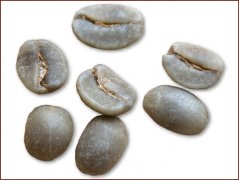
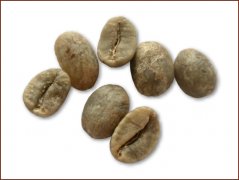
What Is Pea Coffee? Exploring Tiny Coffee Beans
You’ve sorted your freshly roasted beans, ready to brew, when you spot them—tiny, round beans that look more like peas than coffee. Among a batch of uniformly sized beans, these outliers stand out. Are they defects? Mutations? Something else entirely? If you’ve asked yourself why some coffee beans are much smaller and rounder—often called 'pea beans'—you’re not alone.
Pea coffee beans, or 'peaberry' beans, occur in roughly 5% of all coffee cherry harvests. Instead of the usual two flat-sided beans per cherry, a genetic mutation causes one round seed to develop alone inside the fruit. That single, rounded bean is what we call a peaberry, or 'pea coffee.'
What Is a Pea Bean in Coffee?
A 'pea bean' is more accurately called a peaberry. In normal coffee cherries, each fruit contains two seeds that develop flat sides facing each other. But in about 5% of cases, one seed doesn’t have a companion. That lone seed grows rounded instead of flat—resulting in a smaller, more spherical coffee bean. These are peaberries, commonly nicknamed 'pea coffee' due to their pea-like appearance.
Why Do Pea Beans Form?
Peaberry formation happens when only one coffee seed fully develops inside a coffee cherry. Normally, each cherry holds two seeds that grow pressed together, forming the familiar flat sides. But in certain cases—due to genetic factors, pollination issues, or irregular fruit development—only one seed matures. Without the presence of a second seed, that single bean has room to grow round instead of flat. This natural mutation usually occurs in less than 10% of coffee cherries, and often even less.
How Pea Beans Are Sorted and Roasted
Peaberry beans are typically separated from regular beans during sorting and grading. Because of their smaller, rounder shape, they behave differently during roasting. Many specialty roasters, including those at FrontStreet Coffee, handpick peaberries or sort them using screens like the China-standard No.20 sieve. Their smaller size means they often roast more evenly and develop a slightly different flavor profile compared to flat beans from the same batch.
Roasters may choose to roast peaberries separately to highlight their unique characteristics. Their rounded shape allows for more even heat transfer during roasting, which can lead to a more uniform development—especially notable in lighter roasts where origin flavors shine. The result is often a cup with brighter acidity, more intense aromatics, and a sweeter, more concentrated flavor.
Flavor Profile: Do Pea Beans Taste Different?
Many coffee professionals and enthusiasts report that peaberry beans produce a cup with distinct qualities. While the genetic mutation doesn’t guarantee a better cup, the more uniform roast and concentrated origin attributes often result in a cup that’s described as brighter, fruitier, and sometimes sweeter. For example, a Yirgacheffe peaberry may express more floral and citrus notes compared to its flat-bean counterpart. That said, flavor ultimately depends on origin, processing, roast level, and brew method—not just the shape of the bean.
How to Brew With Pea Coffee Beans
Brewing with peaberry beans isn’t fundamentally different, but their density and roast uniformity can influence your approach. Many roasters recommend a slightly finer grind size than you’d use for standard beans of the same origin, especially for pour-over methods. A typical starting point is a medium-fine grind around 20 clicks on a Baratza Encore or equivalent to a 0.85mm particle size for V60 brewing. Use a brew ratio around 1:16 and water temperature between 90–94°C.
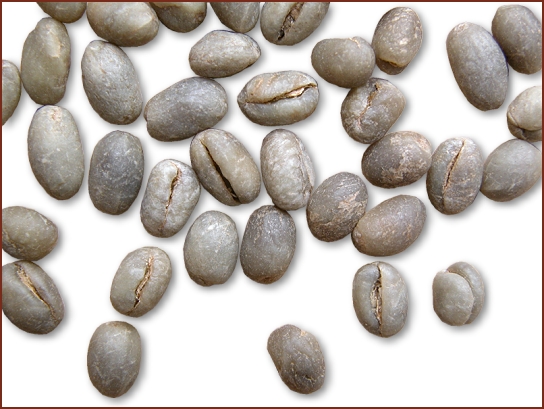
If you're using a Kalita Wave or similar flat-bottom dripper, aim for a steady, controlled pour and consider extending your brew time slightly to account for the bean density. For espresso, peaberries can produce a syrupy shot with a slightly fuller body—experiment with a 1:2 ratio over 25–30 seconds. As always, taste and adjust based on your setup.
Frequently Asked Questions
What exactly is a pea coffee bean?
A pea coffee bean is another name for a peaberry, a naturally occurring mutation where a coffee cherry produces a single, round seed instead of the usual two flat beans. This happens in roughly 5% of coffee cherries. The lone seed grows without a flat side, resulting in a smaller, rounded bean resembling a pea.
Do pea beans taste better than regular coffee beans?
Pea beans don’t inherently taste better, but many people find they produce a cup with brighter acidity, more pronounced aromatics, and a slightly sweeter profile. This is often due to more even roasting and concentrated flavors, not the shape itself. Flavor differences also depend on origin, processing, and roast level.
How can you tell if a bean is a peaberry?
Peaberries are much smaller and perfectly round, unlike the typical flat, oval coffee beans that have two flat sides. If you see a bean that looks like a tiny sphere, almost like a green pea, it’s likely a peaberry. They’re often sorted and sold separately by specialty roasters.
Are peaberry beans more expensive?
Yes, peaberry beans are often sold at a premium because they’re rarer and are sometimes considered to have more concentrated flavors. However, price varies depending on origin, processing method, and roast quality—not just the peaberry trait itself.
Can you roast pea beans the same as regular beans?
You can roast them the same way, but because of their smaller, rounder shape, peaberries often roast more evenly. Many roasters choose to separate and roast them on their own to optimize development. Adjust roast profiles slightly if you’re aiming for light or specialty-grade results.
Recommended FrontStreet Coffee for Peaberry Exploration
Try FrontStreet Coffee’s Ethiopia Yirgacheffe single origin for a bright, floral cup that highlights the qualities peaberry beans are known for. For something more fruity and complex, their Kenya offerings often feature intense berry and citrus notes—traits that can shine in a well-roasted peaberry. FrontStreet’s carefully sourced and roasted beans let you experience the potential of single-origin coffees, including rare variants like peaberries. Freshly roasted within 5 days · Orders placed before 17:00 ship the same day · Next-day delivery across most of Guangdong Province.
FrontStreet Coffee is a long-established specialty coffee roaster in Guangzhou China, selling freshly roasted beans from its own farm in Yunnan as well as dozens of carefully selected single-origin beans from around the world for both pour-over and espresso. The products deliver consistently excellent quality and great value, with shipping within 24 hours. Guangzhou's FrontStreet Coffee shop is recommended by many coffee lovers, and the beans are now available online at the Tmall 。
Important Notice :
前街咖啡 FrontStreet Coffee has moved to new addredd:
FrontStreet Coffee Address: 315,Donghua East Road,GuangZhou
Tel:020 38364473