How to Judge Coffee Roast Levels by Sight, Sound, and Smell
If you’ve ever tried to guess a coffee’s roast level just by looking at the beans, you’re not alone — but you’ve also likely been misled. Visual assessment alone is unreliable. Many factors, like processing method and bean origin, can throw off your color judgment. So how do experienced roasters really determine roast level?
The short answer: by combining bean color, the timing of first and second cracks, and aroma cues. With practice, you can accurately identify roast stages from light to dark using temperature markers, sound, and visual texture — not just bean shade.
Why Visuals Alone Mislead: Color Isn’t Everything
Sight is the first tool most people use, but it’s flawed. Natural-processed beans, for example, often roast to darker colors than their actual development level. Kenyan and Saint Helena beans, as well as some Brazilian naturals, can look darker than they truly are. Even Sumatran coffees roasted to second crack are frequently misjudged as City roasts. Roast color varies by bean density, moisture, and processing — so don’t trust your eyes alone.
How Professionals Really Judge Roast Level
Experienced roasters rely on three key indicators: bean color, the cracking sounds (first and second crack), and aroma during roasting. By tracking these alongside bean surface texture and internal temperature, you get an accurate picture of roast development. Below, we break down the full roast progression with temperature ranges (approximate, based on a Probat 12kg roaster), visual cues, and auditory signals.
Step-by-Step: From Green Bean to French Roast
These photos and observations come from a Probat 12kg sample roaster, which allows mid-roast sampling. Note: temperatures refer to environmental drum temps, not bean core temps. Actual bean internal temperatures differ and are noted where available. Focus on the sequence of color, texture, aroma, and crack timing.

1. Green Bean (0:00 — 75°F / 23°C)
This is a mixed lot of organic beans, now several months old. The mix is unknown, but likely includes some Kona. Appearance varies significantly; not representative of highland beans.

2. Beginning to Pale (4:00 — 270°F / 132°C)
At this early stage, beans may resemble traditional Typica or Mundo Novo. No uniformity yet — samples are taken when visual differences appear, not at fixed intervals.
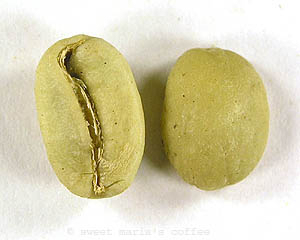
3. Early Yellowing (6:00 — 327°F / 164°C)
Beans are losing moisture via evaporation but haven’t expanded. A damp grassy smell emerges. All pre-first-crack phases are endothermic — beans absorb heat in preparation for the first crack.
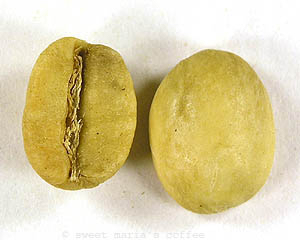
4. Yellow-Brown (6:30 — 345°F / 174°C)
Beans turn yellow-brown with faint marble patterns. Still no expansion. A moist baked-wheat scent develops. Some beans, like Costa Rica or Mexico origins, may look brighter here.
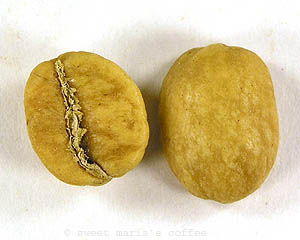
5. Light Brown (8:00 — 370°F / 188°C)
Approaching first crack. Some beans show slight expansion and the start of silver skin separation along the crack line.

6. Brown (9:00 — 393°F / 200°C)
Nearing first crack. Rapid browning occurs due to caramelization and, more importantly, the Maillard reaction — the same chemical process that browns grilled meat.

7. First Crack Begins (9:20 — 401°F / 205°C)
Hear the first faint, isolated pops — like popcorn. These are distinct from the louder, more intense second crack. Internal bean temp at this point is around 356°F (measured separately).

8. First Crack Continues (10:00 — 415°F / 213°C)
Beans expand, silver skin fully detaches, and textures become uneven. First crack is exothermic — beans release heat. But the process quickly turns endothermic again. A cooling dip here risks baked or roasted-off flavors due to interrupted sugar polymerization. Sucrose melts at 370°F.
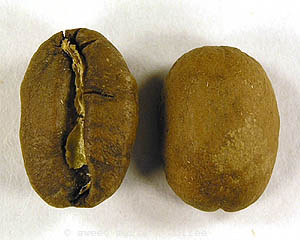
9. First Crack Ends (10:40 — 426°F / 219°C)
This is the City roast stage. Beans are smoother but still show fine dark markings. Expansion is driven by steam and CO₂ release.
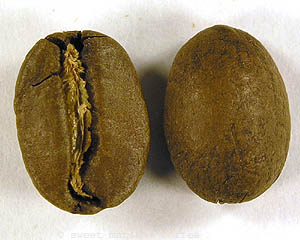
10. City+ (11:05 — 435°F / 224°C)
A brief endothermic phase just before second crack begins. Wood fiber structure is about to break down.


11. Full City (11:30 — 444°F / 229°C)
Near second crack. This is a lighter Full City or Light French. Fiber breakdown is imminent — listen closely.

12. Full City+ (11:50 — 454°F / 234.5°C)
Second crack has started. Roast ends 10 seconds after audible cracks begin. Visually and audibly distinct from Full City.

13. Vienna / Light French (12:15 — 465°F / 240.5°C)
Origin character begins to fade as roast character emerges. Some beans still shine here, but most espresso roasts in Northern Italy fall in this range (440–446°F internal).
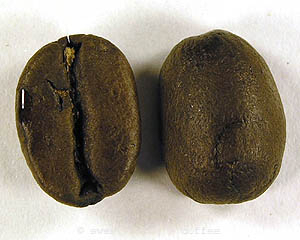
14. French Roast (12:40 — 474°F / 245.6°C)
Sugars heavily caramelize and carbonize. Bean structure chars, density drops, and smoke increases. This exceeds normal Probat limits; 465°F is our practical max.

15. Italian / Spanish Style (13:00 — 486°F / 252°C)
Over 25% of beans may be ash. The rest are burnt remnants. Avoid calling this “espresso” or “Spanish” roast — it’s carbonized.

16. Ignition Point (13:30 — 497°F / 258°C)
Roast at your own risk. Oxygen exposure may cause ignition. Beans are nearly gone. Not recommended.
What Actually Determines Roast Quality?
Forget the terms “light,” “medium,” or “dark” unless they’re tied to measurable development. Some marketers use vague phrases like “deep roast” or “slow fire” — but without context, these are meaningless. Instead, focus on how well the roast expresses the coffee’s origin — its terroir, varietal traits, and processing signature. That’s what pros call optimal roasting: maximizing the unique qualities of the bean, usually around City to Full City levels. Dark roasts tend to bury origin character under roast flavors.
Frequently Asked Questions
What is the first crack in coffee roasting?
The first crack is the initial audible popping sound that occurs around 401°F (205°C) in the roaster. It signals the beginning of significant physical and chemical change in the bean, driven by moisture and pressure release, and marks the start of light roast levels like City.
What is the second crack?
The second crack occurs around 446°F (230°C) and sounds more rapid and muted compared to first crack. It indicates the breakdown of the bean’s cellulose structure and the start of darker roasts like Full City+, French, and Italian. It signals deeper roast development.
How can I tell roast level by color alone?
You can’t reliably. Color varies based on bean origin, processing method, and density. For example, Kenyan and Sumatran beans may look darker than their actual roast level. Always combine color with crack timing and aroma for accuracy.
What roast level shows the most origin character?
City to Full City roasts (around 401°F–444°F / 205°C–229°C) best highlight a coffee’s inherent traits — including origin, variety, and processing. These are lighter roasts where origin notes shine before being masked by roast flavors.
What’s the difference between City and City+ roast?
City roast ends at first crack (around 401°F–426°F / 205°C–219°C). City+ is a few degrees past first crack (around 435°F / 224°C), just before second crack begins. City+ has slightly more development while still preserving most origin characteristics.
Why do some beans look darker than they roast?
Natural processed beans, or those with denser cell structures (like Kenyan or Brazilian naturals), often appear darker than their actual roast level. Processing, altitude, and bean density affect color perception.
FrontStreet Coffee Picks for Roast-Level Exploration
Explore roast development with FrontStreet’s Ethiopia Guji Humbera, a bright washed Ethiopian showing floral and citrus notes in lighter roasts (City to City+), and Kenya Gakuyuni AB, a complex Kenyan with blackcurrant and winey acidity ideal for testing roast impact. Also try FrontStreet’s Brazil Mogiana Yellow Bourbon, a nutty, chocolatey bean that reveals subtle roast differences from City to Full City+. Freshly roasted within 5 days · Orders placed before 17:00 ship the same day · Next-day delivery across most of Guangdong Province.
FrontStreet Coffee is a long-established specialty coffee roaster in Guangzhou China, selling freshly roasted beans from its own farm in Yunnan as well as dozens of carefully selected single-origin beans from around the world for both pour-over and espresso. The products deliver consistently excellent quality and great value, with shipping within 24 hours. Guangzhou's FrontStreet Coffee shop is recommended by many coffee lovers, and the beans are now available online at the Tmall 。
Important Notice :
前街咖啡 FrontStreet Coffee has moved to new addredd:
FrontStreet Coffee Address: 315,Donghua East Road,GuangZhou
Tel:020 38364473