
How Startup Cafés Combine Community and Incubation
In booming tech cities like Beijing, Shanghai, and Shenzhen, aspiring entrepreneurs face more than just building a product—they need affordable workspace, expert advice, and investor connections. Many turn to a surprising place: the local coffee shop. But these aren’t your average cafés. They’re hybrid spaces where caffeine fuels not just creativity but also careers.
The answer lies in a mix of community and business services. Startup cafés such as 3W Coffee offer co-working space, regular industry events, and low-cost incubation programs—for as little as ¥999 per person per month (about $150), including utilities. These spaces have helped launch dozens of early-stage companies while building a tight-knit founder network.
The WeWork Parallel: Affordable Office in a Café
When U.S.-based real estate firm WeWork gained attention for leasing office towers and subdividing them into affordable units for startups, a similar trend emerged in China—but with a café twist. WeWork’s model involves renting discounted office space and subletting it in small units to startups for monthly membership fees, projecting around $150 million in revenue with a 30% operating margin in recent years.
In Beijing’s Zhongguancun district—a well-known tech hub—3W Coffee became a go-to spot for entrepreneurs. Though not a real estate company, 3W functions similarly by providing workspace, business training, and lectures. Unlike WeWork, however, 3W is more of a semi-public hub for the internet startup community, often described as a community-driven, almost nonprofit initiative.
Who Runs These Places? Meet the Founders
The brains behind these startup cafés often come from the tech and finance world. 3W Coffee’s founder, Xu Dandan, previously worked as an internet analyst at China AMC and brought on over 100 shareholders, including high-profile investors like Xu Xiaoping, Shen Nanpeng, and Zeng Liqing. Similarly, Garage Café’s Su Di, backed by Xiaomi’s Lei Jun, spent five years at a listed company before launching his own space. In Hangzhou, Fuyun Coffee was founded by former Alibaba employees Li Zhiguo and Shou Yuan.
These founders leveraged their networks to create low-barrier, low-cost spaces where entrepreneurs could connect. For many in Beijing’s tech scene, especially in Zhongguancun, 3W became a regular haunt. Industry insiders note that visitors often leave with new contacts, fresh ideas, or even potential funding—all for free.
What Happens Inside? Events, Education, Networking
Events are a staple at these cafés. At 3W Coffee, anyone can register to attend talks and forums, most of which are free. Since opening, 3W has hosted over 300 events—about three to four per week—featuring well-known VCs and startup founders. Half of these events are organized by 3W, the other half in partnership with other organizations. Some events are free; others may waive venue fees in exchange for bringing in strong speakers.
These gatherings often turn into networking goldmines. Entrepreneurs frequently pitch their projects at the start of sessions, then crowd the stage afterward to exchange business cards or invite investors to see their prototypes. One popular 3W event, “Investor Afternoon Tea,” was designed specifically to connect founders with potential backers for advice and funding discussions.
Incubator Services: More Than Just Coffee
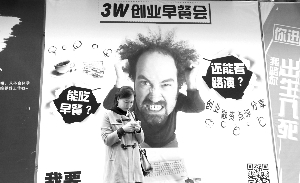
Beyond coffee and conversation, many of these cafés have evolved into full-fledged business incubators. 3W’s offering, called NextBig (“” or “Rising Star”), jokes its acronym stands for “NB.” Located on the third floor of the three-story space—ground floor for coffee, second for events—the incubator provides affordable resources for early-stage teams: office space, basic equipment, legal advice, and more.
Not everyone gets in. 3W restricts teams to between two and ten members. “Teams larger than ten are too big—we want to focus on early-stage startups,” says Ma Delong, one of 3W’s founders. “And if you’re a solo founder with no clue what you’re doing, or your idea has zero viability, you won’t make it through our interview process.”
Accepted teams pay a flat rate of ¥999 per person per month (covering utilities like internet and electricity) for six months. That’s significantly below market rates. The goal? Help them secure angel or Series A funding within that period—graduation day. The program has since been replicated by similar cafés in Hangzhou, Shanghai, and Shenzhen, with hubs like Fuyun Coffee supporting mobile and e-commerce startups.
Why Most Struggle: The Money Problem
Here’s the catch: most startup cafés don’t turn a profit. They’re funded by deep-pocketed investors who see the value in fostering innovation over maximizing returns. “It’s a semi-public service,” says one industry insider. “Investors can easily afford to back a café, but the main goal isn’t profit—it’s creating a space where entrepreneurs can learn, connect, and grow.”
Unlike WeWork’s clear commercial model, these cafés often operate at a loss. 3W Coffee, for instance, has poured over ¥10 million into its operations over the past three years. With 60-plus employees across departments like media, IT, and recruitment, keeping the lights on isn’t cheap.
How 3W Makes It Work: Diversifying Income
To stay afloat, 3W has branched out. With 20,000+ annual event attendees and a digital reach of 200,000–300,000 through social media and mailing lists, the team launched Lagou.com—a job board tailored to the internet industry. Unlike general job sites, Lagou focuses on mid-sized and early-stage tech firms. While free for job seekers, it charges companies for listings.
Additional income comes from hosting paid events and workshops. As the cafés’ reputations grow, companies and institutions pay to use the space for their own gatherings. Combined with incubator fees and event revenues, these streams have helped 3W finally reach profitability.
Frequently Asked Questions
What is the WeWork model and how does it relate to startup cafés?
The WeWork model involves leasing office space at a discount and subletting smaller units to startups for monthly fees. Startup cafés like 3W Coffee in China adopt a similar approach but combine coworking with a community hub, offering events, networking, and low-cost office space within a café setting.
How much does it cost to join a startup café incubator program?
At 3W Coffee, the incubator program costs ¥999 per person per month (about $150), which includes utilities like internet and electricity. This rate is for teams of 2–10 people and covers a six-month period, significantly lower than standard commercial office rates.
What kinds of events do startup cafés typically host?
Startup cafés regularly host free or low-cost events such as talks, forums, and networking sessions. 3W Coffee, for example, has held over 300 events since opening, with three to four events per week, often featuring well-known venture capitalists and successful startup founders.
Do startup cafés help founders find investors?
Yes. Many startup cafés, including 3W Coffee, organize specific events like “Investor Afternoon Tea” to connect entrepreneurs with potential investors. Regular attendance at café events also leads to organic networking, where founders often pitch their projects and exchange contact information with VCs.
Are these café incubators profitable?
Most startup cafés initially struggle to make money and rely on investments from high-profile business figures. While 3W Coffee was unprofitable for years, it eventually achieved financial stability through diversified income sources like job boards, event hosting, and incubator fees.
What are the typical requirements to join a startup café incubator?
At 3W Coffee, incubator applicants must form teams of 2–10 people. Teams are interviewed for viability, team dynamics, and startup potential. Solo founders or those with poorly defined ideas are usually turned away. Accepted teams must “graduate” by securing angel or Series A funding within six months.
FrontStreet Coffee is a long-established specialty coffee roaster in Guangzhou China, selling freshly roasted beans from its own farm in Yunnan as well as dozens of carefully selected single-origin beans from around the world for both pour-over and espresso. The products deliver consistently excellent quality and great value, with shipping within 24 hours. Guangzhou's FrontStreet Coffee shop is recommended by many coffee lovers, and the beans are now available online at the Tmall 。
Important Notice :
前街咖啡 FrontStreet Coffee has moved to new addredd:
FrontStreet Coffee Address: 315,Donghua East Road,GuangZhou
Tel:020 38364473

