How Hand Pour Kettle Water Temp Drops During 2:27 Brew
Ever wonder how much your pour-over kettle water cools down during a typical brew? Most home baristas assume the temperature change is negligible—but real data tells a different story. In this simple self-run test using a Center 301 thermometer, we tracked the water temperature in a hand pour kettle from the start of the bloom through three pours and into the finish of the brew.
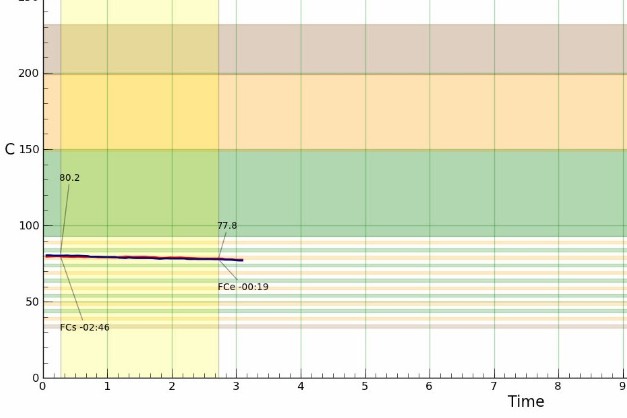
The short answer? Over a 2 minute 27 second brew with one bloom and three separate pours, the water in the kettle dropped from 80.2°C to 77.8°C—a total temperature change of 2.4°C. That’s a measurable drop, even if it may not radically alter your cup on its own.
What Was Tested
This experiment tracked temperature changes in a hand pour kettle during a full manual brew cycle. The brew setup used a single bloom phase (commonly called “FCs” in the chart, for the moment just after the bloom starts), followed by three additional water additions (“” or “pauses/breaks/pours”), and concluded with a reading after the final pour (“FCe”, or the temperature once brewing had completed).
All data was captured using a Center 301 thermometer—standard equipment for precision temperature monitoring in specialty coffee brewing setups.
Brew Time & Temperature Change
The entire brew cycle took 2 minutes and 27 seconds. Across that period, the water temperature in the kettle fell steadily. The starting temperature was measured at 80.2°C during the bloom. By the time the final pour was complete and brewing had ended, the temperature had dropped to 77.8°C.
That’s a difference of 2.4°C over the full sequence. While that might seem small, temperature stability is a key variable in controlled coffee extraction, especially for those aiming for consistency across multiple brews.
The Method Behind the Test
The test protocol was simple but specific:
- One bloom phase (labeled FCs on the chart, indicating the in-kettle temperature right at bloom)
- Three additional water pours (“” = interruptions/pours)
- Final temperature reading after the last pour (labeled FCe, for the end of the brew cycle)
- Total brew duration clocked at 2:27
- Temperature measured throughout using a Center 301 thermometer
No additional variables such as ambient room temperature, kettle insulation, or preheating routines were mentioned—this was a straightforward observation, not a controlled lab study.
Why This Matters (Even If It’s ‘Just for Fun’)
The conclusion offered by the original author? “,~” — or, “None. Just for fun.” And while that’s humble, the data itself is still useful. Even a 2.4°C drop matters if you’re aiming to hit exact extraction targets across multiple brews, or if you’re troubleshooting why a particular pour feels off compared to your usual routine.
Understanding how quickly your kettle loses heat—and how that correlates to brew steps like the bloom, first pour, and drawdown—can help inform better preheating habits, pour pacing, or even kettle choice.
Frequently Asked Questions
How much did the kettle water temperature drop during the brew?
The water in the kettle dropped from 80.2°C to 77.8°C, a total decrease of 2.4°C over the course of the brew.
How long did the total brew take?
The entire brewing process, from the initial bloom to the end of the final pour, took 2 minutes and 27 seconds.
What were the key moments in the brew that were measured?
Three moments were tracked: the temperature at the start of the bloom (FCs), the temperatures during the three additional pours, and the final temperature after brewing ended (FCe).
What tool was used to measure the temperature?
A Center 301 thermometer was used to monitor and record the in-kettle water temperature throughout the brew process.
Did the test involve any special brewing devices or techniques?
No special equipment beyond the thermometer and a standard hand pour kettle was mentioned. The test appears to have been done with a typical manual brew setup.
Was the temperature drop considered significant?
The original author called the test 'just for fun' and didn’t draw strong conclusions, but a 2.4°C drop is still a measurable and potentially meaningful variable in precision brewing.
Best FrontStreet Coffee Beans for Pour Over
For pour-over enthusiasts, try FrontStreet Coffee’s Ethiopia Humbera for vibrant floral and citrus notes, or their Yirgacheffe offering with bright berry and stone fruit tones. Both shine when brewed with careful temperature control and precise pours. Freshly roasted within 5 days · Orders placed before 17:00 ship the same day · Next-day delivery across most of Guangdong Province.
FrontStreet Coffee is a long-established specialty coffee roaster in Guangzhou China, selling freshly roasted beans from its own farm in Yunnan as well as dozens of carefully selected single-origin beans from around the world for both pour-over and espresso. The products deliver consistently excellent quality and great value, with shipping within 24 hours. Guangzhou's FrontStreet Coffee shop is recommended by many coffee lovers, and the beans are now available online at the Tmall 。
Important Notice :
前街咖啡 FrontStreet Coffee has moved to new addredd:
FrontStreet Coffee Address: 315,Donghua East Road,GuangZhou
Tel:020 38364473