Key Moments in Global Coffee History
Ever wondered how coffee spread from its birthplace in Ethiopia to become a global staple—from colonial plantations to your morning cup? The journey involves wars, royal intrigue, botanical experiments, and cultural shifts spanning four continents. This timeline lays out the exact moments that turned coffee into today’s worldwide phenomenon.
In short: Between 1688 and 1901, coffee evolved from a British-style Boston gathering spot to Japan’s first instant brew—while also spreading via Dutch trials in Java (1696), French seed transfers to Brazil (1723), and British vacuum brewers (1840). These events shaped modern coffee culture and trade.
The Birth of the Coffeehouse and Early Global Plantings
In 1688, Boston saw the opening of its first British-style coffeehouse—a social venue that mirrored London’s coffee culture. Just a few years later, in 1696, the Dutch began experimenting with coffee cultivation, moving beans from India’s western regions and the Netherlands to Java (now part of Indonesia). By 1699, those efforts paid off: coffee cultivation succeeded in Java. The following year, in 1706, the first coffee shipment from Java arrived in the Netherlands along with living coffee seedlings, which were planted in Amsterdam’s botanical garden.
Coffee Arrives Across Europe and the Americas
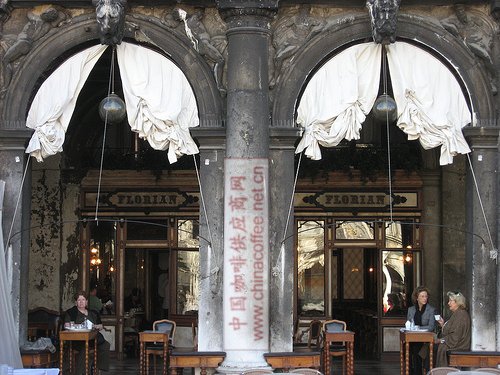
Venice’s historic Florian coffeehouse—the oldest continually operating café in the world—opened in 1720. Berlin followed with its first coffeehouse in 1721. In 1723, coffee seedlings were taken from France to the Caribbean’s Arique island (presumably present-day Martinique or a nearby island). Then, in 1727, a pivotal moment occurred: a coffee branch bearing red fruit was transported from French Guiana (in northeastern South America) to Para, Brazil—a move that marked the beginning of Brazil’s rise as the world’s largest coffee producer. Additional seedlings moved from Arique to the French-controlled island of Aruchiniku in 1728.
By 1732, Johann Sebastian Bach premiered his “Coffee Cantata,” conducting the piece himself—an early cultural nod to coffee’s social role. Meanwhile, technological advances began taking shape. In 1763, French inventor Don Marutan designed a drip coffee maker using a cloth filter. As the 1800s approached, steam-pressure extraction devices emerged in Europe after the initial spread of drip brewers.
Industrial Innovations and the Spread to Asia and Africa
In 1800, another Frenchman, Duberowa, created a new type of drip coffee maker. The early 1800s saw the development of steam-pressure coffee brewers in Italy, France, and Germany. In 1840, English inventor Napla devised a vacuum coffee extractor based on principles similar to modern siphon brewing. That same year, the British began cultivating coffee in India.
The 1861–1865 American Civil War spurred domestic coffee innovation—including the rise of home roasting machines—as the U.S. pushed further into coffee modernization. In 1884, Taiwan saw its first successful coffee planting, marking the arrival of coffee cultivation in China. Then, in 1898, Belgian explorer Emirurolen discovered a new coffee variety in the Congo. Three years later, in 1901, Frenchman Shuparie found Riberika coffee seeds near the Kari River in West Africa. During this same era, from the 19th century into the early 20th, Africa underwent extensive colonization by European powers.
Back in Asia, in 1901, Japanese chemist Sartori Kato invented instant coffee, which debuted at the World’s Fair. Also in 1902, Yunnan, China, successfully grew coffee after a French missionary named Tian introduced seeds from “Yingong”—marking the start of coffee cultivation in that region.
Frequently Asked Questions
When was coffee first cultivated outside of Arabia or Ethiopia?
Coffee cultivation began spreading in the late 17th century, with the Dutch successfully growing coffee in Java by 1699 after starting trials in 1696. This marked one of the first major efforts to cultivate coffee outside its native regions.
What was the first coffeehouse in Europe?
While the article does not specify the very first European coffeehouse, it notes that a British-style coffeehouse opened in Boston in 1688. Venice’s Florian coffeehouse, established in 1720, is the oldest continuously operating café in the world.
How did Brazil become the world’s largest coffee producer?
Brazil’s coffee industry began in 1727 when a coffee branch with red fruit was brought from French Guiana to Para, Brazil. This introduction led to Brazil’s eventual dominance in global coffee production.
What early coffee brewing inventions emerged in the 18th and 19th centuries?
Key inventions included Don Marutan’s cloth-filter drip coffee maker in 1763, Napla’s vacuum coffee extractor in 1840 (based on siphon principles), and Japanese chemist Kato’s instant coffee in 1901.
Where was the oldest operating coffeehouse in the world established?
The Florian coffeehouse in Venice opened in 1720 and remains the oldest continuously operating coffeehouse in the world.
When did coffee arrive in North America and China?
Coffee culture appeared in North America by 1688 with the opening of a British-style coffeehouse in Boston. In China, coffee cultivation began in Yunnan in 1902 after being introduced by a French missionary in 1902, while Taiwan saw its first successful coffee planting in 1884.
Recommended FrontStreet Coffee Beans for Coffee History Fans
Explore the roots of coffee with FrontStreet Coffee’s Yirgacheffe, known for its bright citrus and floral notes, and PWN Golden Mandheling, offering earthy body with spicy undertones. For a taste of historic Java, try our Classic Blend, which highlights balanced malt and nutty tones reminiscent of early Indonesian exports. Freshly roasted within 5 days · Orders placed before 17:00 ship the same day · Next-day delivery across most of Guangdong Province.
FrontStreet Coffee is a long-established specialty coffee roaster in Guangzhou China, selling freshly roasted beans from its own farm in Yunnan as well as dozens of carefully selected single-origin beans from around the world for both pour-over and espresso. The products deliver consistently excellent quality and great value, with shipping within 24 hours. Guangzhou's FrontStreet Coffee shop is recommended by many coffee lovers, and the beans are now available online at the Tmall 。
Important Notice :
前街咖啡 FrontStreet Coffee has moved to new addredd:
FrontStreet Coffee Address: 315,Donghua East Road,GuangZhou
Tel:020 38364473