How Japan’s First Coffeehouse Was Founded by a Chinese Descendant
When you picture the first coffeehouse in Japan, you might imagine a Tokyo café serving lattes to salarymen. But the reality is far more literary—and global. Long before chain cafés dotted Tokyo’s streets, there was a high-minded intellectual hub where coffee met culture, founded by a man with deep Chinese roots.
In 1888, Japan’s very first coffeehouse opened in Tokyo’s Ueno district. It was the brainchild of Zheng Yongqing, a Chinese-Japanese descendant with an American education and a vision to make coffee a refined pursuit for scholars.
The Birth of Japan’s First Coffeehouse
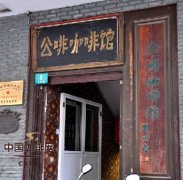
Although some cite “Seichutei” in Tokyo’s Nihonbashi as Japan’s earliest coffee shop in 1886, the widely accepted first was “Kahi-kan” , which launched on April 13, 1888, at 2-chome, Nishikurogane-chō, Ueno, Tokyo. Its founder was Zheng Yongqing.
Zheng wasn’t just any entrepreneur. Born in 1859 in Nagasaki, he was the adopted son of Zheng Yongning—a descendant of Tianhuazheng Qi, the younger brother of famed Chinese general Zheng Chenggong (Koxinga). Zheng Yongqing studied at Yale University in the United States and was fluent in Chinese, English, French, and Japanese. He belonged to Japan’s educated elite and sought to elevate coffee beyond mere consumption.
Coffee as High Culture
Zheng’s genius wasn’t just in serving coffee—it was in framing it as an intellectual pastime. He chose a name, “Kahi-kan,” that echoed the traditional Japanese teahouse but also played on the sound of “coffee.” In Japanese, “kahi” sounded close enough to “coffee” that it even became an early, recognized loanword for the drink. Other whimsical translations of coffee circulating at the time included “kofi,” “kofei,” “koshi,” “kaxi,” “Tang tea,” and “fragrant soup.”
To match the atmosphere, Zheng filled his coffeehouse with books and periodicals from both East and West, along with the traditional Four Treasures of the Study (writing brush, ink stick, inkstone, and paper). His goal? To merge the scent of coffee with the scent of books. The result was less café, more literary salon.
The clientele reflected this vision. Japanese intellectuals didn’t just visit for caffeine—they brought their quirks. Some arrived with geisha for readings. Others, like a Japanese counterpart to Lu Xun, frequented the space but never touched coffee. What mattered was the posture: seated in tall-backed chairs, a magazine spread open, sipping whatever—coffee, green tea, or even plain water.
A Short-Lived Visionary Venture
Despite its cultural ambitions, Kahi-kan was too refined for its time. Operating at a loss for four years, it shut down quietly. But its impact didn’t vanish.
Just two years later, in 1890, Tokyo’s Asakusa district saw the opening of “Houseki Café” . Then, in 1909, Brazilian-Japanese immigrant Mizuno Ryūrō launched “Café Paulista” , backed by free Brazilian coffee beans. Its first branch opened in 1911 in Ginza and still stands today opposite the Hakuhinkan Toy Park at Ginza 8-chome. Its famous ad campaign promised, “Black as a devil, sweet as love, hot as hell—coffee for 5 sen, plus 5 sen for a doughnut.” Affordable and popular, it drew students from nearby Keio University and young literary figures. Seating etiquette had its oddities: Akutagawa Prize-winning writer Akutagawa Ryūnosuke’s contemporary, novelist Akimoto Fujio, known as “Akiyama Udaru” or “Rainbird Akiyama,” reportedly occupied ten seats weekly while hosting Esperanto society meetings at just one coffee.
The original Café Paulista even featured a women’s-only section on its second floor. In 1911, the avant-garde women’s magazine “Seito” , founded by Hiratsuka Raichō and inspired by Britain’s 18th-century Bluestocking literary women, frequently held editorial meetings there. “Seito” took its name from “Bluestockings,” a term for educated, independent women. Though the women’s lounge no longer exists, blue-stockinged patrons—those wearing blue socks—are still playfully given free coffee today. There’s even an urban legend that John Lennon and Yoko Ono visited for three nights in a row during their Tokyo stay, ordering the house blend, Paulista Old, still on the menu. Whether Yoko wore blue socks remains unknown.
Frequently Asked Questions
Who was Zheng Yongqing, and what is his connection to Japan’s first coffeehouse?
Zheng Yongqing was a Chinese-Japanese intellectual born in 1859 in Nagasaki, raised by Zheng Yongning, a descendant of Zheng Chenggong’s brother. He studied at Yale, spoke four languages, and founded Japan’s first coffeehouse, Kahi-kan, in Tokyo in 1888, promoting coffee as an intellectual drink.
What was the first coffeehouse in Japan and when did it open?
Japan’s first widely recognized coffeehouse was Kahi-kan , which opened on April 13, 1888, in Tokyo’s Ueno district. Another claim is Seichutei in Nihonbashi, Tokyo, from 1886.
Why did Kahi-kan close after only four years?
Kahi-kan closed because it was too highbrow for the general public and operated at a loss for four consecutive years, despite attracting intellectuals and having a unique literary atmosphere.
What was Café Paulista, and why is it significant?
Café Paulista, founded in 1909 by Brazilian-Japanese immigrant Mizuno Ryūrō, was a major early coffee chain in Japan. Its 1911 Ginza branch offered cheap coffee (5 sen), became wildly popular with students and writers, and still operates today near Ginza’s toy museum.
Did the early Japanese coffeehouses attract any notable international visitors?
Yes, legend says John Lennon and Yoko Ono visited Café Paulista in Ginza for three nights and ordered the Paulista Old blend. It’s unclear if Yoko Ono wore blue socks, which are now playfully associated with free coffee at the café.
What were some of the quirky coffee-related translations in early Japan?
Early Japanese terms for coffee included “kahi,” “kofi,” “kofei,” “koshi,” “kaxi,” “Tang tea,” and “fragrant soup.” “Kahi” sounded similar to “coffee” and was even used as an early loanword.
Recommended FrontStreet Beans for Literary Cafés
Channel the refined vibe of Japan’s first coffeehouse with FrontStreet Coffee’s Yirgacheffe – bright and floral with citrus and jasmine notes, perfect for intellectuals who appreciate clarity. Pair it with Ethiopia Huakui, a complex washed Ethiopian offering blueberry and bergamot, ideal for deep conversation. For something richer yet balanced, try Brazil Queen Manor, a nutty and chocolatey blend great for extended reading sessions. Freshly roasted within 5 days · Orders placed before 17:00 ship the same day · Next-day delivery across most of Guangdong Province.
FrontStreet Coffee is a long-established specialty coffee roaster in Guangzhou China, selling freshly roasted beans from its own farm in Yunnan as well as dozens of carefully selected single-origin beans from around the world for both pour-over and espresso. The products deliver consistently excellent quality and great value, with shipping within 24 hours. Guangzhou's FrontStreet Coffee shop is recommended by many coffee lovers, and the beans are now available online at the Tmall 。
Important Notice :
前街咖啡 FrontStreet Coffee has moved to new addredd:
FrontStreet Coffee Address: 315,Donghua East Road,GuangZhou
Tel:020 38364473