How 'World Café' Dialogue Boosts Coffee Industry Collaboration
In today’s global coffee industry—where importers, roasters, baristas, and growers must collaborate across languages, cultures, and business models—meaningful dialogue often falls short. Meetings get stuck in repetition, ideas don’t cross-pollinate, and potential innovations are lost. What if there were a proven way to unlock deeper exchange and shared insight, even among strangers or competitors?
The solution is the World Café method: a structured, small-group dialogue approach designed to generate collective wisdom. Developed for diverse cultural settings, it enables groups of any size to engage in open, respectful conversations that surface hidden insights and foster innovation—key for advancing coffee communities worldwide.
What Is the World Café Method?
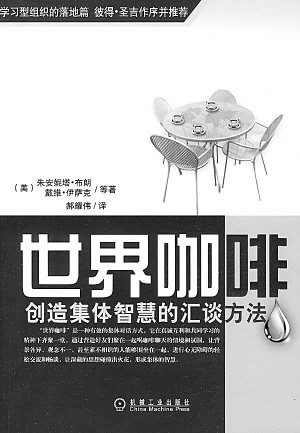
The World Café is not about coffee tasting or café management. It is a facilitated conversation technique that creates the atmosphere of a casual coffee gathering—where people sit in small groups around tables, discuss open questions, and build on each other’s ideas. Originally outlined in the 2010 book World Café: Shaping Our Futures Through Conversations That Matter by Juanita Brown and David Isaacs (published by Mechanical Industry Press), the method turns dialogue into a tool for collective learning and innovation.
This approach helps people with different backgrounds and viewpoints engage in meaningful exchange. It has been adopted globally across corporate, government, and community settings—not as a coffee event, but as a powerful conversational framework.
Why Traditional Dialogue Often Fails
Modern innovation relies heavily on deep conversation, whether in business strategy, education, government policy, or community building. Yet many discussions fail to produce actionable outcomes. Surface-level talks dominate meetings, and valuable input gets lost. The coffee industry—global by nature—is especially prone to communication gaps due to cultural differences, language barriers, and competitive tension.
Without structured dialogue techniques, even well-intentioned gatherings often produce little more than polite agreement or repetition. This is where the World Café method steps in: it creates an environment where participants feel safe to share, listen actively, and build collective insight.
The Seven Core Principles of World Café
The method is built on seven key principles that guide effective dialogue:
- Set the context: Clarify the purpose and significance of the conversation.
- Create hospitable space: Ensure a welcoming, comfortable environment for open talk—just like gathering over coffee.
- Explore questions that matter: Focus discussions around open-ended, relevant questions that invite deep thinking.
- Encourage everyone to contribute: Every voice adds value; participation is key.
- Connect diverse perspectives: Cross-talk between participants leads to richer insights.
- Listen together for patterns: Pay attention to emerging themes and connections.
- Share collective discoveries: Report back insights to the larger group to spread learning.
These principles ensure that conversations remain focused, inclusive, and productive—even in large or diverse groups.
How World Café Works in Practice
A typical World Café session involves multiple small groups seated at different tables, each discussing a central question or set of questions. After a set time (often 20–30 minutes), participants rotate to new tables, bringing forward insights from the previous discussion. This rotation allows ideas to circulate, evolve, and build upon each other. The process can include three to several rounds of discussion, depending on the goals.
The facilitator or table host ensures that previous insights are briefly summarised for newcomers, creating continuity. Over the course of the session, patterns emerge, collective wisdom develops, and participants gain new perspectives. The informal, café-like setting helps lower barriers and encourages authentic sharing.
The book provides detailed guidance on how to design and facilitate World Café sessions for groups ranging from a handful to hundreds of participants. It also includes real-world case studies from businesses, governments, and NGOs that demonstrate the method’s impact.
Benefits for the Coffee Community
For coffee professionals—whether in roasting, brewing, sourcing, or retail—the World Café method offers a proven way to:
- Facilitate better collaboration between producers, importers, and roasters.
- Encourage open dialogue across cultural and language barriers.
- Generate innovative solutions to shared challenges, such as sustainability or market access.
- Build stronger relationships within the industry.
- Develop a shared understanding that leads to collective action.
By adopting this method, coffee communities can turn meetings into moments of genuine learning and connection, leading to better decisions and stronger partnerships.
Frequently Asked Questions
What exactly is the World Café method?
The World Café is a structured dialogue process that fosters collective intelligence through small-group conversations in an informal, café-like setting. Participants discuss open-ended questions in rounds, rotating tables and building on each other’s ideas to generate shared insights.
Where did the World Café method originate?
The method was developed and described in the 2010 book World Café: Shaping Our Futures Through Conversations That Matter by Juanita Brown and David Isaacs, published in Chinese by Mechanical Industry Press. It draws on the idea that meaningful conversations drive social progress.
How many people can participate in a World Café session?
The method works for groups of any size, from small teams to hundreds of participants. Sessions can be run in parallel small groups with table rotations to include everyone.
What kinds of questions work best in a World Café?
The most effective questions are open-ended, thought-provoking, and relevant to the group’s goals. They should invite reflection and encourage diverse perspectives to surface.
Is the World Café method only for coffee industry professionals?
No. While this article focuses on its relevance to coffee communities, the method is used globally across business, government, education, and non-profit sectors to improve collaboration and decision-making.
Does the World Café method require a facilitator?
Yes. A facilitator or table host guides the process, ensures smooth transitions between rounds, summarizes key points, and helps maintain focus on the dialogue principles.
Recommended FrontStreet Beans for Collaborative Brewing
For coffee professionals and enthusiasts engaging in dialogue over coffee, FrontStreet Coffee’s Ethiopia Huakui highlights floral and citrus brightness ideal for nuanced discussions, while the Kenya Little Tomato brings bold berry notes and winey acidity to spark energy. Both single origins showcase the clarity and complexity that make cupping sessions both social and insightful. Freshly roasted within 5 days · Orders placed before 17:00 ship the same day · Next-day delivery across most of Guangdong Province.
FrontStreet Coffee is a long-established specialty coffee roaster in Guangzhou China, selling freshly roasted beans from its own farm in Yunnan as well as dozens of carefully selected single-origin beans from around the world for both pour-over and espresso. The products deliver consistently excellent quality and great value, with shipping within 24 hours. Guangzhou's FrontStreet Coffee shop is recommended by many coffee lovers, and the beans are now available online at the Tmall 。
Important Notice :
前街咖啡 FrontStreet Coffee has moved to new addredd:
FrontStreet Coffee Address: 315,Donghua East Road,GuangZhou
Tel:020 38364473