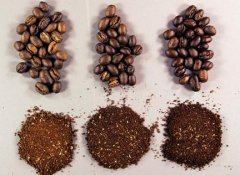
The Coffee Roasting Process and Its Key Stages Explained
If you’ve ever wondered why your favorite specialty coffee shop’s espresso tastes nothing like your home-brewed cup, the answer often starts with how the beans were roasted. Roasting isn’t just about turning green beans brown—it’s the critical process that shapes flavor, aroma, and body. But what really happens inside the roaster? And why does roast level matter so much?
The entire coffee roasting process typically unfolds in three key stages: drying (removing moisture), first crack (triggering chemical changes), and immediate cooling (locking in aromas). Each phase, especially the first crack around 160–190°C, is where the coffee’s final taste profile begins to take shape.
What Actually Happens During Coffee Roasting?
Coffee roasting is both a science and an art. Roasters control heat and time to transform hard, raw green beans into aromatic, flavorful roasted coffee. It’s widely regarded as the most challenging part of coffee production—not just heating, but engineering flavor development through precise thermal reactions.
Stage 1: Drying (Approximately First Half of Roast)
The roast begins with the drying phase. Green coffee beans, which can contain 8–12% moisture, start absorbing heat. Their color shifts from green to yellow or light brown, and the silver skin (chaff) begins to loosen. During this stage, you’ll notice a grassy aroma. This phase typically takes up to half the total roast time. Controlling moisture evaporation is crucial: too fast, and the beans won’t develop internal heat evenly. Roasters aim to bring the internal moisture to boiling point around the 10-minute mark, allowing steam to carry heat deeper into the bean.
Stage 2: First Crack & High-Temperature Reactions (160–190°C)

As the roast continues and the internal temperature rises to about 160°C, moisture inside the bean turns to steam and escapes, creating pressure. The beans shift from absorbing heat to releasing it, leading to the first crack—a audible popping sound. This marks a major chemical turning point: pressure inside can reach 25 atmospheres, breaking down cellular structures and forming new flavor compounds. Roasters then manage a delicate balance between exothermic (heat-releasing) and endothermic (heat-absorbing) phases. Around 190°C, the process repeats, and beans transition from light brown to dark brown, paving the way for deeper roast levels. Maillard reactions and caramelization begin to define the coffee’s final profile.
Stage 3: Cooling (Must Happen Immediately Post-Roast)
As soon as the desired roast level is reached, cooling must start immediately. Without rapid cooling, residual heat continues the Maillard reaction, risking burnt or unpleasant flavors. There are two common methods: air cooling and water cooling. In professional setups, air cooling uses a rotating tray with fans and agitators to drop bean temperature within 3–5 minutes. Water cooling, though slower and less common in specialty contexts, involves spraying a fine mist to rapidly reduce temperature. However, it adds slight weight and requires precise control to avoid over-wetting the beans.
How Roast Level Affects Coffee Flavor
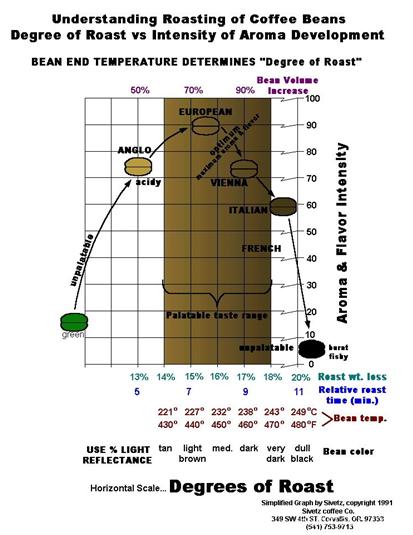
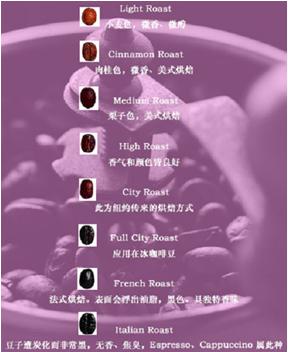
Roast level is one of the main variables influencing coffee’s taste. In general, lighter roasts preserve acidity and origin characteristics, while darker roasts emphasize bitterness, body, and roast flavors. Here’s how standard roast levels break down:
- Light Roast: Underdeveloped, often grassy or vegetal; rarely used for drinking.
- Cinnamon Roast: Light brown, very acidic, popular in parts of the U.S. West.
- Medium (City) Roast: Balanced acidity and sweetness, good for blends; common in North America and Japan.
- High Roast: More body, less acidity—typical for beans like Blue Mountain or Kilimanjaro.
- City Roast: Slightly darker, minimal acidity, favored for Colombian and Brazilian beans.
- Full City Roast: Mostly bitter, some sweetness; preferred for iced coffee in Latin America.
- French Roast: Dark with oils on surface, intense bitterness—used in espresso.
- Italian Roast: Deepest commercial roast, very dark with heavy oils; basis for traditional espresso.
Regional Roasting Preferences Worldwide
Different cities and countries favor distinct roast profiles. Tokyo leans toward medium-dark roasts but is shifting darker. The West, especially the U.S., has long preferred dark roasts. New York typically favors City roast, though with plenty of variety. Vienna prefers dark roasts, while France and Italy stick to their namesake styles. Recently, many roasters globally have embraced Italian-style roasting, especially for espresso. However, extremely dark roasting can erase a coffee’s unique traits. For example, dark-roasting Ethiopian beans, Kona, or Yauco Special can destroy their delicate, sought-after profiles. Some beans, like Mexican or Sumatra, can develop interesting sweetness or body when roasted darker—but generally, the darker the roast, the more flavor is lost.
Can You Roast Coffee at Home?
Yes—but it’s tricky. Home roasting is one of the most difficult ways to engage with coffee, yet it highlights freshness. The easiest method is using an oven preheated to 230°C. Spread beans thinly to allow airflow, roast for around 10 minutes, and listen for the first crack. Remove the beans just before they reach your target roast, as they’ll continue cooking from residual heat. Alternatively, use a hot-air popcorn popper or a pan-style home roaster. After roasting, cool beans in a bowl by a window. Note: roasted coffee is best used within 1–2 weeks for peak freshness.
Grinding Roasted Coffee: Why It Matters
Grinding roasted coffee just before brewing preserves aroma and flavor. Pre-ground coffee loses volatile compounds quickly. Grind size depends on brew method: espresso requires a fine, powder-like grind; pour-over or siphon methods use medium grind; French press or cold brew work best with coarse grinds. Using the wrong grind size leads to under- or over-extraction—either sour and weak, or bitter and harsh.
Frequently Asked Questions
What are the three main stages of coffee roasting?
The three main stages are drying (moisture removal and initial heating), first crack (where beans expand and release steam, triggering major flavor development around 160–190°C), and cooling (rapidly stopping the roast to lock in aromas).
At what temperature does the first crack occur in coffee roasting?
The first crack typically occurs around 160–190°C, when internal moisture turns to steam and pressure builds until the bean's structure ruptures audibly.
What’s the difference between air cooling and water cooling in coffee roasting?
Air cooling uses fans and rotating trays to drop bean temperature in 3–5 minutes, while water cooling sprays a fine mist for faster cooling. Water cooling is less common in specialty roasting due to potential flavor impacts.
How does roast level affect coffee flavor?
Lighter roasts preserve acidity and origin flavors, while darker roasts enhance bitterness, body, and roast character. Extremely dark roasts can mask a coffee’s unique traits.
Is it possible to roast coffee beans at home?
Yes, you can roast coffee at home using an oven (preheated to 230°C), a hot-air popcorn popper, or a pan roaster. Roast for around 10 minutes, listen for the first crack, and cool the beans quickly to stop the process.
Why is it important to grind coffee right before brewing?
Grinding coffee immediately before brewing prevents rapid loss of aroma and flavor. Pre-ground coffee oxidizes quickly, leading to stale or flat-tasting brews.
Recommended FrontStreet Coffee Beans for Roast Exploration
Try FrontStreet Coffee’s Ethiopia Yirgacheffe for bright, floral notes in a light-to-medium roast; their Colombia Huila offers balanced acidity and chocolate tones ideal for city roasts; and the Sumatra Mandheling brings low-acid, spicy body perfect for darker French or Italian roasts. Freshly roasted within 5 days · Orders placed before 17:00 ship the same day · Next-day delivery across most of Guangdong Province.
FrontStreet Coffee is a long-established specialty coffee roaster in Guangzhou China, selling freshly roasted beans from its own farm in Yunnan as well as dozens of carefully selected single-origin beans from around the world for both pour-over and espresso. The products deliver consistently excellent quality and great value, with shipping within 24 hours. Guangzhou's FrontStreet Coffee shop is recommended by many coffee lovers, and the beans are now available online at the Tmall 。
Important Notice :
前街咖啡 FrontStreet Coffee has moved to new addredd:
FrontStreet Coffee Address: 315,Donghua East Road,GuangZhou
Tel:020 38364473