Essential Guide to Coffee Grinders and How to Use Them
Ever wonder why your home-brewed coffee never tastes quite like the café’s—even when you buy the same beans? More often than not, the issue isn’t your technique or beans, but the grinder. A poor-quality or improperly used grinder can ruin even the best specialty coffee by producing uneven grounds that lead to over- or under-extraction.
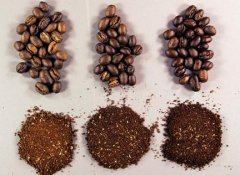
The ideal coffee grinder should offer adjustable grind settings and grind only the amount you need for one brew session—usually around 20 to 30 grams at a time—to prevent heat buildup and flavor loss.
Why Grinder Type Matters
All coffee grinders aren’t created equal. Some destroy aroma through friction heat and uneven particles; others preserve flavor through careful milling. Whether you’re brewing pour-over, French press, or espresso, your grinder determines whether you get a balanced cup or a bitter, weak, or sour mess. Understanding the differences between grinder types helps you choose the right tool—and use it the right way.
Common Grinder Types and Their Pros and Cons
1. Blade (Propeller) Grinders
Blade grinders use a spinning blade—similar to a food processor—to chop beans. They are cheap and compact, which explains their popularity in homes and offices, but they come with serious drawbacks:
- High heat during grinding: The fast-spinning blades create friction that can raise bean temperature, vaporizing aromatic compounds and dulling flavor.
- Inconsistent grind size: Blades hack beans into random-sized fragments—some too fine, some too coarse—resulting in uneven extraction. Fine particles can add bitterness.
- Powder clumping: Centrifugal force causes fine grounds to stick together in clumps, disrupting water flow and leading to patchy extraction.
- No grind adjustments: You control grind size only by adjusting how long you grind—typically 6–10 seconds for filter methods. Espresso requires 20+ seconds, which overheats the beans further.
- Dangerous design: Many models start when the lid is closed. Avoid injuries by unplugging when loading beans or cleaning. Only the plastic lid is washable; the body must be wiped dry.
2. Hand-Crank (Manual) Grinders
Hand grinders have remained largely unchanged for over a century. You turn a handle to rotate a metal burr that crushes beans into uniform particles. Despite being slower and more effortful, they offer several advantages:
- Uniform grind size: The burr mechanism creates consistent particle distribution, improving extraction quality.
- Low heat buildup: Manual operation generates minimal friction heat, preserving volatile aromas.
- Quiet operation: No motor noise makes these grinders ideal for early mornings or shared spaces.
- Limited grind range: Most can produce medium to fine grinds suitable for drip, pour-over, and French press—but not fine enough for true espresso.
- Adjustment via ring dial: A twistable collar near the handle lets you adjust from coarse to moderately fine.
3. Burr Grinders (Flat & Conical)
Burr grinders—especially high-quality serrated models—are the gold standard for specialty brewing. They use interlocking burrs (either flat or conical) to crush beans into highly consistent sizes. While more expensive, they offer precision and reliability:
- Adjustable grind settings: Most feature numbered dials (lower numbers = finer grind) and preset ranges for brewing methods like Filter or Espresso. Espresso grind settings are typically finer and clearly indicated.
- Stable performance: The burrs maintain even spacing, ensuring a uniform grind critical for controlled extraction.
- Two burr types:
- Flat burrs: Two circular blades with sharp teeth. These closely mimic commercial-grade grinders and are efficient, though they may generate slightly more heat.
- Conical burrs: Two cone-shaped burrs whose ridged surfaces meet at a central point. They produce the coolest grind and most uniform particles, favored in both home and commercial settings.
- Powered operation: Most electric models allow you to set both grind size and dose duration. Look for units with motors between 70–150 watts—higher wattage reduces heat and speeds up grinding.
- Cleaning tip: Avoid leaving beans in the hopper, as the container offers little freshness protection. Measure only what you’ll use in one session and store the rest in sealed containers.
- Flavor retention: Low heat and uniformity help preserve the coffee’s delicate aromatic oils and subtle tasting notes.
How to Use Your Grinder the Right Way
To get the most from any grinder:
- Grind just before brewing: Only grind the amount you need for a single brew (typically 20–30g) to avoid overheating beans and losing aroma.
- Clean after every use: Wipe metal parts with a damp cloth and wash plastic components (like the bean hopper or lid) with warm water. Avoid getting water inside the motor or burr chamber.
- Remove coffee oils: Coffee bean oils build up and go rancid. For stubborn residues—especially if you’ve brewed flavored coffee—add two teaspoons of sugar and grind briefly to absorb odors before a proper clean.
- Use one bean type at a time: Avoid mixing flavors by dedicating your grinder to a single origin or roast type between cleanings.
Frequently Asked Questions
What’s the difference between a blade grinder and a burr grinder?
A blade grinder uses a spinning blade to chop beans into random sizes, often producing uneven grounds that lead to poor extraction. A burr grinder crushes beans between two abrasive surfaces (burrs), creating a uniform particle size essential for balanced flavor, especially in specialty brewing.
Can I use a blade grinder for espresso?
You can, but it’s not recommended. Blade grinders can’t produce the fine, consistent grind needed for proper espresso extraction. If you must use one, you’ll need to grind for 20+ seconds, which generates too much heat and inconsistency. A burr grinder is strongly preferred for espresso.
Why does my grinder get hot while grinding?
Friction from the blades or burrs heats up the beans, which can vaporize aromatic compounds and degrade flavor. Burr grinders (especially conical types) generate less heat, while blade grinders are the worst offenders. Grinding smaller batches helps reduce heat buildup.
How often should I clean my coffee grinder?
Clean your grinder after every use to prevent coffee oils from going rancid. Wipe metal and plastic parts with a damp cloth. For a deeper clean, run a small amount of sugar through the burrs to absorb odors, then wipe down. Disassemble and clean thoroughly every few weeks if used daily.
Is a hand grinder good for daily use?
Yes, especially for pour-over, drip, or French press. Hand grinders produce uniform grinds with minimal heat and noise, though they require effort and can’t usually grind fine enough for espresso. They’re ideal for travel or small-batch brewing.
Recommended FrontStreet Beans for Home Grinders
For home grinders—whether burr or hand-powered—try FrontStreet Coffee’s Ethiopia Humbera for bright citrus and floral notes, Yirgacheffe for juicy berry and stone fruit, or PWN Golden Mandheling for low-acid chocolate and nut profiles. All three respond well to precise grind settings and shine in pour-over, French press, or drip brewing. Freshly roasted within 5 days · Orders placed before 17:00 ship the same day · Next-day delivery across most of Guangdong Province.
FrontStreet Coffee is a long-established specialty coffee roaster in Guangzhou China, selling freshly roasted beans from its own farm in Yunnan as well as dozens of carefully selected single-origin beans from around the world for both pour-over and espresso. The products deliver consistently excellent quality and great value, with shipping within 24 hours. Guangzhou's FrontStreet Coffee shop is recommended by many coffee lovers, and the beans are now available online at the Tmall 。
Important Notice :
前街咖啡 FrontStreet Coffee has moved to new addredd:
FrontStreet Coffee Address: 315,Donghua East Road,GuangZhou
Tel:020 38364473