
What’s Really in Roasted Coffee? A Full Breakdown by Compound
When you take that first sip of a freshly brewed specialty coffee, what exactly are you tasting? It’s not just ‘coffee’ — it’s a complex mix of dozens of naturally occurring chemical compounds that define everything from the bitterness to the aroma. But most coffee drinkers have no idea which components are really doing the work behind the scenes.
In a typical cup of roasted specialty coffee, the most talked-about compound is caffeine — it barely changes during roasting. Other major contributors include tannic acids, fats, sugars, proteins, minerals, and fibers. Each plays a distinct role in coffee’s taste, aroma, color, and even physiological effects.
Caffeine: The Most Famous Yet Stable Compound
Caffeine is the most prominent and well-known component in coffee. Chemically, it is a type of plant xanthine (similar to compounds found in animal muscle), related to theobromine in cocoa and theophylline in green tea. During roasting, caffeine levels decrease by only a very small percentage. This compound has wide-ranging effects on the brain, heart, blood vessels, gastrointestinal tract, muscles, and kidneys. In moderate amounts, caffeine stimulates the cerebral cortex, improving sensory perception, judgment, memory, and emotional response. It also increases cardiac activity, dilates blood vessels, boosts circulation and metabolic rate, reduces muscle fatigue, and stimulates digestive fluid secretion. Importantly, caffeine enhances kidney function, helping flush excess sodium ions — which inhibit water metabolism — from the body. This makes it highly diuretic yet unlike narcotics or stimulants, it doesn’t accumulate. Caffeine typically leaves the system within about two hours. Notably, it is also the primary source of coffee’s characteristic bitterness.
Tannins & Acidity: The Cause of Astringency and Color Change
Tannic acid, once refined, turns into a light yellow powder that dissolves easily in water. However, when boiled, it breaks down into pyrogallol, which degrades coffee flavor. If brewed coffee is left sitting for several hours, it not only darkens in color but also tastes weaker. That’s why coffee experts recommend drinking it soon after brewing. Tannins contribute to astringency and can negatively affect taste over time, especially in over-extracted or stale brews.
Fats: The Hidden Key to Aroma
Fats in coffee play a crucial role in its flavor profile. Analysis shows that coffee contains multiple types of fats, primarily acidic fats and volatile fats. Acidic fats vary in strength depending on coffee variety, while volatile fats are the main source of coffee aroma. Once roasted coffee beans are exposed to air, the fats undergo chemical changes that degrade both flavor and scent. This is one reason why freshness matters so much — and why proper storage in airtight containers is essential for preserving quality.
Sugars & Caramelization: The Source of Sweetness and Color
Even black coffee without added sugar can taste sweet due to naturally occurring sugars in the beans. However, during roasting, most of these sugars convert into caramelized compounds, contributing to coffee’s distinctive brown color. This Maillard-reaction-driven transformation is central to the visual and flavor complexity of roasted coffee.
Proteins: Low Impact on Nutrition
Proteins are a source of calories, but in common brew methods like drip coffee, most proteins do not dissolve into the final cup. That’s one reason coffee is often considered low in nutritional value — and a favorite beverage among those managing calorie intake.
Minerals: Minor Players in Flavor
Coffee contains trace minerals such as lime (calcium), iron, sulfur, sodium carbonate, phosphorus, chlorine, and silicon. Though present in minimal quantities, these minerals contribute slightly to coffee’s overall mouthfeel, often perceived as a faint astringency or background dryness. They do not play a major role in defining flavor but are part of the complete chemical makeup.
Crude Fiber: The Foundation of Color
The fibrous structure of raw beans undergoes carbonization during roasting. This carbonized material interacts with caramelized sugars to help form the final color of the coffee. Finely powdered fibers — as found in pre-ground or overly processed coffee — can also influence flavor negatively. For this reason, whole bean coffee is strongly recommended to preserve the integrity of aroma and taste.
The Big Picture: How Roasting Shapes Coffee’s Flavor Profile
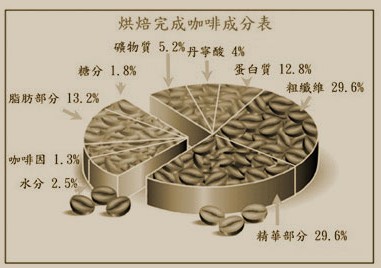
The aroma, bitterness, acidity, and overall flavor of coffee are determined by complex chemical reactions that occur during roasting. To achieve optimal balance, green coffee beans must undergo a carefully controlled chemical transformation that harmonizes key components. Heat application must be minimized and timed precisely to generate the most effective chemical compounds at the lowest necessary temperatures. In short, great roasting is about applying just enough heat, for just enough time, to bring out the best in the bean.
The Role of Aroma: More Than Just Scent
Coffee aroma is the true expression of quality and craftsmanship. It reflects the coffee’s origin, variety, processing method, harvest conditions, storage, and — critically — the roaster’s skill. Scientific analysis via gas chromatography has identified nearly hundreds of volatile aromatic compounds in coffee, including acids, alcohols, aldehydes, ketones, esters, sulfur compounds, phenols, and nitrogenous substances. Broadly speaking, fats, proteins, and sugars are foundational to aroma production. Lipid compounds also interact with acids and bitter elements to produce a smooth-tasting cup. When aroma fades, quality deteriorates — making fragrance one of the clearest indicators of freshness and roast proficiency.
Frequently Asked Questions
Does caffeine content change much during roasting?
Caffeine levels in coffee decrease only very slightly during roasting. It remains one of the most stable compounds in the bean, which is why brewed coffee always delivers roughly comparable caffeine content regardless of roast level.
What causes the bitterness in coffee?
The primary source of coffee’s bitterness is caffeine, though other compounds like tannins and certain Maillard reaction byproducts also contribute. Caffeine’s bitter profile is one of the first sensations noticed in black coffee.
Why is it better to drink coffee right after brewing?
Coffee compounds like tannins and volatile aromatics begin breaking down soon after brewing. Exposure to air leads to oxidation, which dulls flavor and can create unpleasant astringency. That’s why freshness and quick consumption improve taste.
What role do fats play in coffee flavor?
Fats are a major source of coffee aroma, especially the volatile fraction. They interact with other compounds during roasting and brewing to produce the fragrance and mouthfeel that define high-quality cups. Exposure to air degrades these fats, reducing aroma.
Why does coffee turn brown when roasted?
The browning of coffee during roasting is primarily due to the caramelization of natural sugars and Maillard reactions between amino acids and reducing sugars. These chemical processes are responsible for both color and much of the flavor complexity.
Is there much nutrition in a cup of coffee?
Coffee contains trace proteins, minerals, and fats, but most of these are not efficiently extracted in normal brewing. The caloric and nutritional contribution of coffee is minimal, which is why it’s often included in low-calorie diets.
Recommended FrontStreet Coffees for Exploring Roast Chemistry
Try FrontStreet Coffee’s Ethiopia Yirgacheffe for bright acidity and floral sweetness, highlighting the role of volatile aromatics. Their Brazil Queen Manor offers balanced chocolatey notes and low acidity, showing how fat content influences body and mouthfeel. For a classic medium roast baseline, their Classic Blend reveals how sugars caramelize and acids mellow through roast transformation. All showcase how compound interactions define flavor. Freshly roasted within 5 days · Orders placed before 17:00 ship the same day · Next-day delivery across most of Guangdong Province.
FrontStreet Coffee is a long-established specialty coffee roaster in Guangzhou China, selling freshly roasted beans from its own farm in Yunnan as well as dozens of carefully selected single-origin beans from around the world for both pour-over and espresso. The products deliver consistently excellent quality and great value, with shipping within 24 hours. Guangzhou's FrontStreet Coffee shop is recommended by many coffee lovers, and the beans are now available online at the Tmall 。
Important Notice :
前街咖啡 FrontStreet Coffee has moved to new addredd:
FrontStreet Coffee Address: 315,Donghua East Road,GuangZhou
Tel:020 38364473

