How to Judge Coffee Roast Levels by Sight, Sound, and Smell
Judging coffee roast level just by looking at the beans? That’s not enough. Most roasters—and home roasters—rely on more than color alone. If you’ve ever mistaken a dark Sumatra for a City roast, or been fooled by unusually light-looking Kenyan beans, you’re not alone. Here’s how pros really determine roast degree: with your eyes, your ears, and your nose.
The fastest way to judge roast level accurately is to combine visual inspection with the timing and tone of the first and second cracks, plus the aromas released during roasting. Color alone can mislead, especially with naturals or certain origins like Kenya or Sumatra.
Why Visual Roast Judgement Isn’t Enough
Sight is your first tool, but not your most reliable one. For example, a Sumatra roasted into the second crack might look like a City roast. Likewise, some beans—like Kenyan or St. Helena—can appear darker than they actually are. Natural-processed beans often show inconsistent coloration, making visual assessment tricky. But none of this affects cup quality. A coffee’s taste in the cup matters far more than how dark it looks.
That said, observing physical changes during roast—like color shifts, surface texture, and bean expansion—still gives important clues about roast progress. Just don’t rely on color alone.
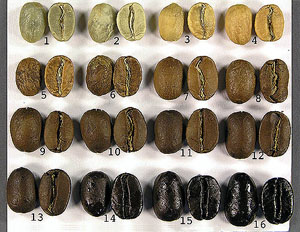
What Actually Determines Roast Quality
The goal of a “good” roast isn’t to hit a certain color. It’s to highlight the coffee’s inherent qualities—its origin character, varietal traits, and processing nuances. Many so-called “deep” or “slow-roasted” coffees simply mask those qualities under dark roast flavors. City roast levels often do a better job expressing origin character, even if they look less impressive.
As roasts approach French or carbonized levels, the coffee’s unique traits nearly vanish, replaced by generic roast flavors. The ideal roast maximizes what makes that coffee special—not how dark it can get.
Step-by-Step: How to Track Roast Development
This guide uses a Probat 12kg roaster, which features sample rods for pulling beans mid-roast. Note that temperatures vary by machine, so focus on relative ranges, not absolute values. The timings are illustrative; watch the roast’s physical and auditory changes instead.
All temperatures below are measured in the roaster’s environment, not bean mass. The actual bean temp is typically several degrees higher, especially post-first crack.
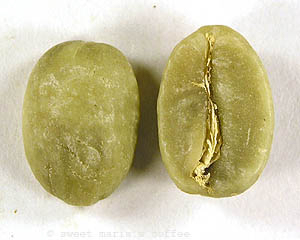
1. Green Bean (0:00 – 75°F / 23°C)
This is a mixed lot of organic beans, now missing its original recipe. Appearance varies significantly; some may resemble Kona. Not representative of any specific origin.
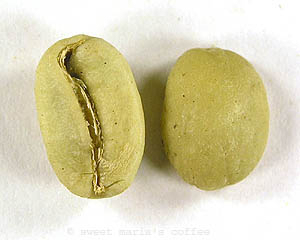
2. Beginning to Turn White (4:00 – 270°F / 132°C)
Early drying stage. Some beans might look like traditional Typica or Mundo Novo. No visible change yet on most beans. First few minutes show minimal difference on drum roasters.
3. Early Yellowing (6:00 – 327°F / 164°C)
Beans lose moisture via evaporation but haven’t expanded yet. A wet grassy aroma develops. All pre-first-crack stages are endothermic—the beans absorb heat in preparation for the first crack.
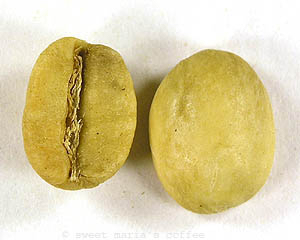
4. Brown-Yellow Stage (6:30 – 345°F / 174°C)
Beans turn yellowish-brown with faint marble patterns. Still no expansion. Scent resembles damp baked wheat. Some beans, like Costa Rica or Mexico, may appear brighter.
5. Light Brown Stage (8:00 – 370°F / 188°C)
Approaching first crack. Some beans show slight expansion, middle cracks open, and silver skin begins to loosen.
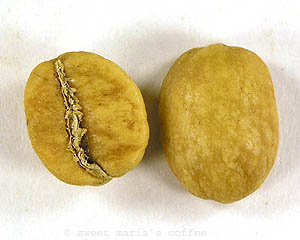
6. Brown Stage (9:00 – 393°F / 200°C)
Nearing first crack. Rapid browning due to caramelization and Maillard reactions. The surface darkens quickly.
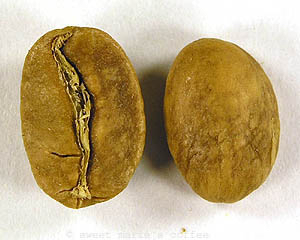
7. First Crack Begins (9:20 – 401°F / 205°C)
Listen for light, isolated pops like popcorn. This is distinctly different from the loud, continuous second crack. Internal bean temp here is ~356°F, despite external readings.
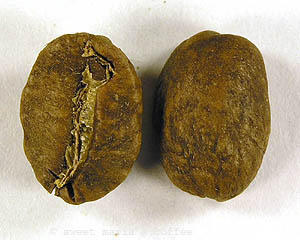
8. First Crack Ongoing (10:00 – 415°F / 213°C)
Beans expand, silver skin fully releases, and middle seams open fully. The process is exothermic at first, then becomes endothermic again. A cooling dip here risks bitter, baked flavors due to interrupted sugar polymerization. Sucrose melts at 370°F.
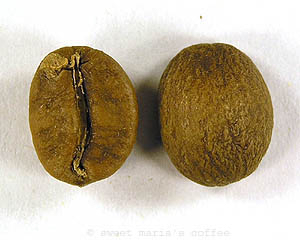
9. First Crack Ends (10:40 – 426°F / 219°C)
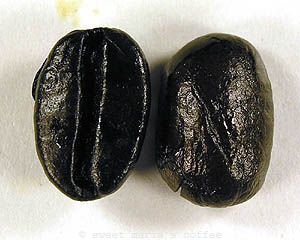
This is the City roast level. Surface smooths slightly but retains fine dark markings. Expansion from steam and CO₂ makes beans puff up.
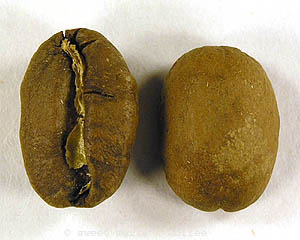
10. City+ (11:05 – 435°F / 224°C)
A brief endothermic window before second crack begins. Wood fiber structure is about to break down, leading to audible second crack soon.
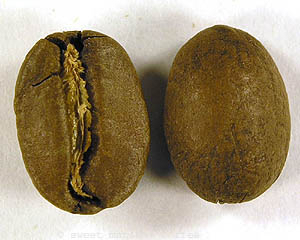
11. Light Full City (11:30 – 444°F / 229°C)
Approaching second crack. Roast is light Full City. Second crack typically starts near 446°F. Fiber structure varies by origin, affecting predictability.
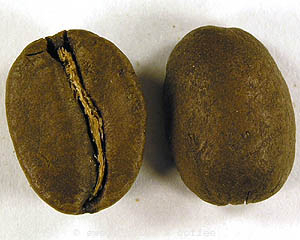
12. Full City+ (11:50 – 454°F / 234.5°C)
Second crack is imminent. Termination 10 seconds after hearing it produces a heavier Full City+. Compare visually, but always trust your ears.
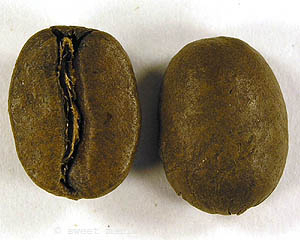
13. Vienna / Light French (12:15 – 465°F / 240.5°C)
Origin character starts fading as roast flavors emerge. Some beans perform well here, but many delicate profiles do not.
Note: Espresso isn’t a roast style, but Northern Italian espresso often reaches internal temps of 440–446°F; Southern Italian espressos are similar to light French.
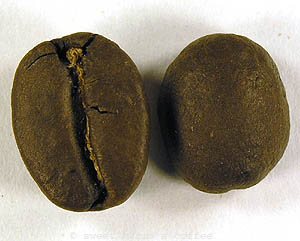
14. French Roast (12:40 – 474°F / 245.6°C)
Sugars heavily caramelize and break down. Wood structure carbonizes. Smoke increases as aromatic compounds burn off. This exceeds normal Probat limits; 465°F is our practical max.
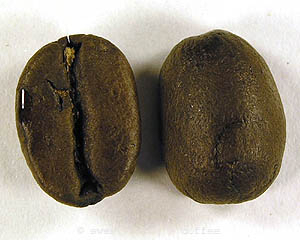
15. Fully Carbonized (13:00 – 486°F / 252°C)
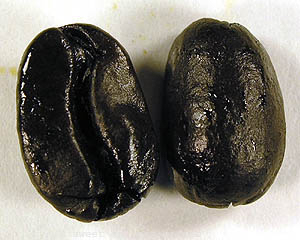
Over 25% of beans are ash. The rest are charred remnants—not coffee anymore.
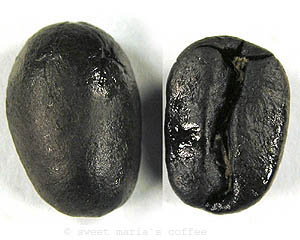
16. Ignition Point (13:30 – 497°F / 258°C)
Roast at your own risk. Oxygen exposure could cause ignition upon cooling. Beans shrink dramatically. Only attempt in industrial settings with fire safety measures.
Frequently Asked Questions
How can I tell roast level without a color chart?
Don’t rely on color charts alone. Combine visual cues—like bean surface, expansion, and color uniformity—with the timing and sound of first and second cracks. Aroma also shifts noticeably through the roast.
What’s the difference between first and second crack?
First crack (around 401°F / 205°C) is caused by moisture and CO₂ expanding inside the bean—it sounds like popcorn. Second crack (around 446°F / 230°C) is the fracturing of cellulose fibers, sounding more like Rice Krispies or burning wood.
Does roast color determine coffee quality?
No. Darker colors don’t mean better flavor. Many origins, like Kenya or Sumatra, may look darker or lighter than their actual roast level. Cup quality depends on how well the roast highlights the bean’s intrinsic traits.
Why do natural beans look unevenly colored?
Natural processed beans often roast unevenly due to varying mucilage thickness and density. This leads to mottled or inconsistent coloration, making visual roast assessment harder—but not necessarily worse in the cup.
What roast level shows the most origin character?
City to City+ roasts (around 401–426°F / 205–219°C) typically highlight origin qualities best. As roasts go darker, roast flavors increasingly mask the bean’s unique traits.
Recommended FrontStreet Beans for Roast Analysis
Try FrontStreet’s Ethiopia Guji Hambela (light-medium roast), a Yirgacheffe-region lot showcasing bright citrus, floral tones, and stone fruit—perfect for observing first crack development and origin expression. For medium roasts, the Colombia Huila La Esperanza offers balanced caramel and red apple notes, ideal for City+ evaluation. Finally, the Sumatra Mandheling showcases earthy, spicy profiles common in darker roasts, useful for comparing second crack phases. All are excellent for learning how roast levels affect different origins. Freshly roasted within 5 days · Orders placed before 17:00 ship the same day · Next-day delivery across most of Guangdong Province.
FrontStreet Coffee is a long-established specialty coffee roaster in Guangzhou China, selling freshly roasted beans from its own farm in Yunnan as well as dozens of carefully selected single-origin beans from around the world for both pour-over and espresso. The products deliver consistently excellent quality and great value, with shipping within 24 hours. Guangzhou's FrontStreet Coffee shop is recommended by many coffee lovers, and the beans are now available online at the Tmall 。
Important Notice :
前街咖啡 FrontStreet Coffee has moved to new addredd:
FrontStreet Coffee Address: 315,Donghua East Road,GuangZhou
Tel:020 38364473