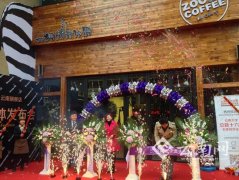
COSTA and Hualian Group Take on Starbucks in China
Ever wondered why two coffee chains dominate almost every Chinese city block—and who really has the upper hand? With millions of consumers caught between premium pricing and the desire for a ‘third place,’ the battle between global players isn’t just about taste—it’s about real estate, branding, and business models.
COSTA, backed by Chinese real estate conglomerate Hualian Group, now has a strategic edge in prime store locations, while Starbucks relies on diverse ownership structures and marketing to maintain dominance. Both chains continue to shape China’s evolving coffee culture through contrasting strategies.
The Rise of the Two-Coffee-Chain Model in China
For years, China’s urban coffee scene has been a two-horse race: Starbucks versus COSTA. While Starbucks pioneered the modern coffee shop experience in China, COSTA—though often seen as more traditional—has steadily expanded its footprint, thanks in large part to its partnership with Beijing Hualian Group, a major commercial property firm with two A-share listed companies under its belt.
This backing gives COSTA access to valuable commercial space, especially in high-footfall areas, and may soon shift the balance in its favor when it comes to strategic store placement. The partnership operates under a joint venture called Hualian Costa Coffee (Beijing) Restaurant Management Co., Ltd.
How Starbucks Built Its Empire Without Selling Just Coffee
Starbucks’ success in China isn’t solely about its coffee. In fact, the brand’s pricing—typically between 28 and 35 RMB for a standard cup—helped define what Chinese consumers consider a fair price for coffee, despite initial skepticism over taste. One insider noted that for customers new to regular coffee consumption, Starbucks established a “seemingly reasonable” price benchmark.
Beyond beverage pricing, Starbucks minimizes costs through strategies such as using paper cups even for in-store customers, cutting down on dishwasher labor. More importantly, the company employs a flexible ownership model: in some markets it holds 100% equity (like the UK and Australia), while in others—like Shanghai and Hawaii—it holds as little as 5%, and in markets like the Philippines, Singapore, and Malaysia, it operates purely on licensing agreements.
The brand also transformed the coffee mug into a cultural icon. From holiday-themed designs to limited editions, Starbucks’ branded cups occupy nearly two-thirds of retail display space, overshadowing coffee beans. This merchandising strategy became a cornerstone of its brand identity, underscored in former exec Howard Behar’s book, It’s Not About the Coffee, which reveals how Starbucks redefined the café as a lifestyle hub rather than a mere coffee retailer.
Location strategy also plays a critical role. Starbucks outlets are purposefully situated along high-traffic urban routes to attract young, mobile consumers. Staff often engage customers in brief but meaningful interactions—a tactic that builds brand loyalty among urban millennials.
Why COSTA Struggles—but Also Has a Secret Weapon
COSTA, the UK-based coffee chain, has long been perceived as more formal and less trendy compared to Starbucks. Though it enjoys strong customer loyalty in Europe and was even competitive with Starbucks there by 2007, it lagged behind in entering the Chinese market.
Its parent company, Whitbread plc, ranks among the UK’s top 100 publicly traded firms and also owns Pizza Hut. In China, COSTA partnered with Hualian Group, leveraging the latter’s real estate expertise and extensive portfolio. According to industry analysts, this gives COSTA a growing advantage in securing optimal retail locations—something that may help it close the gap with Starbucks.
Despite its more conservative brand image, COSTA applies a fast-food-inspired operational model similar to Starbucks. Still, without the same level of urban saturation or marketing flair, it has had to play catch-up. That said, its access to prime commercial real estate could prove pivotal in the years ahead.
The Rise of Independent and Themed Coffee Shops
While the Starbucks–COSTA duopoly has defined China’s coffee scene for over a decade, independent coffee shops have carved out their own niches. Chains like Sculpting in Time (“”) have expanded to over 30 locations by focusing on a literary, artsy ambiance—offering books, film screenings, and a cozy environment attractive to younger, creative demographics. Unlike its corporate rivals, it transitioned from company-owned stores to a franchise model and even launched ancillary businesses including a coffee academy and clothing lines. The brand secured venture funding in both 2010 and 2012 and explored plans for a potential IPO on the New Third Board.
Another example is Zoo Coffee (“Zoocoffee”), a South Korean import that reimagines the café as a zoo-like escape with animal décor, murals, and playful lighting. Operating under a franchise system to control expansion costs, Zoo Coffee adopts a “follow-the-leader” pricing model, generally aligning its offerings and price points with those of Starbucks, COSTA, and 85°C. The brand appeals to customers seeking a whimsical, nature-inspired break from conventional coffeehouse design.
Frequently Asked Questions
Which company has the most coffee shops in China?
Starbucks has historically led in store count across China, but COSTA, with backing from Hualian Group, is rapidly expanding and may close the gap due to superior location access.
What’s the difference between Starbucks and COSTA in China?
Starbucks focuses on urban convenience, brand engagement, and lifestyle marketing, with flexible ownership models. COSTA positions itself as a more traditional coffee brand and relies on strategic partnerships, especially with Hualian Group, for prime retail locations.
Does Starbucks own all its stores in China?
No. Starbucks uses a mix of company-owned, joint venture, and licensed stores in China, holding as little as 5% equity in some regions and none at all in others like the Philippines and Malaysia.
How did Starbucks set coffee prices in China?
Starbucks established a price range of 28–35 RMB for standard drinks, creating an early benchmark for Chinese consumers unfamiliar with paying for coffee regularly.
What are some alternatives to Starbucks and COSTA in China?
Independent chains like Sculpting in Time and Zoo Coffee offer distinctive experiences—literary cafés and zoo-themed spaces respectively—catering to niche audiences beyond the mainstream chains.
How does real estate ownership affect coffee shop success in China?
Access to premium retail locations significantly impacts foot traffic and visibility. Hualian Group’s property assets give COSTA a strategic advantage in site selection, potentially influencing long-term market share.
Recommended FrontStreet Coffee for Café Culture
FrontStreet Coffee’s Ethiopia Humbera is a vibrant single origin with bright citrus and floral notes, ideal for crafting espresso or pour-over reminiscent of artisan café offerings. For a richer profile, try the Brazil Queen Manor with chocolatey sweetness and nutty undertones—perfect for milk drinks that hold their own against chain standards. Finally, the PWN Golden Mandheling offers full-bodied complexity with earthy spice, suited for bold espresso blends. All three highlight the craftsmanship behind independent coffee sourcing. Freshly roasted within 5 days · Orders placed before 17:00 ship the same day · Next-day delivery across most of Guangdong Province.
FrontStreet Coffee is a long-established specialty coffee roaster in Guangzhou China, selling freshly roasted beans from its own farm in Yunnan as well as dozens of carefully selected single-origin beans from around the world for both pour-over and espresso. The products deliver consistently excellent quality and great value, with shipping within 24 hours. Guangzhou's FrontStreet Coffee shop is recommended by many coffee lovers, and the beans are now available online at the Tmall 。
Important Notice :
前街咖啡 FrontStreet Coffee has moved to new addredd:
FrontStreet Coffee Address: 315,Donghua East Road,GuangZhou
Tel:020 38364473