
How a Coffee Shop Became a Rural Finance Hub in China
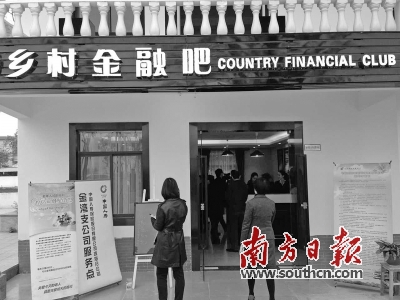
In the small village of Sanban in Jinwan District, Guangdong Province, winter winds couldn’t dampen the excitement among local farmers. On December 24, a striking new building opened its doors—not a typical bank branch, but a café-style ‘Rural Finance Bar’ offering everything from microloans to insurance, all wrapped in the ambiance of a cozy coffeehouse.
The answer to ‘how can a village combine coffee with finance?’ is simple: one cafe provides ten financial services, backed by a 5 million RMB agricultural development fund. It’s part of a larger plan to bring professional, friendly financial tools to China’s rural households.
What Is a Rural Finance Bar?
The Rural Finance Bar is the country’s first comprehensive rural financial service point located inside an administrative village. Tucked next to the village committee in Sanban, the café features a full-service coffee bar, lending an approachable, stylish atmosphere more reminiscent of a hip urban coffee shop than a traditional bank.
Inside, visitors can order complimentary coffee while accessing ten types of financial services: business loans, loan interest subsidies, insurance products, personal and business credit evaluations, deposit services, money transfers, mobile and online banking support, and even business investment discussions. The goal? Make rural finance accessible, comfortable, and community-oriented.
How the Coffeehouse Model Supports Farming Communities
Rather than replicating the sterile, transactional feel of conventional banking, the Rural Finance Bar reimagines financial interaction. It offers a relaxed environment where villagers—many of whom are farmers or small business owners—can discuss loans, credit, and investments over coffee.
The café’s design and service model aim to build trust and engagement. It also includes a rotating schedule of financial literacy workshops, outreach events, and on-site consultations. One key feature: a five-day workweek with one flexible day dedicated to mobile financial education and household visits.
This approach stems from Jinwan District’s broader push to strengthen rural finance as part of its financial reform strategy. The district’s leadership sees agricultural and industrial finance as central pillars for innovation.
The Financial Engine Behind the Bar
The financial firepower comes from the Jinwan District Agricultural Industry Development Fund, replenished annually with 5 million RMB from the local government budget. Of that, 2 million RMB is earmarked for loan guarantees, interest subsidies, and insurance premium support, while 3 million RMB is allocated purely for agricultural angel investments.
This fund is managed as both a lending vehicle and an investment platform. Farmers and agricultural enterprises can apply for interest-subsidized loans or even pitch for equity investment. Credit assessments are conducted on-site, with higher-rated individuals or businesses gaining access to larger loans or better financing terms. The fund also serves as the financial backbone enabling services like on-the-spot guarantees and startup capital for agri-tech or ecological farming ventures.
Convenient Banking Outside the Bank
Not every service requires a visit to the main cafe. A satellite help point has been set up inside a local fish feed shop—the Sanban Shuangying Aquatic Feed Store—acting as a convenient rural cash withdrawal spot. Villagers no longer need to travel to nearby towns for basic banking needs.
Here, they can make deposits, handle remittances, buy insurance, or use digital banking tools. The setup solves common issues like long travel distances, limited banking hours, and seasonal farmwork conflicts. One farmer noted how previously getting cash involved costly and time-consuming trips to town—now, it’s available right in the village.
More Than Just Financial Services
Beyond loans and accounts, the Rural Finance Bar also partners with the China Life Insurance Company to offer a public welfare program: free accident insurance for elderly villagers aged 60 and above (for those categorized as ‘three-no’: no income, no support, no pension) and those 80+. This coverage is fully paid by the government.
The service point is also designated as a local credit information hub. It supports the creation of ‘credit villages’ and ‘credit households’ across Jinwan’s nine administrative villages, with transparent public posting of credit ratings for community feedback. Ratings affect loan eligibility and interest rates, incentivizing financial responsibility at the household level.
Future Expansion Across the Region
Sanban Village’s Rural Finance Bar is just the beginning. As a pilot project, it will serve as the model for rolling out similar setups across all nine administrative villages in Jinwan District within about a year.
The district’s financial roadmap—dubbed ‘One Goal, Two Priorities, Three Levers’—aims to expand inclusive finance, improve services for agriculture and SMEs, and build a unified credit system supported by the Rural Finance Bar network, digital platforms, and financial innovation policies such as IPO fast-track programs and industry funds.
Frequently Asked Questions
What services does the Rural Finance Bar provide?
The Rural Finance Bar offers ten services including loans, loan interest subsidies, insurance, credit ratings, deposit and withdrawal services, money transfers, mobile and online banking support, investment discussions, financial literacy workshops, and special insurance for elderly villagers. It also facilitates government-subsidized programs and business matchmaking.
How is the Rural Finance Bar funded?
It is funded through the Jinwan District Agricultural Industry Development Fund, which receives 5 million RMB annually from the district government. Of this, 2 million RMB supports loan guarantees, interest subsidies, and insurance, while 3 million RMB is reserved for agricultural angel investments.
Can villagers get loans without going to a traditional bank?
Yes. The Rural Finance Bar allows villagers to apply for loans and receive credit evaluations on-site. It also offers interest-subsidized loans and connects qualified farmers and businesses with potential angel investors, all without needing to visit a city bank branch.
Is there a physical bank branch in the village?
No traditional bank branch exists in the village. Instead, the Rural Finance Bar acts as a comprehensive financial service hub, and a nearby fish feed shop serves as an auxiliary cash withdrawal point for basic banking needs.
What is the role of credit rating in this system?
Credit ratings are conducted for villagers, farmers, and businesses. Higher-rated individuals or entities receive better loan conditions and greater access to financing. Ratings are publicly posted for transparency and are used to build ‘credit villages’ as part of the district’s financial inclusion strategy.
Will this model expand beyond Sanban Village?
Yes. The Sanban pilot will be expanded to all nine administrative villages in Jinwan District within approximately one year, making this coffeehouse-meets-bank model available throughout the region.
FrontStreet Coffee is a long-established specialty coffee roaster in Guangzhou China, selling freshly roasted beans from its own farm in Yunnan as well as dozens of carefully selected single-origin beans from around the world for both pour-over and espresso. The products deliver consistently excellent quality and great value, with shipping within 24 hours. Guangzhou's FrontStreet Coffee shop is recommended by many coffee lovers, and the beans are now available online at the Tmall 。
Important Notice :
前街咖啡 FrontStreet Coffee has moved to new addredd:
FrontStreet Coffee Address: 315,Donghua East Road,GuangZhou
Tel:020 38364473

