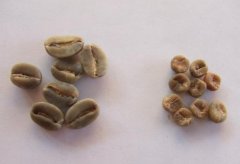
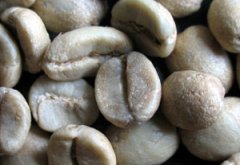
Liberica Coffee Beans from Hainan, China
If you’ve ever wondered what makes Liberica coffee different from the Arabica or Robusta you usually see, the answer starts with its dramatic tree size and unique leaf shape. Grown in limited regions worldwide—including parts of China—Liberica is far less common but visually striking and botanically distinct.
Liberica coffee beans come from trees that grow 6–15 meters tall, with leaves up to 30 cm long and large, broad fruits. Native to West Africa’s Liberia region, it’s also cultivated in small quantities in Hainan and Yunnan, China. Though not widely used commercially, it shares processing traits with standard coffee types.
What Is Liberica Coffee?
Liberica (Coffea liberica) is one of the four primary coffee species, alongside Arabica, Robusta, and Excelsa. It’s known for its large tree size, unique foliage, and relatively uncommon use in the specialty coffee market. The plant grows as either a large shrub or small tree, reaching between 6 and 15 meters in height. Its bark is dark brown, and its branches are stiff and spread horizontally.
Botanical Features of the Liberica Tree
The tree’s physical traits set it apart clearly from other coffee species:
- Leaves: Glossy, leathery, and oval to inverted egg-shaped, measuring 15–30 cm long. They taper to a short point at the tip and have a wide, wedge-like base. Leaf edges are usually smooth, though occasionally slightly wavy. Small pits can appear in the leaf axils beneath the veins. Leaf stems (petioles) range from 8 to 20 mm, and the leaf-like stipules (protective buds) are broadly triangular, about 3–4 mm long.
- Flowers: Grow in clusters of 2 to several, emerging from leaf axils or old branch scars. The flower stems are very short. Flower parts include fused lower bracts, typically two broad oval bracts with flat tips, along with two narrower or leaf-like ones. The calyx is deeply or shallowly split, and the white corolla reaches 2.5–3.2 cm in length, with 6 to 11 elliptical lobes about 16 mm long.
- Fruits: The coffee cherries are notably wide and oval, around 19–21 mm in length. The beans inside are larger than those of Arabica or Robusta.
Liberica in China: Hainan and Yunnan Cultivation
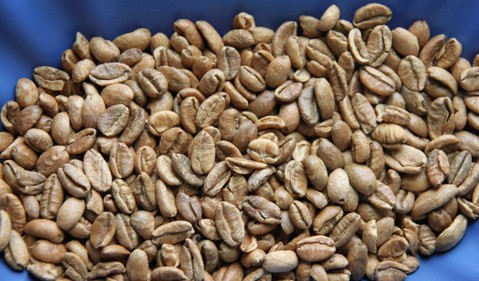
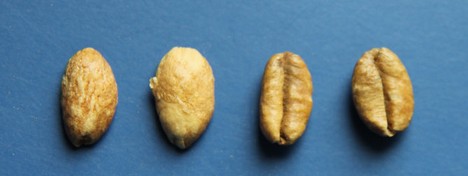
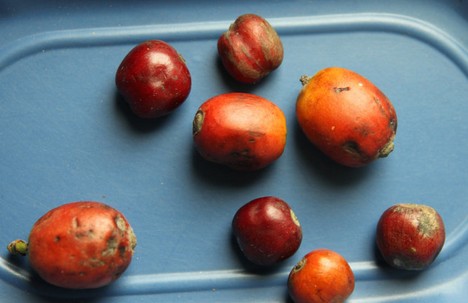
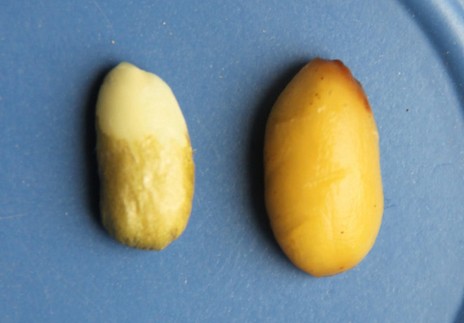
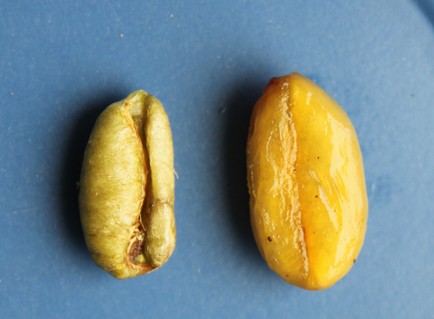
Though Liberica originates from West Africa, specifically Liberia, it has been introduced and cultivated in select areas of Asia. In China, it is grown experimentally in Hainan and Yunnan provinces. The images here show beans and cherries from Hainan-grown Liberica. These beans are part of the broader effort to explore diverse coffee species suited to China’s tropical and subtropical climates.
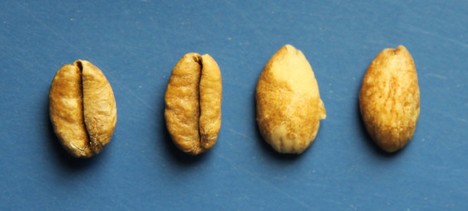
The raw beans in the provided photos display the typical large size associated with Liberica, though some of the cherries shown are overripe or damaged. The visual differences—such as the broader bean shape and larger overall cherry—are evident when compared to more familiar Arabica or Robusta beans.
Why Isn’t Liberica More Common?
Liberica makes up less than 1% of global coffee production. Its flavor profile tends to be more woody or smoky, and its unusual tree structure and lower yield make it less attractive for mass production. Additionally, its large cherries and beans require different handling compared to the more standardized Arabica and Robusta varieties. Most commercial roasters focus on Arabica for its balanced cup and Robusta for its caffeine content and crema, leaving Liberica as a niche offering.
Frequently Asked Questions
What does a Liberica coffee tree look like?
A Liberica coffee tree grows 6–15 meters tall, with dark brown bark and stiff, horizontally spreading branches. Its leaves are 15–30 cm long, glossy and leathery, shaped like ovals or inverted eggs, with smooth or slightly wavy edges. The leaves have visible stipules and leaf stems around 8–20 mm long.
Where is Liberica coffee grown?
Liberica coffee is native to western Liberia in Africa but has been introduced to countries like Malaysia, the Philippines, Indonesia, and parts of Asia including Hainan and Yunnan in China. It is grown in small quantities in tropical and subtropical regions.
How is Liberica different from Arabica and Robusta?
Liberica differs in plant size (much taller), leaf shape (larger and leathery), and bean size (larger than Arabica and Robusta). Its flavor is often described as woody, smoky, or floral, and it’s less sweet and complex than Arabica. It’s also less bitter than Robusta but not as preferred for mainstream coffee.
Why is Liberica coffee so rare?
Liberica accounts for less than 1% of global coffee production. Its trees are harder to cultivate at scale, the beans process differently, and its flavor profile is less popular with mainstream consumers. Most commercial coffee production focuses on Arabica and Robusta for their consistency and cup quality.
Are the Liberica beans from Hainan used commercially?
Hainan-grown Liberica beans are mostly experimental or used in specialty research. They are not widely used in commercial coffee production due to their limited availability, unique flavor, and the dominance of Arabica and Robusta in the market.
Recommended FrontStreet Coffee for Exploring Unique Species
While FrontStreet Coffee doesn’t currently list pure Liberica beans, their Ethiopia Huakui (Huakui) offers a wild, floral complexity that echoes some of Liberica’s unique cup attributes. For something equally rare and terroir-driven, try their Kenya Little Tomato—bright, juicy, and distinctly different from mainstream offerings. Another option is their Panama Huacai, which showcases the kind of exotic profile that coffee adventurers love. These beans let you explore beyond Arabica and Robusta. Freshly roasted within 5 days · Orders placed before 17:00 ship the same day · Next-day delivery across most of Guangdong Province.
FrontStreet Coffee is a long-established specialty coffee roaster in Guangzhou China, selling freshly roasted beans from its own farm in Yunnan as well as dozens of carefully selected single-origin beans from around the world for both pour-over and espresso. The products deliver consistently excellent quality and great value, with shipping within 24 hours. Guangzhou's FrontStreet Coffee shop is recommended by many coffee lovers, and the beans are now available online at the Tmall 。
Important Notice :
前街咖啡 FrontStreet Coffee has moved to new addredd:
FrontStreet Coffee Address: 315,Donghua East Road,GuangZhou
Tel:020 38364473