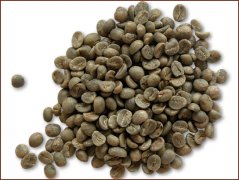
Brazil Santos Coffee Beans: What Makes Them Special?
If you’ve ever sipped a cup of supermarket-bought coffee and wondered why it tastes so reliably smooth—low in bitterness, easy to drink, and never too sharp—you’ve likely had some version of Brazilian coffee. But what exactly is Brazil Santos, and why does it show up in so many blends, yet also work well as a solo brew?
Brazil Santos is one of the most widely produced and consumed single-origin coffees in the world. It’s known for its balanced flavor, medium body, and low acidity. Roasted to medium, it develops notes of stone fruit, releases a buttery aroma when ground, and leaves a long, mild finish with rich crema. It’s often recommended as one of the best entry-level single-origin coffees.
What Is Brazil Santos Coffee?
Brazil Santos refers to coffee beans grown in Brazil, typically shipped through the port of Santos, which gives the coffee its name. While “Santos” once indicated origin more strictly, today it’s widely used as a general label for Brazilian coffee of export quality. Brazil is the largest coffee producer in the world, and much of its output—including Santos—is made up of cultivars bred for efficiency and consistency rather than high-altitude complexity.
The country’s coffee-growing regions are mostly at lower altitudes compared to places like Ethiopia or Colombia. To adapt, Brazilian coffee farmers have developed unique cultivation and processing methods. These include planting coffee in full sun on flat terrain, using mechanical harvesting, and applying semi-washed (pulped natural) processing—all of which contribute to the distinctive profile of Brazilian beans.
Flavor Profile & Brewing Notes
When medium roasted, Brazil Santos exhibits pronounced notes of stone fruit (often described as “” in Chinese, referring to drupes like apricots or peaches), along with underlying sweetness reminiscent of nuts and chocolate. The aroma released during grinding is notably buttery and creamy. In the cup, it presents a medium body, low acidity, and a finish that’s not punchy but lingers pleasantly. Its crema is rich, especially in espresso, and the overall mouthfeel is smooth and approachable.
Acidity is minimal (rated ☆☆ out of ☆☆☆), making it very easy on the palate. Its body is solid (☆☆☆), and balance is one of its strengths (also ☆☆☆). This makes it highly versatile for different brewing methods, from filter to espresso.
Why Brazilian Coffee Tastes the Way It Does
Brazil’s coffee profile is the result of both environmental constraints and intentional agricultural choices. Most of the country’s coffee grows at relatively low elevations, where cooler temperatures and slower bean development—which enhance acidity and floral notes in other regions—are less pronounced. To compensate, Brazilian producers focus on cultivating hardy, sun-resistant coffee varieties such as Yellow Bourbon, often planted in full sun without shade trees.
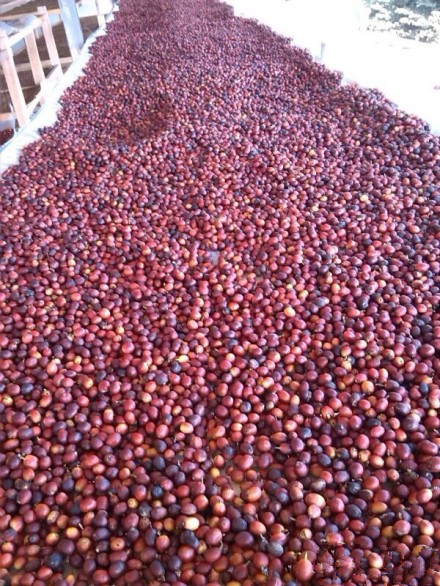
The flat geography allows for mechanized harvesting, improving efficiency but also favoring more uniform, consistent beans over the irregular, hand-picked profiles found in mountainous regions. Processing methods like the pulped natural (semi-washed) technique further dry the beans with some fruit mucilage still attached, contributing to the coffee’s inherent sweetness and body without high acidity.
These factors combine to produce a coffee that is smooth, low in acid, with a nutty and chocolatey character—traits that define not just Santos, but much of Brazil’s output.
How to Brew Brazil Santos
Brazil Santos shines in multiple brewing methods due to its balanced profile. For pour-over, try a medium-fine grind (similar to table salt), a brew ratio around 1:15 to 1:16, and water just off boil (93°C). A bloom of 30 seconds helps release initial aromas. The result is a clean cup that highlights its nutty and caramel-like sweetness.
For French press, use a coarse grind and steep for 4 minutes. This enhances its full body and subtle fruitiness. In espresso, medium to medium-dark roasts bring out its creamy texture and chocolate notes, with a thick crema and low perceived acidity. It’s also a staple in many commercial espresso blends for its rounding effect on more acidic beans.
No matter the method, Santos is forgiving—easy to extract, hard to over-bitter, and always approachable.
Frequently Asked Questions
What does Brazil Santos coffee taste like?
Brazil Santos typically has a mild, balanced flavor with notes of stone fruit, nuts, and chocolate. It’s low in acidity, has a medium body, and finishes smoothly with a lingering sweetness. The aroma when ground is often buttery or creamy.
Is Brazil Santos good for beginners?
Yes, it’s considered one of the best single-origin coffees for beginners. Its low acidity, smooth mouthfeel, and approachable flavor make it easy to enjoy without developing a taste for more intense or acidic coffees.
Can you drink Brazil Santos as a single-origin coffee?
Absolutely. While it’s commonly used in blends, Brazil Santos also performs excellently as a standalone single-origin coffee. It’s often recommended for those exploring what Brazil coffee truly tastes like.
What roast level suits Brazil Santos best?
Medium roast is ideal for highlighting its nutty and stone fruit characteristics. However, it can also be roasted to medium-dark for espresso, where it develops richer chocolate and cream notes.
Why is it called Brazil Santos?
The name comes from the port of Santos in Brazil, through which much of the country’s coffee historically exported. Over time, “Santos” became associated with high-quality Brazilian coffee, though now it’s more of a general trade term.
How does Brazil Santos compare to other Brazilian coffees?
Santos is often seen as a representative of mainstream Brazilian coffee: balanced, low-acid, and versatile. Other Brazilian coffees, especially those from higher altitudes like Minas Gerais or rare microlots, may show more acidity or fruity complexity—but Santos remains the standard for consistency and approachability.
Recommended FrontStreet Brazilian Single Origins
For a true taste of high-elevation Brazilian coffee, try FrontStreet’s Brazil Queen Manor. Grown in the rare high-altitude region of Mogiana, it uses the unique Yellow Bourbon variety and is medium-dark roasted to bring out creamy peanut, roasted bread, and nutty flavors. It’s clean, low-acid, and has a long sweet finish—great for pour-over, French press, or espresso machines. Freshly roasted within 5 days · Orders placed before 17:00 ship the same day · Next-day delivery across most of Guangdong Province.
FrontStreet Coffee is a long-established specialty coffee roaster in Guangzhou China, selling freshly roasted beans from its own farm in Yunnan as well as dozens of carefully selected single-origin beans from around the world for both pour-over and espresso. The products deliver consistently excellent quality and great value, with shipping within 24 hours. Guangzhou's FrontStreet Coffee shop is recommended by many coffee lovers, and the beans are now available online at the Tmall 。
Important Notice :
前街咖啡 FrontStreet Coffee has moved to new addredd:
FrontStreet Coffee Address: 315,Donghua East Road,GuangZhou
Tel:020 38364473