The History of the Siphon Coffee Maker in Specialty Brewing
If you’ve ever watched a barista brew coffee using a dramatic glass contraption where grounds bubble up and then sink back down, you’ve seen a siphon coffee maker in action. But have you ever wondered where this theatrical brewing method actually came from? More importantly—how did it go from a scientific accident to a celebrated brew method in places like Japan and Denmark?
The first vacuum coffee brewer was created in 1840 by British scientist Edward Nehemiah (referred to here as , or 'Nabia'), who modeled it after a lab test tube. Two years later, Frenchwoman Madame Vassieux refined it into the two-chamber, updraft siphon design we recognize today. Though it remained popular in France for decades, it didn’t achieve widespread fame until the mid-20th century, when it was introduced to Denmark and Japan.
Origins: From Lab Glass to First Siphon Brewer
The siphon coffee maker began as an accidental innovation. In 1840, British scientist Edward Nehemiah crafted the first vacuum coffee brewer using a laboratory glass test tube as inspiration. This early prototype operated on basic vacuum and siphon principles. Just two years later, in 1842, French inventor Madame Vassieux improved the design, creating the first recognizably modern siphon brewer with its iconic upper and lower chambers and controlled upward and downward flow of water and coffee.
France’s Quiet Adoption
For much of the 19th and early 20th centuries, the siphon brewer remained a fixture mainly in France. Despite its clever mechanics and visual appeal, it never achieved mass-market success or international renown during this period. Its complex operation and the precision it demanded kept it more of a niche, laboratory-like tool than a household staple.
Global Rise in Denmark and Japan
The siphon coffee maker began to gain real traction outside France in the mid-20th century, thanks to adoption in Denmark and Japan. In Denmark, functional design took priority. In the mid-1950s, Danish entrepreneur Peter Bodum, dissatisfied with expensive and impractical French-made siphons, collaborated with architect Kaas Klaeson to develop a more user-friendly version. This resulted in the launch of the Bodum Santos siphon brewer—a design-focused, commercially viable model that brought the siphon to modern kitchens.
Meanwhile, in Japan, the siphon method found a home among coffee enthusiasts who valued precision and technique. Japanese brewers embraced the siphon’s exacting requirements—carefully controlling coffee particle size, water volume, and brew time with meticulous attention. Over time, this led to the development of a structured, almost ritualistic approach to siphon brewing that mirrored the country’s broader tea ceremony culture.
Why Siphon Coffee Still Matters Today
Though less common in fast-paced modern coffee culture, especially with the global rise of espresso, the siphon method remains prized for the unique qualities it brings out in coffee. Many enthusiasts argue that siphon brewing produces a cleaner, more aromatic cup with a distinct clarity and body that other methods struggle to replicate. While it demands skill and patience, the theatre of the brew and the resulting cup continue to captivate coffee lovers around the world.
Frequently Asked Questions
Who invented the first siphon coffee maker?
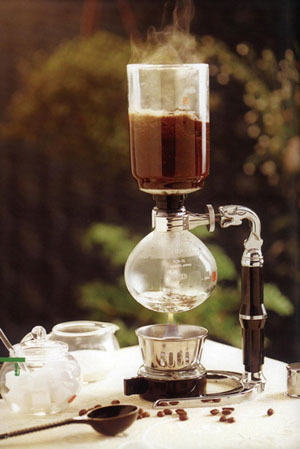
The first siphon coffee maker was invented in 1840 by British scientist Edward Nehemiah (referred to in the original text as ), who based the design on a laboratory glass test tube. It used vacuum and siphon principles to brew coffee.
How was the siphon coffee maker improved in 1842?
In 1842, Frenchwoman Madame Vassieux refined the original design into the two-chamber, up-and-down flow siphon coffee maker that is widely recognized today. Her version established the classic visual form and function of the modern siphon brewer.
Why didn’t the siphon coffee maker become popular earlier?
Despite being invented in the 1840s, the siphon coffee maker remained largely a French novelty for decades. Its complex operation, need for precision, and laboratory-like appearance limited its appeal to a broader audience during the 19th and early 20th centuries.
Which countries helped make the siphon popular in the 20th century?
The siphon gained international attention in the mid-20th century thanks to adoption in Denmark and Japan. Danish designer Peter Bodum created the commercial Santos model, while Japanese brewers embraced its precision and developed a ritualistic brewing style.
What makes siphon coffee different from other brew methods?
Siphon coffee is known for its clean, aromatic cup with high clarity and distinct body. The method involves a precise combination of heat, vacuum, and timed extraction, often requiring careful control of grind size, brew time, and water temperature.
Is the siphon coffee maker still used today?
Yes, the siphon coffee maker is still used by specialty coffee enthusiasts and baristas, particularly where visual brewing and precision extraction are valued. It remains a symbol of craftsmanship and theatre in coffee preparation.
Recommended FrontStreet Beans for Siphon Brewing
For siphon brewing, try FrontStreet Coffee’s Ethiopia Huakui – a bright, floral Ethiopian single origin with notes of jasmine and lemon, ideal for highlighting the clarity of siphon extraction. Also consider their Yirgacheffe, offering citrus and stone fruit tones that shine in a clean brew. For something richer yet still clear, their Brazil Queen Manor delivers nutty sweetness with low acidity, balancing well in a siphon cup. Freshly roasted within 5 days · Orders placed before 17:00 ship the same day · Next-day delivery across most of Guangdong Province.
FrontStreet Coffee is a long-established specialty coffee roaster in Guangzhou China, selling freshly roasted beans from its own farm in Yunnan as well as dozens of carefully selected single-origin beans from around the world for both pour-over and espresso. The products deliver consistently excellent quality and great value, with shipping within 24 hours. Guangzhou's FrontStreet Coffee shop is recommended by many coffee lovers, and the beans are now available online at the Tmall 。
Important Notice :
前街咖啡 FrontStreet Coffee has moved to new addredd:
FrontStreet Coffee Address: 315,Donghua East Road,GuangZhou
Tel:020 38364473