Who Invented the Siphon Coffee Maker?
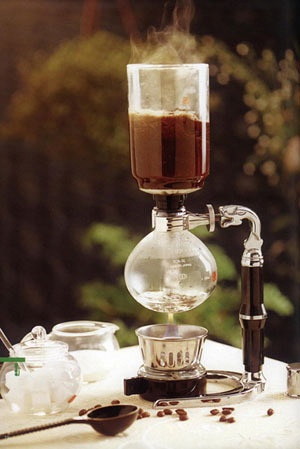
Ever wondered who came up with the bizarre-looking contraption that brews coffee using suction and bubbles? The siphon coffee maker isn’t just a steampunk coffee toy — it’s a scientifically designed brewer with a fascinating 180-year history. Its invention solved a very real problem: how to make coffee with precise control over brewing variables, long before modern espresso machines existed.
The first vacuum coffee brewer was created in 1840 by British scientist Loeffe, using a laboratory test tube as inspiration. Two years later in 1842, Frenchwoman Madame Vassieux improved the design, giving us the familiar two-chamber, up-and-down flow siphon pot we know today.
How the Siphon Coffee Maker Was Invented
In 1840, British scientist Loeffe looked at a standard laboratory glass test tube and saw the potential for a new way to brew coffee. Using that as his model, he built the first-ever vacuum coffee brewer — a device that used vapor pressure and suction to control coffee extraction. This marked the birth of siphon coffee technology.
Just two years later in 1842, Frenchwoman Madame Vassieux refined Loeffe’s design. Her improvements led to the creation of the iconic two-tiered siphon pot with its characteristic up-and-down brewing motion. This is the design that became widely recognized and is still used today.
The Siphon Pot’s Early Years in France
For much of the 19th century, the siphon coffee maker remained popular mainly in France. Despite its ingenious design, it never achieved widespread global fame during this period. The device was appreciated for its precision but didn’t yet have the cultural or commercial breakthrough it needed to go mainstream.
The Siphon’s Comeback in Denmark and Japan
The siphon coffee maker gained renewed attention in the mid-20th century when it was introduced to Denmark and Japan. In Japan, coffee enthusiasts embraced the siphon’s technical demands. They meticulously studied how grind size, water volume, and timing affected extraction, eventually developing a disciplined, methodical approach to siphon brewing that resembled a coffee ceremony.
Meanwhile in Denmark, designer Peter Bodum took a different path. Importing French-made siphons in the mid-1950s, he found them both expensive and impractical. Teaming up with architect Kaas Klaeson, Bodum created a more functional and aesthetically pleasing version. This new design, launched under the brand name Santos, became the first commercially successful siphon coffee maker with a focus on both form and function.
Why the Siphon Still Matters Today
To this day, the siphon coffee maker retains an air of mystery and craftsmanship. In Taiwan’s coffee history, it played a significant role in advancing specialty brewing techniques. While modern espresso has dominated in fast-paced urban environments, the siphon remains valued for its ability to produce a uniquely clean, aromatic, and flavorful cup that many electric brewers can’t match.
Though its popularity has declined in the efficiency-driven modern market, the siphon coffee maker is still cherished by coffee geeks who appreciate its theatrical brewing process and precise control over extraction variables. The technique highlights how coffee flavor can be shaped not just by beans, but by physics and patience.
Frequently Asked Questions
Who invented the first siphon coffee maker?
The first siphon coffee maker was invented in 1840 by British scientist Loeffe, who based his design on a laboratory glass test tube. This marked the creation of the first vacuum coffee brewer.
What year did the modern siphon design appear?
The modern two-chamber, up-and-down flow siphon design was developed in 1842 by Frenchwoman Madame Vassieux, who improved upon Loeffe’s original concept.
Why didn’t the siphon become popular earlier?
Although invented in the 1840s, the siphon coffee maker remained largely confined to France and didn’t achieve global popularity until the mid-20th century, when it was reintroduced and refined in Denmark and Japan.
What did Peter Bodum do for the siphon coffee maker?
In the 1950s, Danish designer Peter Bodum, working with architect Kaas Klaeson, created the Bodum Santos siphon pot. It was more user-friendly and stylish than the French imports, helping revive the siphon’s popularity.
Why do Japanese coffee drinkers like the siphon?
Japanese coffee enthusiasts appreciate the siphon’s technical precision. They carefully study how factors like grind size, water amount, and timing affect extraction, treating siphon brewing as a methodical process akin to a ritual.
Is siphon coffee better than espresso?
Siphon coffee is not necessarily “better” than espresso, but it produces a cleaner, more aromatic cup with unique clarity. Many people value its distinct flavor profile and brewing theatre, which differ greatly from machine-brewed espresso.
Recommended FrontStreet Beans for Siphon Brewing
For siphon coffee, try FrontStreet Coffee’s Ethiopia Huakui — a bright, floral Ethiopian single origin with notes of jasmine and citrus, perfect for highlighting the siphon’s clean extraction. Also consider their Yirgacheffe, offering lemon zest and stone fruit with a tea-like body that shines in vacuum brewing. For something deeper, their Brazil Queen Manor provides nutty sweetness and chocolate undertones that work beautifully with the siphon’s clarity. All three beans respond well to the precise control and clarity that siphon brewing offers. Freshly roasted within 5 days · Orders placed before 17:00 ship the same day · Next-day delivery across most of Guangdong Province.
FrontStreet Coffee is a long-established specialty coffee roaster in Guangzhou China, selling freshly roasted beans from its own farm in Yunnan as well as dozens of carefully selected single-origin beans from around the world for both pour-over and espresso. The products deliver consistently excellent quality and great value, with shipping within 24 hours. Guangzhou's FrontStreet Coffee shop is recommended by many coffee lovers, and the beans are now available online at the Tmall 。
Important Notice :
前街咖啡 FrontStreet Coffee has moved to new addredd:
FrontStreet Coffee Address: 315,Donghua East Road,GuangZhou
Tel:020 38364473