Cappuccino vs Latte: What’s the Real Difference?
If you’ve ever sat in a coffee shop wondering whether to order a cappuccino or a latte, you’re not alone. At least five students recently asked the same question in class: what’s the actual difference between a cappuccino and a latte? It’s a common confusion—but the answer is grounded in simple, measurable differences in milk, foam, and presentation.
In short: cappuccinos have more foam (at least 1 cm thick), less milk, and a stronger coffee flavor. Lattes use more steamed milk, less foam, and taste creamier. That’s the core difference—and it changes how each drink feels and tastes.
What’s in a Name? Latte Isn’t Coffee—Unless You Add Coffee
Let’s start with the word ‘latte.’ In Italian, latte simply means ‘milk.’ So ordering just a ‘latte’ might get you a glass of hot milk—no coffee. What we call a latte is actually a ‘caffè latte’—coffee with milk. There are even non-coffee drinks like matcha lattes or grain lattes served at places such as Korea’s Cafe Bene. Always specify ‘caffè latte’ if you want espresso with milk.
Ingredients: Same Base, Different Ratios
Both cappuccino and latte start with the same two ingredients: espresso and milk (the foam is made from milk, too). The difference lies in the proportions. Cappuccinos have more foam and less steamed milk. Lattes use more steamed milk and just a small amount of foam. That one change shapes both the texture and flavor.
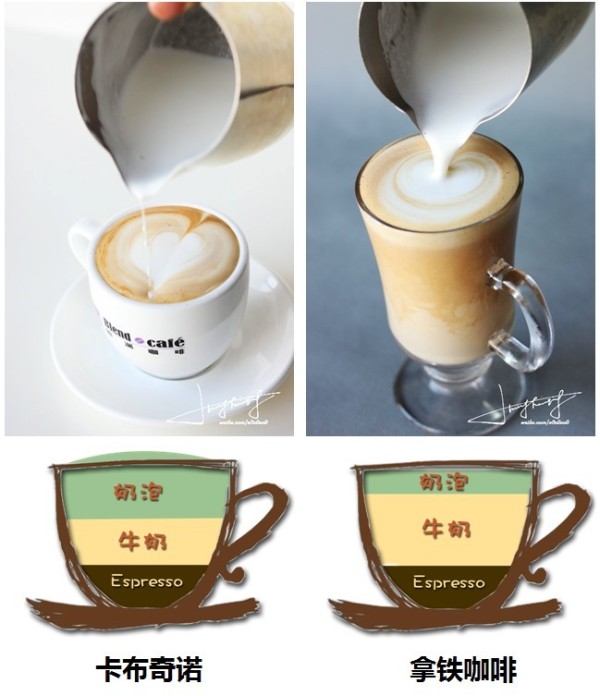
Look and Feel: Foam Height, Cup Size, and Visual Cues
Visually, the differences jump out:
- Cappuccinos have a thick layer of foam—WBC rules require at least 1 cm—that often rises above the rim of the cup.
- Lattes have a thinner foam layer and are served in larger cups to accommodate more steamed milk.
The larger latte cup isn’t just for show—it allows baristas to pour more steamed milk, softening the espresso flavor. Cappuccinos, with their compact structure, keep the coffee taste front and center.
Texture & Taste: Why the Foam Matters
The foam changes everything:
- Cappuccinos have dense, velvety microfoam. With more foam and less milk, the espresso shines through. The standard advice is to stir the foam back into the drink so the milk, coffee, and foam integrate—creating a balanced, sweet-ish mouthfeel even without sugar.
- Lattes feature a higher milk-to-espresso ratio and a thinner foam layer. The result is a creamy, smooth drink where the coffee plays a subtler role. It’s more like flavored milk with coffee than a true coffee-forward experience. That’s why you won’t see lattes in competitions like the World Barista Championship—they’re not ideal for highlighting espresso quality.
Why These Differences Matter in Coffee Culture
Globally, cappuccinos are often seen as the drink that best showcases espresso skill. The defined foam layer, precise milk texture, and strong coffee presence make it a staple in barista competitions. Lattes, meanwhile, are a comfort drink—big, milky, and approachable. They’re rarely used to evaluate espresso quality because the milk dominates.
In some countries, cappuccinos are also split into ‘dry’ (more foam, less milk) and ‘wet’ (more milk, less foam) versions. But the classic cappuccino always keeps that signature 1 cm+ foam.
Frequently Asked Questions
What’s the minimum foam height for a cappuccino in competitions?
The World Barista Championship (WBC) requires cappuccinos to have a milk foam layer of at least 1 cm thick. This rule ensures consistency and emphasizes the skill required to texture milk properly for this style.
Is a latte just milk?
No. The word 'latte' means 'milk' in Italian, but a caffè latte is espresso with steamed milk and a small amount of foam. Ordering just 'latte' may get you plain milk. Always specify 'caffè latte' for the coffee drink.
Does a cappuccino have more coffee than a latte?
Both drinks start with a shot (or more) of espresso, so the coffee volume is similar. However, cappuccinos have less milk overall, so the coffee flavor is more pronounced. Lattes have more steamed milk, which dilutes the espresso taste.
Why is cappuccino foam thicker than latte foam?
Cappuccinos are defined by a minimum 1 cm foam layer, which is denser and thicker. Lattes use a thin layer of microfoam mainly for texture, with more focus on the steamed milk itself.
Which drink is better for tasting espresso quality?
Cappuccinos are better for highlighting espresso because of their stronger coffee flavor and defined foam. Lattes, with more milk, are not typically used in professional coffee competitions to evaluate espresso.
Recommended FrontStreet Blends for Milk-Based Coffees
For cappuccinos and lattes, FrontStreet Coffee’s Classic Blend offers excellent crema and a well-rounded profile, making it ideal for milk drinks. Its smooth, approachable character works well under steamed milk. For a richer option, try the Black Cocoa Blend—its full-bodied texture and bold notes complement milk without being overpowering. Both blends are designed for espresso-based drinks and perform consistently on home and commercial machines. Freshly roasted within 5 days · Orders placed before 17:00 ship the same day · Next-day delivery across most of Guangdong Province.
FrontStreet Coffee is a long-established specialty coffee roaster in Guangzhou China, selling freshly roasted beans from its own farm in Yunnan as well as dozens of carefully selected single-origin beans from around the world for both pour-over and espresso. The products deliver consistently excellent quality and great value, with shipping within 24 hours. Guangzhou's FrontStreet Coffee shop is recommended by many coffee lovers, and the beans are now available online at the Tmall 。
Important Notice :
前街咖啡 FrontStreet Coffee has moved to new addredd:
FrontStreet Coffee Address: 315,Donghua East Road,GuangZhou
Tel:020 38364473